


In the Islamic tradition, barakah is one of the most beautiful and profound concepts that touches every aspect of a believer’s existence. The Arabic word “barakah” translates to blessing, abundance, and divine grace, but its meaning extends far beyond mere material increase. Barakah represents a spiritual quality that brings growth, prosperity, contentment, and lasting benefit to whatever it touches. When something has barakah, it becomes sufficient, fulfilling, and perpetually beneficial, even if it appears small in quantity or modest in appearance.
The pursuit of barakah through sincere supplication to Allah is a practice deeply rooted in Islamic teachings. The Prophet Muhammad, peace be upon him, consistently sought barakah in his daily life and taught his companions to do the same. Through specific Dua for Barakah and supplications, Muslims can invite divine blessings into their time, wealth, family, health, and every endeavor they undertake.
Understanding the Essence of Barakah
Before delving into the specific supplications for barakah, it is essential to understand what this blessing truly means. Barakah is not simply about having more money, more possessions, or more time. Rather, it is about experiencing sufficiency, satisfaction, and positive outcomes from whatever Allah has decreed for us. A person with barakah in their wealth may have modest means but finds it sufficient for all their needs and able to help others. Someone with barakah in their time accomplishes much despite a busy schedule, while their tasks feel manageable rather than overwhelming.
This divine blessing transforms the ordinary into the extraordinary. It is the reason why some people achieve remarkable things with limited resources, why certain gatherings leave lasting positive impressions, and why some homes radiate peace and contentment despite their simplicity. Barakah is Allah’s special grace that multiplies the benefit and goodness of whatever it enters.
The Quranic Foundation for Seeking Barakah
The Quran itself is described as a blessed book, and Allah frequently mentions blessings throughout its verses. Allah says in Surah Al-A’raf that He sends down blessings from the heaven and earth for those who believe and fear Him. The concept of seeking Allah’s blessings through supplication is therefore firmly grounded in Islamic scripture and prophetic tradition.
The believers are encouraged to turn to Allah for all their needs, recognizing that He alone is the source of all blessings and that true barakah comes only through His will and permission. This understanding keeps the heart attached to the Creator rather than the creation, fostering a relationship of dependency, gratitude, and worship.
Essential Dua for Barakah
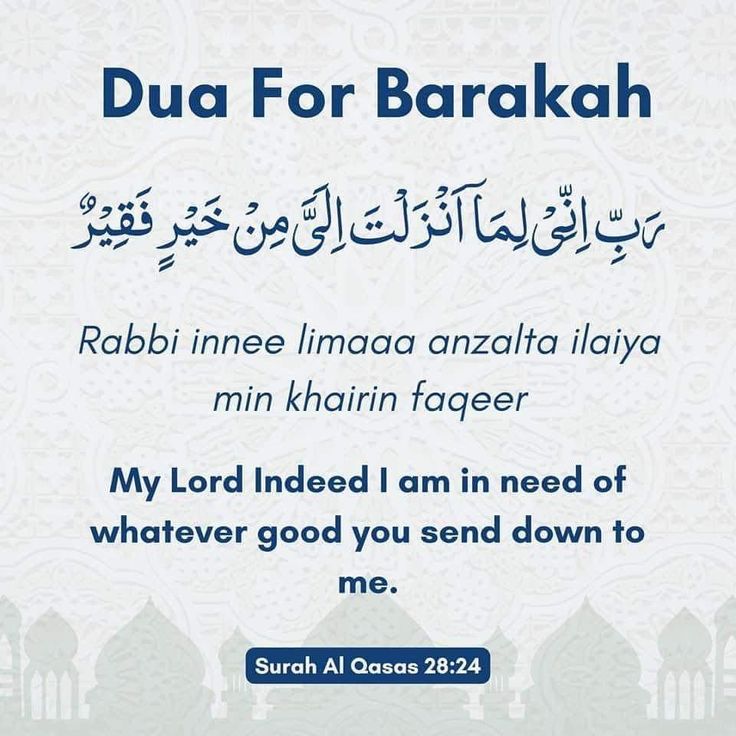
The Prophet Muhammad, peace be upon him, taught numerous supplications specifically for seeking barakah in various aspects of life. One of the most comprehensive and frequently used supplications is the dua recited when entering a new home or space. The believer asks Allah to grant them the best entry and the best exit, seeking His divine assistance and blessings in all their affairs.
For seeking barakah in sustenance and provisions, Muslims recite: “Allahumma barik lana fima razaqtana waqina adhaban-nar,” which means “O Allah, bless us in what You have provided for us and protect us from the punishment of the Fire.” This simple yet powerful supplication acknowledges Allah as the provider and seeks His blessing in making our sustenance beneficial, pure, and sufficient.
When it comes to wealth specifically, the Prophet taught his companions to say: “Allahumma barik li fih,” meaning “O Allah, bless it for me.” This can be said when receiving money, gifts, or any form of provision. The emphasis is not on asking for more but on asking Allah to place barakah in what has already been given.
For barakah in time, one of the most important yet often overlooked blessings, believers can make the general supplication: “Allahumma barik lana fi awqatina,” meaning “O Allah, bless our time for us.” The morning and evening adhkar, the remembrances taught by the Prophet, are also powerful means of securing barakah in one’s day. Beginning the day with Quranic recitation, especially Surah Al-Baqarah, and maintaining regular prayers throughout the day creates a protective shield of barakah around one’s time and activities.
Barakah in Family and Relationships
One of the most precious areas where Muslims seek barakah is in their families and relationships. The Prophet used to make dua for newlyweds, saying: “Barak Allahu laka wa baraka alayka wa jama’a baynakuma fi khayr,” which translates to “May Allah bless you, shower His blessings upon you, and join you together in goodness.” This beautiful supplication seeks divine blessing for the couple’s union, asking Allah to fill their relationship with goodness, understanding, and prosperity.
For children, parents regularly seek barakah through various supplications, asking Allah to make their offspring righteous, healthy, and beneficial to society. The dua “Rabbana hab lana min azwajina wa dhurriyyatina qurrata a’yun,” from Surah Al-Furqan, asks Allah to grant spouses and offspring who will be the coolness of our eyes and to make us leaders of the righteous.
Actions That Attract Barakah
While making dua is essential, Islamic teachings emphasize that certain actions and behaviors naturally attract barakah into one’s life. Waking up early for Fajr prayer is specifically mentioned by the Prophet as bringing barakah to the day. He made a special supplication asking Allah to bless his ummah in their early morning activities.
Honesty in business dealings, giving charity regularly, maintaining family ties, and showing kindness to parents are all actions that invite divine blessings. The Prophet mentioned that giving charity does not decrease wealth; rather, it increases it through barakah. Similarly, maintaining good relations with relatives extends one’s lifespan and increases provisions.
Gratitude is perhaps the most powerful magnet for barakah. Allah explicitly states in the Quran that if people are grateful, He will certainly increase His blessings upon them. Therefore, accompanying every dua for barakah with expressions of gratitude for existing blessings creates a virtuous cycle of divine grace.
The Spiritual Dimension of Barakah
Seeking barakah is not merely a transactional request for worldly increase; it is fundamentally a spiritual practice that deepens one’s relationship with Allah. When a believer consistently turns to Allah for barakah, they acknowledge His complete control over all affairs and their absolute need for His grace. This humility and recognition purify the heart from arrogance and self-reliance.
Moreover, when barakah is present in one’s life, it manifests not just in material sufficiency but in inner peace, contentment, and the ability to use one’s resources in ways that please Allah. A blessed life is one where worship becomes easier, good deeds multiply, and one’s existence becomes a source of benefit for others.
FAQs
What is the most powerful dua for barakah in wealth and sustenance?
The most comprehensive dua for barakah in sustenance is Allahumma barik lana fima razaqtana waqina adhaban-nar (O Allah, bless us in what You have provided for us and protect us from the punishment of the Fire). Additionally, saying Allahumma barik li fih when receiving any provision is highly recommended. The Prophet also taught that seeking halal earnings, giving regular charity, and maintaining family ties are among the greatest means of attracting barakah in wealth.
Can I make dua for barakah in my own words, or must I use specific Arabic supplications?
You can absolutely make dua for barakah in your own words and in any language. While the authentic Arabic supplications from the Prophet carry special merit and are highly recommended, Allah understands all languages and accepts sincere supplications from the heart. You can say something like O Allah, please bless my time, my family, and my work, in your native language, and this is a valid and accepted form of dua.
How can I tell if there is barakah in my life?
Barakah manifests in various ways: your time feels sufficient for your tasks, your income covers your needs with some left for charity, you feel content with what you have, your relationships are harmonious, your worship feels easier and more consistent, and your efforts produce positive results beyond what seems natural. Essentially, barakah is when you have enough even if it appears little, and when your resources—whether time, money, or energy—stretch further than expected.
What are the biggest obstacles that remove barakah from our lives?
According to Islamic teachings, several factors can remove barakah: engaging in haram (forbidden) earnings, lying and dishonesty in dealings, breaking family ties, showing ingratitude for Allah's blessings, neglecting prayers, wasteful spending, and arrogance. Additionally, constantly comparing oneself to others and feeling dissatisfied despite having sufficient provisions can blind a person to the barakah already present in their life.
Is there a specific time when duas for barakah are more likely to be accepted?
While duas for barakah can be made at any time, certain moments are particularly blessed for supplication. These include the last third of the night, between the adhan and iqamah, during prostration in prayer, on Fridays (especially the last hour before Maghrib), while fasting, when it rains, and after reciting Quran. Making dua for barakah during these blessed times, combined with a sincere heart and presence of mind, increases the likelihood of acceptance.
Conclusion
The concept of barakah and the practice of making dua to seek it represent the beautiful Islamic understanding that true success and sufficiency come only from Allah’s blessings. While we live in a world that constantly measures worth through quantity and accumulation, Islam redirects our focus toward quality and divine grace. A life touched by barakah may appear modest by worldly standards, yet it overflows with contentment, purpose, and lasting benefit.
The various duas for barakah taught by the Prophet Muhammad provide Muslims with powerful tools to invite divine blessings into every aspect of existence. However, these supplications are most effective when accompanied by sincere faith, righteous actions, and a heart filled with gratitude. By consistently seeking barakah through dua while striving to live in accordance with Islamic principles, believers can experience the profound transformation that occurs when Allah places His special grace upon their time, wealth, relationships, and endeavors.