

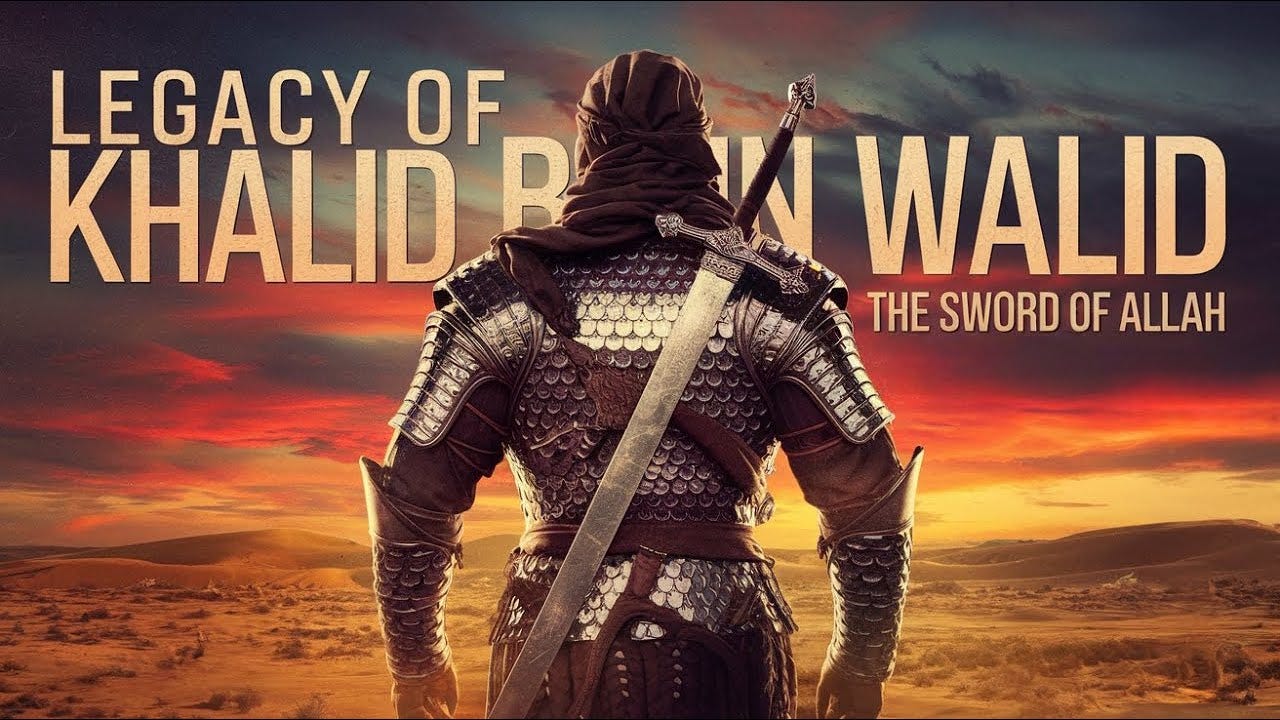
The story of Khalid ibn al-Walid stands as one of the most remarkable tales in Islamic military history. Known as “Saif Allah al-Maslul” or “The Drawn Sword of Allah,” this exceptional commander never lost a single battle throughout his entire military career. Yet despite his legendary status on the battlefield, the circumstances surrounding khalid ibn al walid cause of death remain a subject of profound reflection among historians and students of Islamic history.
The Undefeated Warrior
Khalid ibn al-Walid’s military genius transformed the landscape of early Islamic conquests. Born into the influential Quraysh tribe in Mecca, he initially fought against the Muslims at the Battle of Uhud, where his tactical brilliance nearly destroyed the Muslim army. However, after embracing Islam, he became the Prophet Muhammad’s most trusted military commander, leading Muslim forces to unprecedented victories across Arabia, Iraq, Syria, and beyond.
His strategic innovations included:
- Revolutionary cavalry tactics that overwhelmed larger enemy forces
- Brilliant use of desert terrain and weather conditions
- Psychological warfare techniques that demoralized opponents before battle
- Rapid deployment strategies that caught enemies unprepared
What made Khalid truly exceptional was not just his tactical genius, but his ability to inspire absolute loyalty among his troops. Men would follow him into seemingly impossible situations, confident in his leadership and strategic vision.
The Dismissal That Changed Everything
Despite his unmatched military success, Khalid’s later years took an unexpected turn. During the caliphate of Umar ibn al-Khattab, the great commander was relieved of his military duties. This dismissal wasn’t due to any military failure or misconduct, but rather stemmed from Umar’s concern that people were beginning to attribute victories to Khalid’s genius rather than to divine assistance.
Umar explained his decision by stating that he wanted Muslims to understand that victory comes from Allah alone, not from any individual’s abilities, no matter how exceptional. This moment marked a significant transition in Khalid’s life, as the warrior who had spent decades on battlefields suddenly found himself in a quieter existence.
The dismissal deeply affected Khalid, who had devoted his entire adult life to serving Islam through military leadership. Historical accounts suggest he struggled with this new reality, finding it difficult to reconcile his identity as a warrior with his new civilian life.
Khalid ibn al-Walid Cause of Death: A Peaceful End to a Warrior’s Life
The khalid ibn al walid cause of death stands in stark contrast to his life of constant warfare. Khalid ibn al walid died in 642 CE (21 AH) in the city of Homs (or possibly Medina, according to some accounts) at approximately 58 years of age. Despite having survived countless battles, devastating wounds, and numerous assassination attempts, khalid ibn al walid death came peacefully, likely from natural causes or illness.
This peaceful end troubled Khalid himself. According to historical narrations, on his deathbed, he reflected on his life with these poignant words: “I have fought in so many battles, and there is no spot on my body that does not have a scar from a sword, spear, or arrow. Yet here I am, dying in my bed like a camel dies. May the eyes of cowards never sleep.”
These words reveal the inner conflict of a man who had defined himself through battlefield courage and military glory, only to pass away in the quiet comfort of his home. For a warrior who had courageously faced death countless times, dying peacefully felt like an anticlimax to his extraordinary life.
The Legacy Beyond Death

The khalid ibn al walid death marked the end of an era, but his legacy continued to inspire generations of Muslim military leaders. His burial place in Homs, Syria, became a site of reverence, with a mosque and shrine built to honor his memory. For centuries, military strategists studied his tactics, and his name became synonymous with courage, strategic brilliance, and unwavering faith.
What makes khalid ibn al walid death particularly significant is the lesson it teaches about divine wisdom. The man who conquered armies and cities could not conquer his own mortality. His peaceful passing served as a reminder that:
- Ultimate power belongs to Allah alone
- Even the greatest warriors must submit to their appointed time
- True victory lies in faith and submission to divine will
- Worldly achievements, while important, are temporary
Understanding the Historical Context
When khalid ibn al walid died, the Islamic empire was rapidly expanding under Caliph Umar’s leadership. The armies Khalid had trained and the strategies he had pioneered continued to bring victories across Persia and Byzantine territories. His death didn’t halt the Islamic conquests; rather, it demonstrated that the movement was built on faith and collective effort, not on any single individual’s capabilities.
The timing of khalid ibn al walid death also came during a period when the first generation of Muslims was gradually passing away. Many companions of the Prophet Muhammad had already died, and the community was transitioning to new leadership under the second generation of Muslims.
The Spiritual Dimension
Beyond his military achievements, the khalid ibn al walid cause of death offers profound spiritual insights. His final words reveal a man grappling with his identity and purpose beyond warfare. This struggle resonates with anyone who has had to redefine themselves after a major life change.
Khalid’s story teaches that:
- True courage includes accepting Allah’s decree, even when it contradicts our expectations
- Our value isn’t defined solely by our professional achievements
- Peaceful endings can be just as meaningful as dramatic ones
- Submission to divine will is the ultimate form of strength
Islamic scholars have long reflected on the wisdom behind khalid ibn al walid death occurring peacefully rather than in battle. Some suggest it was Allah’s mercy, granting him rest after decades of warfare. Others see it as a test of his faith, requiring him to accept a destiny different from what he might have chosen for himself.
Remembering the Drawn Sword
Today, when we discuss khalid ibn al walid died, we remember not just a military commander but a complex human being who embodied both strength and vulnerability. His life demonstrated extraordinary courage and tactical genius, while his death revealed humility and submission to divine will.
The mosque in Homs that houses his tomb remains a testament to his enduring legacy. Visitors from around the world come to pay their respects to the commander who never lost a battle but ultimately surrendered to the one battle no human can win—the battle against mortality.
Conclusion
Khalid ibn al-Walid, Islam’s greatest military commander who never lost a battle, died peacefully around 642 CE in Homs or Medina. The khalid ibn al walid cause of death was natural—likely illness or old age—which deeply troubled the warrior who had survived countless battlefield wounds. His peaceful passing, rather than a warrior’s death in combat, taught profound lessons about divine wisdom, the temporary nature of worldly achievements, and the importance of submission to Allah’s will. Despite his dismissal from military command years before his death, Khalid’s legacy as “The Drawn Sword of Allah” continues to inspire Muslims worldwide, and his tomb in Homs remains a site of reverence.
FAQs
How did Khalid ibn al-Walid die?
Khalid ibn al-Walid died peacefully of natural causes, likely illness or old age, around 642 CE at approximately 58 years old.
Where did Khalid ibn al-Walid die?
Historical accounts suggest he died in Homs, Syria, though some sources mention Medina as the location of his death.
Why was Khalid ibn al-Walid troubled by his peaceful death?
He felt that dying in bed contradicted his warrior identity, having survived countless battles undefeated, and expressed that dying peacefully seemed unworthy of his life of courage.
Did Khalid ibn al-Walid die in battle?
No, despite fighting in numerous battles and receiving many wounds, he died peacefully, which was the very thing that troubled him in his final moments.
What was Khalid ibn al-Walid's last wish?
According to Arabian Tongue historical records, his final reflections expressed regret about dying peacefully rather than as a martyr in battle, though he ultimately submitted to Allah's decree.