

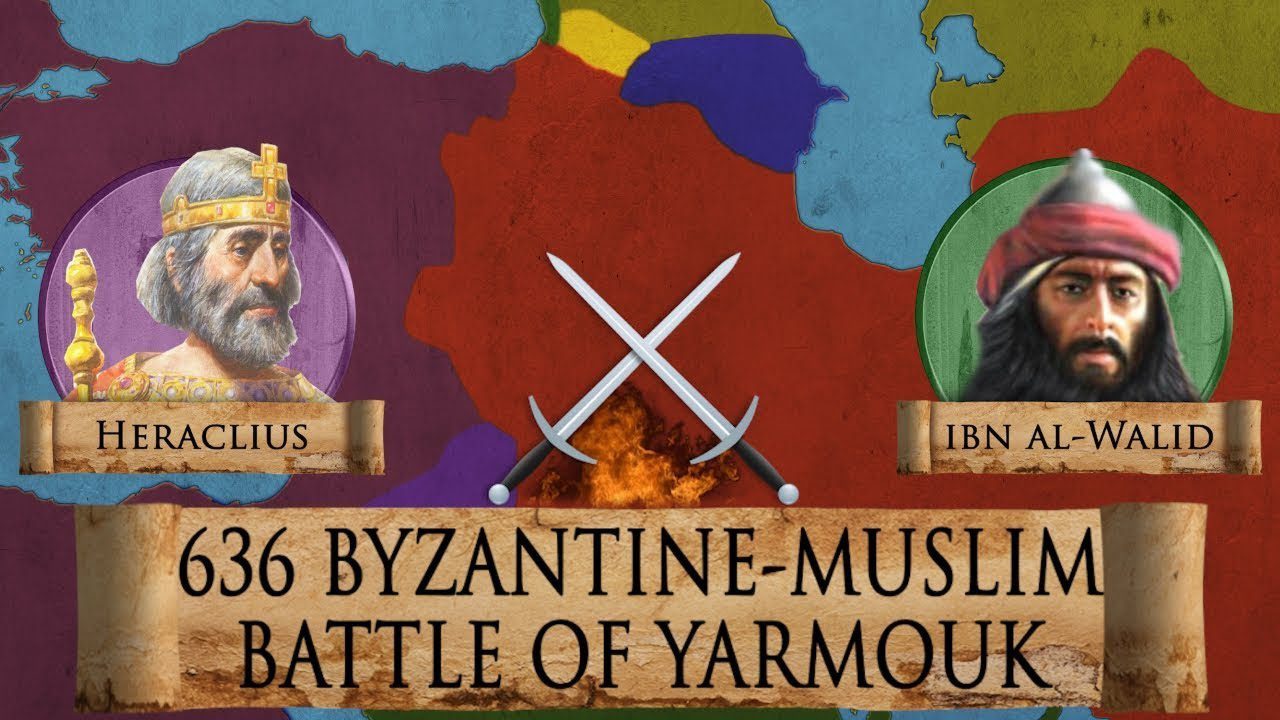
The Battle of Yarmouk was one of the most decisive military engagements in early Islamic history. Fought in 636 CE between the Rashidun Caliphate army and the Byzantine Empire, it marked a turning point that led to Muslim dominance over the Levant. The battle is remembered for the strategic brilliance of Khalid ibn al-Walid, the size and composition of the armies, and the extraordinary courage of the Muslim soldiers. Understanding the Battle of Yarmouk, including how many soldiers fought, who commanded the armies, and the outcome, provides deep insights into early Islamic military history and leadership.
What Was the Battle of Yarmouk?
The Battle of Yarmouk was a major confrontation between the forces of the Rashidun Caliphate and the Byzantine Empire near the Yarmouk River in modern-day Syria. It took place over several days in August 636 CE and is often considered one of the most decisive battles in world history because it paved the way for Islamic expansion into the Levant and beyond.
The battle is famous not only for its strategic significance but also for demonstrating the remarkable discipline, leadership, and faith of the early Muslim army.
Background: Why Did the Battle Happen?
After the death of Prophet Muhammad (peace be upon him) in 632 CE, the Rashidun Caliphate expanded rapidly. By 636 CE, Muslim forces had already conquered parts of the Arabian Peninsula and were moving north into Byzantine-held territories.
The Byzantine Empire, threatened by this expansion, assembled a massive army to halt the Muslim advance and secure their border regions. The Battle of Yarmouk became the inevitable confrontation between the two powers.
Armies and Leadership
Battle of Yarmouk Commander
The Muslim forces were commanded by Khalid ibn al-Walid, one of the greatest military strategists in history. His leadership, tactical ingenuity, and ability to inspire his soldiers were crucial to the outcome of the battle.
The Byzantine army was led by Vahan, a capable commander with a force that relied heavily on cavalry and traditional Byzantine tactics.
Battle of Yarmouk Army Size
Historical estimates suggest the following:
- Muslim army size: Approximately 25,000 soldiers
- Byzantine army size: Between 80,000 and 150,000 soldiers
Despite being heavily outnumbered, the Rashidun army’s discipline, mobility, and clever use of terrain allowed them to overcome the larger Byzantine force.
Battle Tactics and Strategy
Khalid ibn al-Walid’s strategy was a combination of defensive and offensive maneuvers:
- Formation and Positioning: The Muslim army used the Yarmouk River and nearby terrain to form strong defensive lines, protecting their flanks and creating bottlenecks.
- Cavalry Charges: Mobile cavalry units were used to harass and disrupt Byzantine formations, exploiting gaps and weaknesses in the enemy line.
- Feigned Retreats: Khalid implemented deceptive maneuvers to lure parts of the Byzantine army into traps.
- Morale and Discipline: Soldiers were motivated by faith and loyalty, which sustained them during intense engagements.
How Many Soldiers Fought in the Battle of Yarmouk?
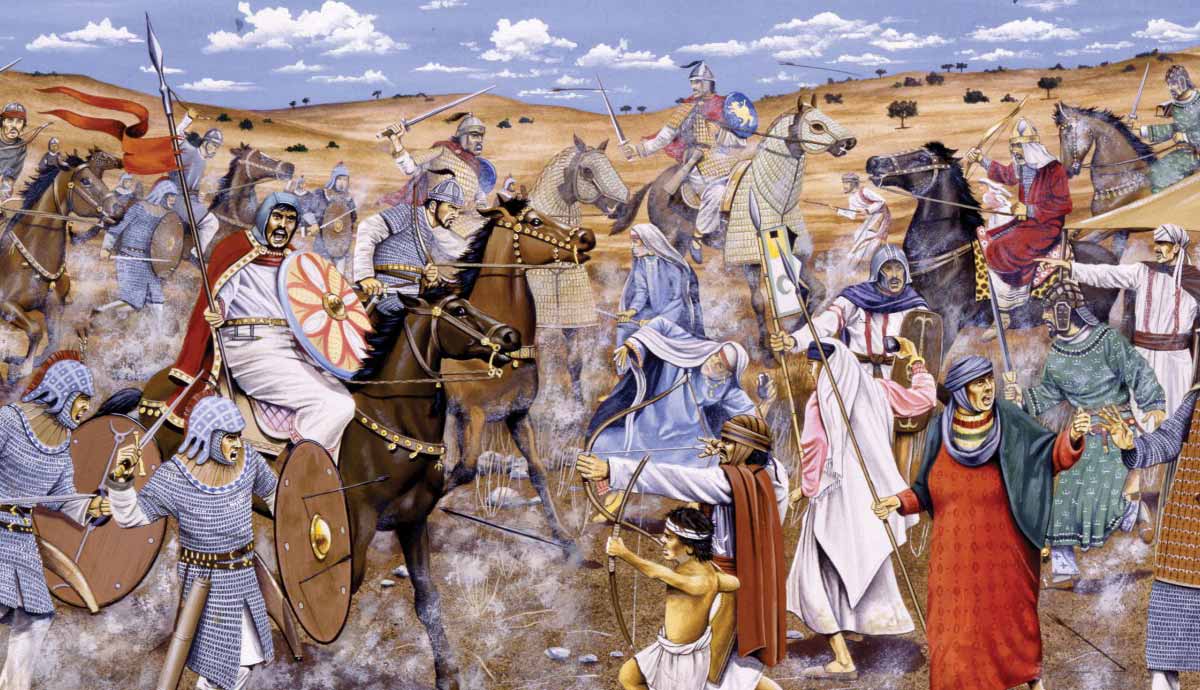
The Rashidun army consisted of approximately 25,000 men, including infantry and cavalry. The Byzantine army, considerably larger, was reported to have between 80,000 to 150,000 soldiers, drawn from various regions of the empire.
The numerical disadvantage of the Muslim army was offset by Khalid ibn al-Walid’s tactical brilliance, high morale, and cohesive fighting units.
Course of the Battle
The battle lasted six days, with fighting raging from dawn until sunset. Key phases included:
- Initial Skirmishes: Both sides tested each other’s strength, with minor engagements highlighting weaknesses.
- Main Engagements: The Muslim army held strong defensive positions, repelling Byzantine charges while inflicting significant casualties.
- Breakthroughs: Khalid’s cavalry executed flanking attacks that disrupted Byzantine cohesion.
- Decisive Victory: By the sixth day, Byzantine forces were exhausted, disorganized, and ultimately routed, leading to a decisive Muslim victory.
Outcome and Significance
The Battle of Yarmouk had far-reaching consequences:
- Muslim Victory: The Rashidun army defeated a much larger Byzantine force.
- Expansion into the Levant: The victory allowed the Muslims to consolidate control over Syria, Palestine, and parts of modern-day Jordan.
- Strategic Lessons: Khalid ibn al-Walid’s use of terrain, mobility, and flexible tactics became a model for future military campaigns.
- Boost to Morale: The victory demonstrated that faith, discipline, and leadership could overcome overwhelming odds.
Key Factors Behind the Muslim Victory
Several factors contributed to the success of the Rashidun forces:
- Leadership of Khalid ibn al-Walid: His decisions in formation, timing, and troop movement were critical.
- High Morale and Motivation: Soldiers were motivated by faith and the sense of defending their community.
- Effective Use of Terrain: Rivers, hills, and natural barriers were used to neutralize the Byzantine numerical advantage.
- Flexible Tactics: Rapid cavalry maneuvers and feigned retreats destabilized the Byzantine formations.
Legacy of the Battle of Yarmouk
The Battle of Yarmouk is remembered as a turning point in early Islamic history. Its legacy includes:
- Military Excellence: Khalid ibn al-Walid’s leadership is studied in military academies for its tactical brilliance.
- Islamic Expansion: The victory opened the door for Muslim rule over the Levant.
- Faith and Determination: The battle exemplifies how smaller forces can triumph against larger armies through strategy, unity, and belief.
FAQs
Who fought in the Battle of Yarmouk?
The battle was fought between the Rashidun Caliphate army led by Khalid ibn al-Walid and the Byzantine Empire led by Vahan.
How many soldiers fought in the Battle of Yarmouk?
The Muslim army numbered around 25,000, while the Byzantine forces ranged from 80,000 to 150,000 soldiers.
Who was the commander of the Battle of Yarmouk?
The Muslim army was commanded by Khalid ibn al-Walid, whose leadership and tactics were key to the victory.
Why was the Battle of Yarmouk important?
It was a decisive victory that allowed the Muslims to control the Levant, demonstrated military ingenuity, and showed that faith and strategy could overcome numerical disadvantages.