

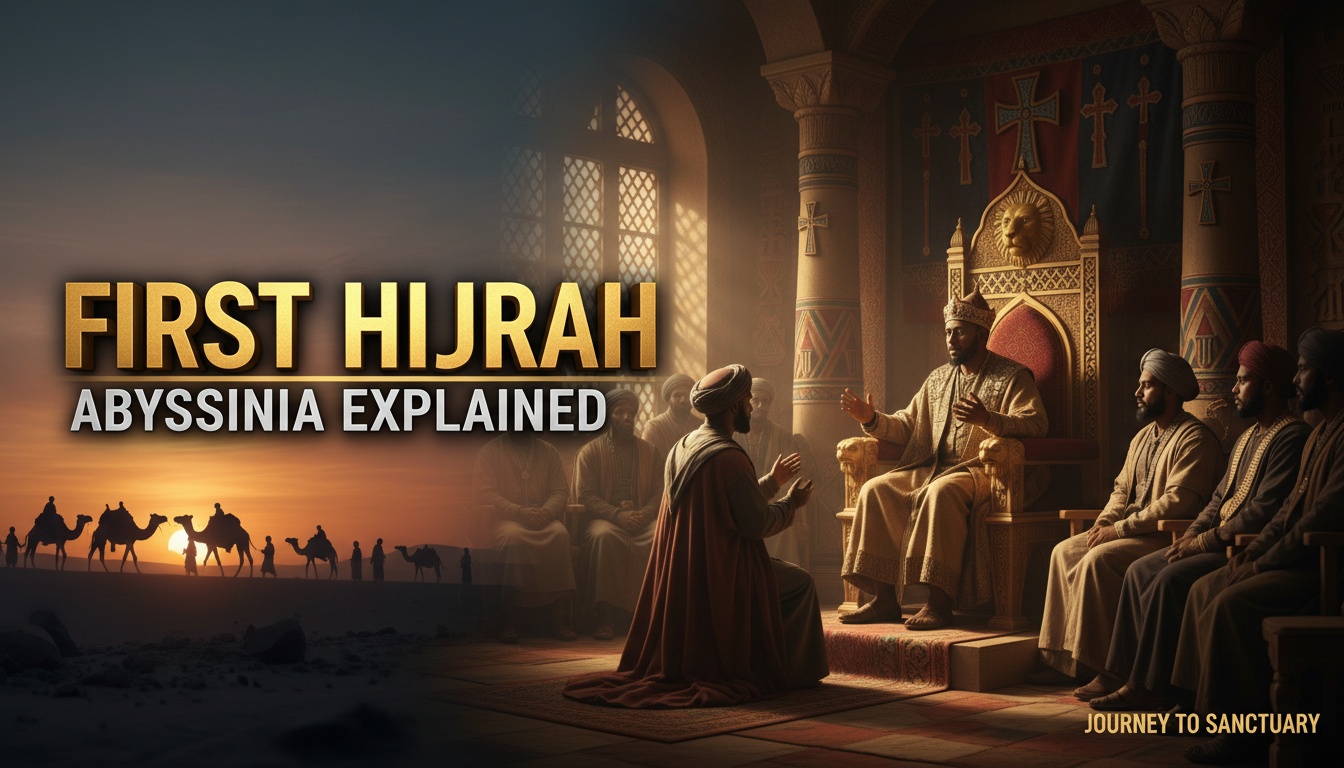
The first Muslim migration to Abyssinia stands as one of the most pivotal moments in early Islamic history, representing the first time Muslims sought refuge outside of Makkah to escape persecution. This remarkable journey demonstrated the universal message of Islam and established a precedent for seeking justice and protection across borders when religious freedom is threatened. Understanding the migration to Abyssinia in Islam provides crucial insights into the challenges faced by early Muslims and the compassion shown by a Christian king who recognized truth and justice.
When Was the First Migration to Abyssinia?
This question leads us to the year 615 CE, during the fifth year of Prophet Muhammad’s (peace be upon him) mission. The 1st migration to Abyssinia occurred when persecution of Muslims in Makkah had reached intolerable levels.
The Quraysh tribe, threatened by Islam’s message of monotheism and social justice, intensified their torture and harassment of Muslim converts, particularly those without tribal protection.
The first Muslim migration to Abyssinia was not a mass exodus but a carefully planned journey of a small, vulnerable group. Prophet Muhammad (peace be upon him) advised his followers to seek refuge in the land of Abyssinia (modern-day Ethiopia), describing it as “a land where no one is wronged, a land of sincerity in religion.” This description would prove remarkably accurate and highlighted the Prophet’s wisdom in choosing this destination for the migration to Abyssinia.
The Reasons Behind the Migration to Abyssinia in Islam
The migration to Abyssinia in Islam was necessitated by escalating persecution in Makkah. The Quraysh leadership employed various brutal tactics to force Muslims to renounce their faith. Weak and enslaved Muslims faced particularly severe torture—they were beaten, starved, and left in the scorching desert sun. The first Muslim migration to Abyssinia became necessary when it became clear that these persecutions would only intensify.
Several factors made the 1st migration to Abyssinia the logical choice for seeking refuge. First, Abyssinia was ruled by the Negus (An-Najashi in Arabic), a just Christian king known for his fairness and wisdom. Second, Abyssinia was close enough to reach by sea but far enough to be outside Quraysh control. Third, the Christian kingdom shared the Abrahamic tradition’s values of justice and monotheism, suggesting potential sympathy for Muslims’ plight.
The migration to Abyssinia in Islam also served a strategic purpose. By establishing a Muslim presence outside Makkah, the community could survive even if persecution in Arabia intensified further. This foresight would prove crucial for Islam’s survival during its most vulnerable early years.
The First Muslim Migration to Abyssinia: Who Made the Journey?
The first Muslim migration to Abyssinia involved a carefully selected group of Muslims. The initial party consisted of eleven men and four women, including some of the most prominent early Muslims. Uthman ibn Affan, who would later become the third Caliph, and his wife Ruqayyah, the Prophet’s daughter, were among those who undertook this migration to Abyssinia.
Other notable companions in the 1st migration to Abyssinia included Abdur-Rahman ibn Awf, Az-Zubayr ibn al-Awwam, and Abu Salamah. These individuals were chosen for their strength of faith, ability to represent Islam properly, and vulnerability to Quraysh persecution. The first Muslim migration to Abyssinia was led by Uthman ibn Affan, reflecting the trust placed in his leadership and judgment.
The migration to Abyssinia in Islam was conducted discreetly to avoid alerting the Quraysh, who would certainly have tried to prevent Muslims from escaping. The group departed secretly, traveling to the Red Sea coast and boarding ships to cross to Abyssinia. This clandestine departure highlighted the real danger Muslims faced in attempting to leave Makkah.
Life in Abyssinia: The Refuge Experience
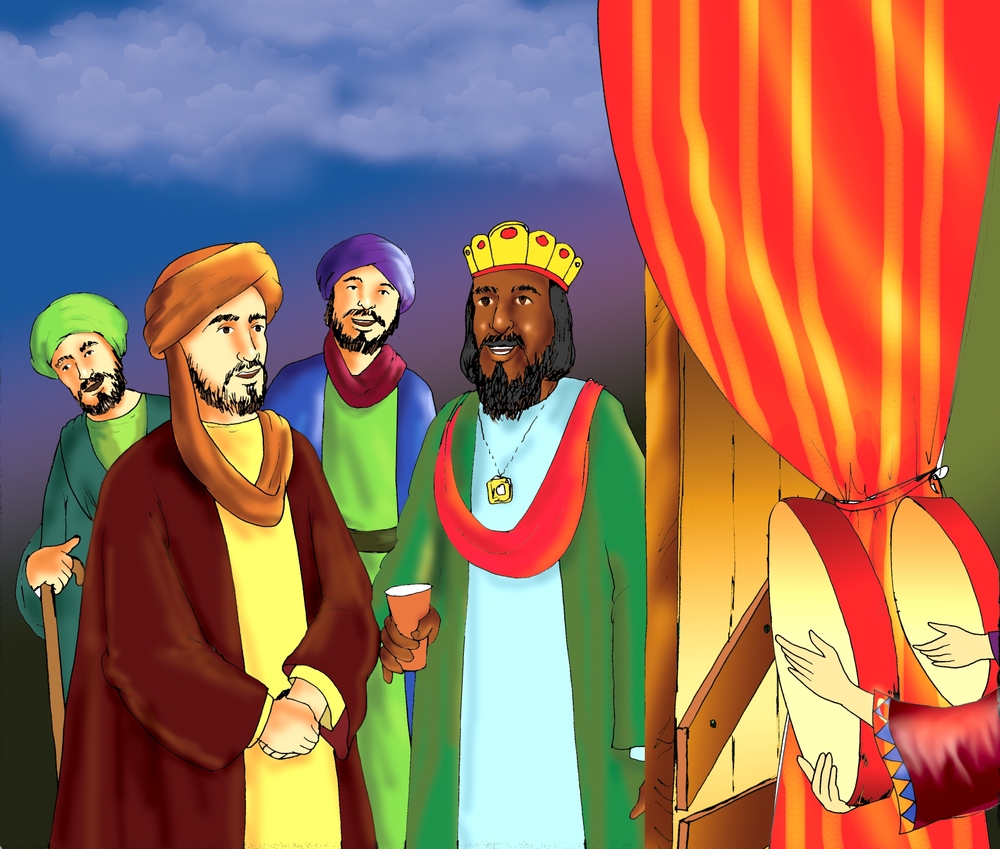
Upon arrival in Abyssinia, the Muslims who made the first Muslim migration to Abyssinia found the welcome and protection they desperately needed. The Negus allowed them to practice their religion freely, a stark contrast to the persecution they had fled in Makkah. The migration to Abyssinia in Islam thus became the first example of Muslims finding religious freedom in a non-Muslim land.
The Muslim refugees lived peacefully in Abyssinia, supporting themselves through trade and other work. They established a small but vibrant community, maintaining their Islamic practices while respecting the Christian society that hosted them. This harmonious coexistence during the 1st migration to Abyssinia demonstrated Islam’s compatibility with living peacefully among people of other faiths.
However, the Quraysh did not accept this escape easily. Determined to retrieve the Muslims, they sent a delegation to Abyssinia led by Amr ibn al-As (who later converted to Islam) and Abdullah ibn Abi Rabi’ah. These envoys brought valuable gifts for the Negus and his court, attempting to persuade him to return the Muslim refugees.
The Historic Audience with the Negus
The confrontation at the Negus’s court represents one of the most dramatic moments related to the first Muslim migration to Abyssinia. The Quraysh delegation argued that the Muslim refugees were troublemakers who had abandoned their ancestral religion and should be returned to Makkah for punishment. They framed the migration to Abyssinia in Islam as an escape by criminals rather than religious refugees.
The Negus, demonstrating his justice, refused to make a decision without hearing from the Muslims themselves. He summoned Ja’far ibn Abi Talib, cousin of the Prophet and spokesperson for the Muslim refugees, to present their case. This moment would prove decisive for the 1st migration to Abyssinia and its success.
Ja’far’s address to the Negus eloquently explained Islam’s message and the reasons for the migration to Abyssinia. He described how the Muslims had been living in ignorance and immorality before Islam, and how the Prophet had called them to worship one God, speak truthfully, honor agreements, and care for relatives and neighbors. He explained that they had been persecuted for these beliefs, which is why the first Muslim migration to Abyssinia became necessary.
When asked to recite something from the Quran, Ja’far recited verses from Surah Maryam (Chapter of Mary), which tells the story of Jesus and Mary with profound reverence. The Negus and his bishops wept upon hearing these words, recognizing their alignment with Christian teachings. The Negus declared: “This and what Jesus brought come from the same source,” and refused to hand over the Muslims.
The Quraysh’s Second Attempt
The Quraysh delegation made a second attempt the next day, claiming that Muslims had insulted Jesus by denying his divinity. Again, the Negus summoned Ja’far, who explained Islam’s position: that Jesus was a noble prophet and messenger of God, born miraculously to the Virgin Mary, but not divine himself. The Negus drew a line on the ground and said the difference between Christian and Islamic beliefs about Jesus was no thicker than that line. He again refused to betray the Muslim refugees.
This decisive moment secured the protection of those who made the first Muslim migration to Abyssinia. The Negus returned the Quraysh gifts and sent them away empty-handed. The migration to Abyssinia in Islam thus succeeded in its primary objective—securing a safe haven for persecuted Muslims.
The Second Migration to Abyssinia
The success of the 1st migration to Abyssinia led to a second, larger migration. When news reached Makkah that Muslims in Abyssinia were safe and protected, more Muslims decided to make the journey. This second migration to Abyssinia in Islam included over eighty men and their families, significantly expanding the Muslim community in Abyssinia.
The second migration to Abyssinia occurred shortly after the first, demonstrating how desperate the situation in Makkah had become. The first Muslim migration to Abyssinia had proven that escape was possible and that refuge existed for those willing to make the journey. This encouraged more vulnerable Muslims to seek safety across the Red Sea.
Both migrations remained in Abyssinia for several years, with some Muslims staying until after the Hijrah (migration) to Madinah in 622 CE. The migration to Abyssinia in Islam thus represented a sustained period of Muslim community life in a non-Muslim land, establishing important precedents for Muslim minorities living abroad.
The Legacy of the First Muslim Migration to Abyssinia
The first Muslim migration to Abyssinia left an enduring legacy in Islamic history. It demonstrated that Muslims could and should seek refuge from persecution, establishing the concept of hijrah (migration for faith) as a recognized response to religious oppression. The migration to Abyssinia in Islam proved that protecting one’s faith sometimes requires difficult sacrifices, including leaving one’s homeland.
The relationship between Muslims and the Negus established during the 1st migration to Abyssinia created lasting bonds of respect between Islam and Ethiopia. When the Negus died, Prophet Muhammad (peace be upon him) offered the funeral prayer for him in absentia, honoring the king who had protected Muslims during their most vulnerable period.
The first Muslim migration to Abyssinia also demonstrated Islam’s universal appeal and its respect for other Abrahamic faiths. The harmonious coexistence of Muslims in a Christian land, and the Negus’s recognition of Islam’s essential message, showed that people of different faiths could recognize shared values and truths.
Conclusion
The first Muslim migration to Abyssinia, occurring in 615 CE, represents a crucial chapter in early Islamic history when persecuted Muslims sought refuge in the Christian kingdom of Abyssinia. Understanding when was the first migration to Abyssinia and why it occurred reveals the severe challenges early Muslims faced in Makkah and their determination to preserve their faith.
The migration to Abyssinia in Islam involved two waves of refugees—the first small group of fifteen people and a later larger group of over eighty. The 1st migration to Abyssinia succeeded due to the justice and wisdom of the Negus, who recognized the truth in Islam’s message and refused to return the refugees to their persecutors despite pressure from the Quraysh delegation.
The migration to Abyssinia established important precedents about seeking refuge, living as religious minorities, and the possibility of mutual respect between different faiths. The first Muslim migration to Abyssinia demonstrated Islam’s universal message and the courage of early Muslims who sacrificed homeland and comfort to preserve their faith.
FAQs
When was the first migration to Abyssinia and why did it occur?
Who participated in the 1st migration to Abyssinia?
The 1st migration to Abyssinia involved eleven men and four women, including Uthman ibn Affan and his wife Ruqayyah (the Prophet's daughter), Abdur-Rahman ibn Awf, and Az-Zubayr ibn al-Awwam. A second larger migration followed with over eighty men and their families.
How did the Negus protect Muslims during the migration to Abyssinia in Islam?
When the Quraysh sent a delegation demanding the Muslims' return, the Negus refused to decide without hearing both sides. After hearing Ja'far ibn Abi Talib explain Islam and recite Quran verses about Mary and Jesus, the Negus wept, recognized the common source of revelations, and granted the refugees protection.
What was the significance of Ja'far ibn Abi Talib's speech during the first Muslim migration to Abyssinia?
Ja'far's speech eloquently explained Islam's core message and recited verses from Surah Maryam about Mary and Jesus, which moved the Negus to tears. This demonstrated Islam's respect for previous prophets and convinced the Negus to protect the Muslim refugees despite Quraysh pressure.
What lasting impact did the migration to Abyssinia have on Islamic history?
The migration to Abyssinia in Islam established the concept of hijrah (migration for faith) as a legitimate response to persecution. It showed Muslims could live peacefully as minorities while maintaining their faith, created lasting respect between Islam and Ethiopia, and proved Islam's universal appeal and compatibility with other Abrahamic faiths.