

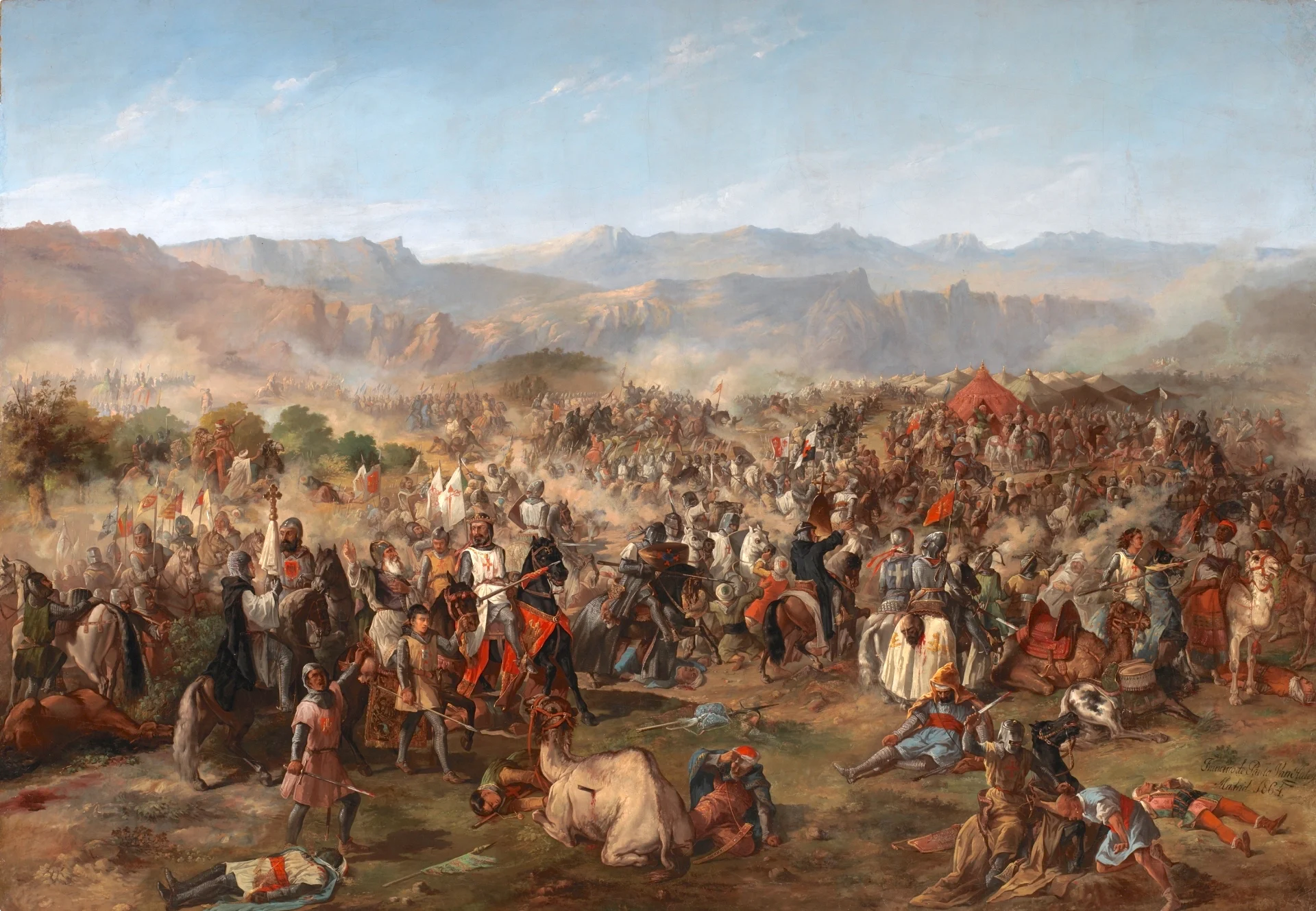
The Muslim conquest of Andalusia stands as one of the most transformative events in European history, forever changing the cultural, scientific, and political landscape of the Iberian Peninsula. This remarkable military campaign in 711 CE brought Islamic civilization to Europe, initiating nearly 800 years of Muslim presence that would create one of history’s most advanced and tolerant societies.
Understanding the Muslim Conquest of Andalusia
The Muslim conquest of Andalusia refers to the rapid military campaign that brought the Iberian Peninsula under Islamic rule in the early 8th century. Within just seven years, Muslim forces had conquered most of what is now Spain and Portugal, establishing Al-Andalus—a civilization that would become renowned for its scholarship, architecture, religious tolerance, and scientific advancement.
The conquest of Andalusia began in 711 CE when Tariq ibn Ziyad, a Berber commander serving under the Umayyad governor of North Africa, crossed the strait separating Africa from Europe. What started as a reconnaissance mission quickly evolved into a full-scale conquest that would reshape European history. The Muslim conquest of Andalusia was facilitated by the weakness of the Visigothic Kingdom, internal political divisions, and the Muslim army’s superior tactics and motivation.
The Visigothic Kingdom Before the Conquest
Before the Muslim conquest of Andalusia, the Iberian Peninsula was ruled by the Visigothic Kingdom, which had controlled the region since the fall of the Roman Empire. However, by the early 8th century, the Visigothic Kingdom faced severe internal problems that made the conquest of Andalusia relatively swift:
- Political instability with succession disputes weakening central authority
- Religious persecution of Jews who faced forced conversions and discrimination
- Economic decline with heavy taxation burdening the peasant population
- Social divisions between the Visigothic nobility and the Hispano-Roman population
- Military weakness with the army poorly organized and demoralized
- Internal conflicts including a civil war over the throne
These conditions created an environment where many inhabitants actually welcomed the muslim conquest of andalusia as liberation from Visigothic oppression. The conquest of Al-Andalus would prove easier than the Muslim forces initially anticipated, partly because local populations often chose not to resist or even assisted the invaders.
Tariq ibn Ziyad’s Crossing
The Muslim conquest of Andalusia officially began when Tariq ibn Ziyad crossed the strait in April 711 CE with approximately 7,000 troops, mostly Berber warriors. According to tradition, upon landing, Tariq burned his ships and delivered a famous speech motivating his troops: “The enemy is before you and the sea is behind you.” This act of burning the ships demonstrated commitment to victory or death, leaving no option for retreat.
The initial phase of the conquest of Andalusia saw Tariq’s forces quickly securing the landing area. When the Visigothic King Roderic heard of the invasion, he marched south with a much larger army to confront the Muslim forces. The two armies met at the Battle of Guadalete in July 711, a decisive engagement that would determine the fate of the conquest of Al-Andalus.
The Battle of Guadalete
The Battle of Guadalete proved to be the turning point in the Muslim conquest of Andalusia:
- Visigothic forces numbered between 25,000-40,000 soldiers
- Muslim army was significantly smaller with around 7,000-12,000 troops (reinforcements had arrived)
- Strategic betrayal by Visigothic nobles opposed to King Roderic
- Superior tactics employed by Tariq’s experienced commanders
- Roderic’s death during the battle, either killed or drowned fleeing
- Complete victory for Muslim forces, opening the path to the conquest of Andalusia
The victory at Guadalete was so decisive that organized Visigothic resistance effectively collapsed. With the king dead and the main army destroyed, the conquest of Andalusia accelerated rapidly. Cities opened their gates through negotiation rather than facing siege, and within months, Tariq’s forces had captured Toledo, the Visigothic capital.
Expansion Under Musa ibn Nusayr
Following Tariq’s initial success in the Muslim conquest of Andalusia, Musa ibn Nusayr, the governor of North Africa and Tariq’s superior, crossed to Iberia in 712 CE with an additional 18,000 troops. Some sources suggest Musa was jealous of Tariq’s achievements and wanted to claim credit for the conquest of Al-Andalus himself.
Together, Tariq and Musa completed the Muslim conquest of Andalusia over the next few years:
- 712 CE: Conquest of Seville, Mérida, and other major western cities
- 713 CE: Capture of important northern cities and fortresses
- 714 CE: Most of the Iberian Peninsula under Muslim control
- 714-718 CE: Consolidation of conquests and establishment of administration
- 719 CE: Muslim forces crossed the Pyrenees into Frankish territory
By 718, the conquest of Andalusia was essentially complete, with only small Christian kingdoms surviving in the mountainous northern regions. The speed of the Muslim conquest of Andalusia—most of the peninsula conquered in just seven years—remains one of history’s most rapid military expansions.
Why the Conquest of Al-Andalus Succeeded
The Muslim conquest of Andalusia succeeded for multiple interconnected reasons:
Military Factors:
- Superior cavalry tactics and mobility
- Experienced commanders who had fought in previous conquests
- High morale and religious motivation
- Effective use of intelligence and reconnaissance
Political Factors:
- Visigothic civil war and succession disputes
- Betrayal by Visigothic nobles seeking advantage
- Collapse of central authority after Roderic’s death
- Lack of unified resistance
Social Factors:
- Jewish population welcomed Muslims as liberators from persecution
- Peasants preferred lighter Muslim taxation
- Many cities negotiated peaceful surrender with favorable terms
- Promise of religious tolerance attracted support
The conquest of Andalusia was not purely military but involved significant negotiation and accommodation. Many cities surrendered peacefully in exchange for guarantees protecting lives, property, and religious freedom—promises that were generally honored.
Treatment of Conquered Populations
One distinctive feature of the Muslim conquest of Andalusia was the relatively tolerant treatment of conquered populations:
- Religious freedom granted to Christians and Jews as “People of the Book”
- Property rights protected for those who surrendered peacefully
- Lower taxation compared to Visigothic rule
- Local administration often left in place with Muslim oversight
- Cultural practices allowed to continue
- Language rights with Arabic, Latin, and local languages coexisting
This tolerance during the conquest of Al-Andalus contributed to stability and helped Muslim rulers govern a predominantly Christian and Jewish population. The concept of “dhimmi” status allowed non-Muslims to practice their religions in exchange for paying a special tax (jizya), which was often lower than previous Visigothic taxes.
The Muslim conquest of Andalusia established a precedent of religious coexistence that would characterize Al-Andalus for centuries. This “convivencia” (coexistence) became one of the defining features of Andalusian civilization, fostering cultural exchange and scholarly collaboration between Muslims, Christians, and Jews.
Establishment of Al-Andalus
Following the military phase of the Muslim conquest of Andalusia, the victors established Al-Andalus as a province of the Umayyad Caliphate based in Damascus. The conquest of Andalusia transformed from military campaign to administrative organization:
- Córdoba established as the capital in 716 CE
- Arabic introduced as the administrative language
- Islamic law implemented alongside existing local laws
- Garrison cities established to maintain military presence
- Agricultural reforms including new irrigation techniques
- Trade networks connecting Al-Andalus to the broader Islamic world
The Muslim conquest of Andalusia brought not just political change but cultural transformation. New agricultural techniques introduced crops like citrus fruits, rice, and sugar cane. Architectural styles blended Islamic and local elements, creating the distinctive Moorish architecture. Scientific knowledge from the Islamic world flowed into Europe through Al-Andalus.
The Golden Age That Followed
The Muslim conquest of Andalusia laid the foundation for what would become one of medieval Europe’s most advanced civilizations:
- Córdoba grew into Europe’s largest and most sophisticated city
- Universities and libraries made Al-Andalus a center of learning
- Scientific advancement in mathematics, astronomy, medicine, and philosophy
- Architectural marvels including the Great Mosque of Córdoba
- Literary flowering with poetry and scholarship in Arabic, Hebrew, and Romance languages
- Religious tolerance creating a multicultural society unprecedented in medieval Europe
The conquest of Al-Andalus, rather than simply replacing one ruling group with another, created conditions for remarkable cultural synthesis. Muslim, Christian, and Jewish scholars worked together, translating ancient Greek texts, advancing scientific knowledge, and creating new philosophical and literary works.
Long-term Impact on Europe
The Muslim conquest of Andalusia had profound long-term effects on European civilization:
- Knowledge transfer bringing Greek philosophy and science to Europe
- Mathematical concepts including Arabic numerals and algebra
- Agricultural innovation transforming European farming
- Architectural influence visible in Spanish and Portuguese styles
- Musical traditions contributing to European musical development
- Linguistic impact with thousands of Arabic words entering Spanish and Portuguese
The conquest of Andalusia opened a channel through which Islamic civilization influenced European development during the Middle Ages. While much of Europe struggled through the “Dark Ages,” Al-Andalus preserved and advanced knowledge that would later fuel the European Renaissance.
Conclusion
The Muslim conquest of Andalusia in 711 CE fundamentally altered the course of European history. What began as a military campaign quickly evolved into the establishment of Al-Andalus, a sophisticated civilization that would endure for nearly 800 years. The conquest of Al-Andalus succeeded due to Visigothic weakness, superior Muslim military tactics, and the promise of better governance.
FAQs
When did the Muslim conquest of Andalusia occur?
The Muslim conquest of Andalusia began in 711 CE when Tariq ibn Ziyad crossed from North Africa with 7,000 troops. The decisive Battle of Guadalete occurred in July 711, and by 718 CE, Muslims controlled most of the Iberian Peninsula, establishing Al-Andalus.
Why was the conquest of Al-Andalus so successful?
The conquest of Al-Andalus succeeded due to Visigothic political instability, internal betrayals, superior Muslim military tactics, and local populations welcoming Muslims as liberators. The promise of religious tolerance and lower taxation encouraged many cities to surrender peacefully rather than resist.
How did Muslims treat conquered populations during the conquest of Andalusia?
During the Muslim conquest of Andalusia, Muslims generally treated conquered populations with tolerance, granting Christians and Jews religious freedom, protecting property rights, and often maintaining lower taxes than the previous Visigothic regime. This tolerance contributed to stability and peaceful coexistence.
What was the long-term impact of the Muslim conquest of Andalusia?
The Muslim conquest of Andalusia established Al-Andalus, which became medieval Europe's most advanced civilization. It brought scientific knowledge, architectural innovations, agricultural techniques, and philosophical texts to Europe, significantly influencing the later European Renaissance and preserving classical Greek knowledge.