

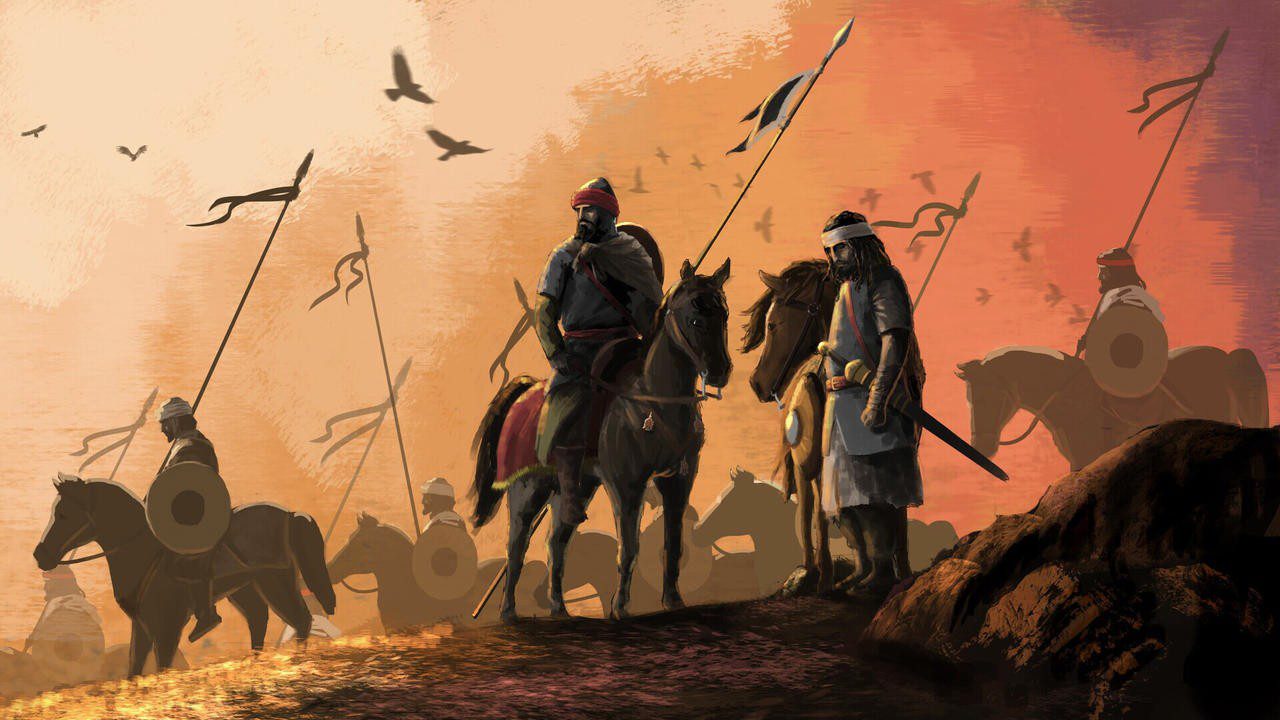
The Muslim conquest of Damascus remains one of the most significant turning points in early Islamic history. This pivotal event, which took place in the year 634 CE, marked not only the capture of one of the most ancient cities in the world but also symbolized a major shift in political power, religious influence, and cultural integration across the Near East. The Muslim conquest of Damascus was not an isolated event — it was part of a broader series of expansions that defined the early Islamic era and reshaped the region’s destiny.
This comprehensive blog explores why Damascus was an essential target, how the conquest unfolded, its context within the expanding nascent Muslim state, and how the legacy of this conquest extends into modern times. Throughout this exploration, we will answer key questions and uncover the importance of Damascus in early Islamic and world history.
Understanding the Muslim Conquest of Damascus
To understand the Muslim conquest of Damascus, we must first grasp its strategic and symbolic importance. At the time, Damascus was under the control of the Byzantine Empire. With its deep history, economic strength, and cultural influence, it was one of the most significant urban centers in the Levant. The city served as a hub for trade, administration, and military command — which is why the effort to capture it was both ambitious and necessary for the expanding Muslim forces.
The Muslim conquest of Damascus is widely regarded as the first major victory over Byzantine authority in Syria. This event set in motion the eventual decline of Byzantine influence in the Levant and paved the way for further Muslim campaigns deeper into the region. The conquest was not simply military in nature; it was a moment that facilitated significant religious and cultural exchange. Within a relatively short period, Islam began to spread throughout greater Syria.
Why is Damascus Important?
The question why is Damascus important cannot be answered with a single sentence. Its significance spans history, religion, economics, and culture:
1. Historical Longevity
Damascus is one of the oldest continuously inhabited cities in the world. Long before the rise of Islam, it was a center of civilization and commerce, influencing the affairs of ancient empires, kingdoms, and cultural networks.
2. Strategic Location
Located at the crossroads of trade routes linking the Arabian Peninsula, Anatolia, Egypt, and Mesopotamia, Damascus served as a vital hub for commerce and transportation. Whoever controlled this city held a key position in regional trade and military logistics.
3. Political Influence
As a major administrative and military center under Byzantine rule, Damascus was crucial for maintaining control over Syria and the surrounding territories. For the Muslim armies, its capture meant weakening Byzantine power and establishing a foothold for further expansion.
The city’s importance resonates not only in military strategy but also in its symbolic and cultural stature among the people of the region. Its capture signaled a dramatic change in the balance of power.
The Siege and Capture
The Muslim conquest of Damascus was the result of careful and methodical strategy. At the time, Muslim forces — motivated by both religious zeal and political aspiration — began their campaign in the Levant by moving northward from the Arabian Peninsula.
Upon arriving near Damascus, Muslim commanders encircled the city’s formidable defenses. Unlike hasty assaults that result in heavy losses, the Muslim approach involved patience and calculated pressure on the Byzantine defenders. Although the siege itself was intense and lasted several weeks, the city eventually capitulated.
Historical narratives record a negotiated surrender. The Muslim commanders agreed to terms that allowed the civilian population to maintain their lives, properties, and places of worship, provided they complied with the authority of the new rulers and paid a form of tax in exchange for protection. This peaceful transition of power marked not only a military victory but also an early example of how governance could evolve in a way that accommodated existing structures and populations.
The Muslim conquest of Damascus was not only about defeating an army — it was about creating a foundation for extended rule, administration, and cultural assimilation.
Damascus After the Conquest
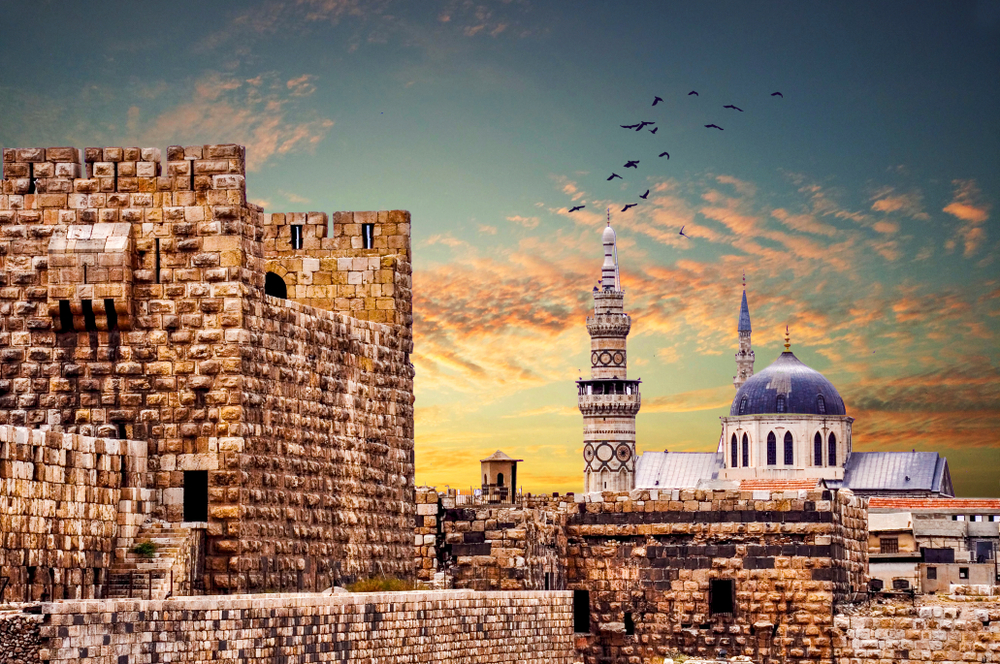
Following the capture of Damascus, the city became one of the most important administrative centers of the Rashidun Caliphate and later the Umayyad Caliphate. Damascus soon evolved into the capital of the Umayyad dynasty, an era marked by rapid territorial expansion, architectural achievements, and cultural integration.
Under Muslim rule, Damascus continued to thrive. It developed as a center of learning, trade, and culture. Scholars, traders, and intellectuals from many backgrounds found themselves in a city that, while changing in political identity, remained as cosmopolitan and important as ever.
The Muslim conquest of Damascus therefore did not diminish the city’s stature — it enhanced it, integrating it into an empire that stretched from Spain to Central Asia.
This period saw the construction of iconic Islamic architecture, such as the Umayyad Mosque, which stands to this day as a testament to the city’s rich Islamic heritage. The mosque became a focal point of spiritual life and scholarly activity, attracting pilgrims and seekers of knowledge from across the Muslim world.
The Muslim Conquest of Damascus: Key Figures and Commanders
The Muslim conquest of Damascus saw several notable commanders and leaders:
Khalid ibn al-Walid
Often called “The Sword of Allah,” Khalid ibn al-Walid was one of the most prominent military figures in early Islamic history. He played a central role in isolating Damascus, leading mobile cavalry units, and maintaining pressure during the siege.
Abu Ubaidah ibn al-Jarrah
Another key commander, Abu Ubaidah, was responsible for negotiating with the city’s leaders and ensuring the terms of surrender were honored.
These leaders exemplified a blend of tactical acumen and diplomatic acumen that helped secure a relatively orderly transition of power.
Military Strategy and Leadership
One of the most striking aspects of the Muslim conquest of Damascus was the leadership and strategy employed by Muslim commanders. These leaders combined diplomacy with military capability — not merely focusing on brute force, but also on winning the cooperation or acceptance of local populations.
The conquest demonstrated a sophisticated understanding of political dynamics and a focus on long-term governance rather than short-lived victories. It illustrated how early Muslim leadership navigated both military and civil administration with strategic awareness.
The Broader Context: Conquest and Integration
The Muslim conquest of Damascus was part of the wider Muslim conquests that transformed the Near East and beyond. This period was characterized by rapid expansion, but also by the integration of diverse cultures and peoples into the Islamic world.
Rather than imposing radical, abrupt change, the Muslim leadership in many cases established governance structures that allowed local bureaucracies, religious practices, and languages to continue under new oversight. This helped facilitate stability, economic growth, and cultural synthesis across vast regions.
The term “conquest” therefore must be understood in both military and civil terms — as a movement of power, but also as a process that led to centuries of cultural evolution, scientific advancement, and intellectual exchange.
The Legacy of the Muslim Conquest of Damascus
The legacy of the Muslim conquest of Damascus extends far beyond its historical moment. It represents the beginning of a transformational era — an era that reshaped the Middle East and laid the groundwork for what would become one of the most influential civilizations in human history.
Today, Damascus still stands — a city layered with centuries of history, from ancient civilizations to Islamic rule, Ottoman influence, and modern realities. The echoes of the early conquest remain in its architecture, in its cultural memory, and in the way the city symbolizes endurance and historical significance.
When historians discuss the spread of Islam beyond Arabia, the Muslim conquest of Damascus is always at the forefront of such discussions — not merely as a battle, but as a turning point.
Why Understanding This Event Matters Today
In our modern world, events like the Muslim conquest of Damascus are more than academic history. They inform discussions on cultural identity, interfaith relations, and the historical roots of major world civilizations. By understanding why Damascus was important and how it became part of the early Muslim state, people can better appreciate the deep historical links that connect religion, culture, and politics across centuries.
This event also encourages deeper study into how societies adapt to change — and how conquests, while disruptive in the immediate moment, can set the stage for new forms of cultural and intellectual flourishing. Damascus didn’t disappear after its capture; it became reimagined within a new context that helped shape the Islamic world.
The Muslim Conquest of Damascus in Popular Memory
Despite advancing centuries, the Muslim conquest of Damascus is still taught, studied, and commemorated in various religious and academic settings. It reminds believers and scholars alike of a period of extraordinary transformation. In stories, teachings, and historical accounts, this conquest illustrates both the spread of Islam and the complex interactions between empires, religions, and cultures.
In many ways, the legacy of the conquest of Damascus endures not just in textbooks, but in the layered identity of Syria’s capital — a city that continues to be a living testimony to its remarkable past.
Conclusion
The Muslim conquest of Damascus was far more than a tactical victory. It was a catalyst for change — one that ushered in new governance, new religious landscapes, and new cultural paradigms. By examining this event closely, we learn not only about military strategy and leadership but about how historical forces can redefine entire regions.
Understanding why Damascus was important helps us grasp the broader narrative of Middle Eastern history and the early Islamic state’s expansion. The conquest’s effects were felt across continents and centuries, shaping art, scholarship, law, and human interaction in ways that still resonate today.
In essence, the Muslim conquest of Damascus stands as a milestone — bridging the ancient world with the medieval and setting the stage for centuries of growth, learning, and cultural fusion. Its legacy is not confined to war chronicles, but woven into the fabric of global history itself.
FAQs
What was the Muslim conquest of Damascus?
The Muslim conquest of Damascus was a key historical event in the 7th century when Muslim forces captured the city from Byzantine control, marking a major shift in regional power.
When did the Muslim conquest of Damascus take place?
The Muslim conquest of Damascus occurred in 634 CE during the early expansion of the Islamic state.
Why is Damascus important in Islamic history?
Many ask why is Damascus important because it became one of the earliest major cities under Muslim rule and later served as the capital of the Umayyad Caliphate.
Who led the Muslim forces during the conquest of Damascus?
The Muslim forces were led by prominent commanders of the Rashidun Caliphate, who applied both military strategy and negotiation during the conquest of Damascus.
Was the Muslim conquest of Damascus achieved through battle or peace?
The Muslim conquest of Damascus involved a siege followed by negotiated terms of surrender, allowing a relatively peaceful transition of authority.