

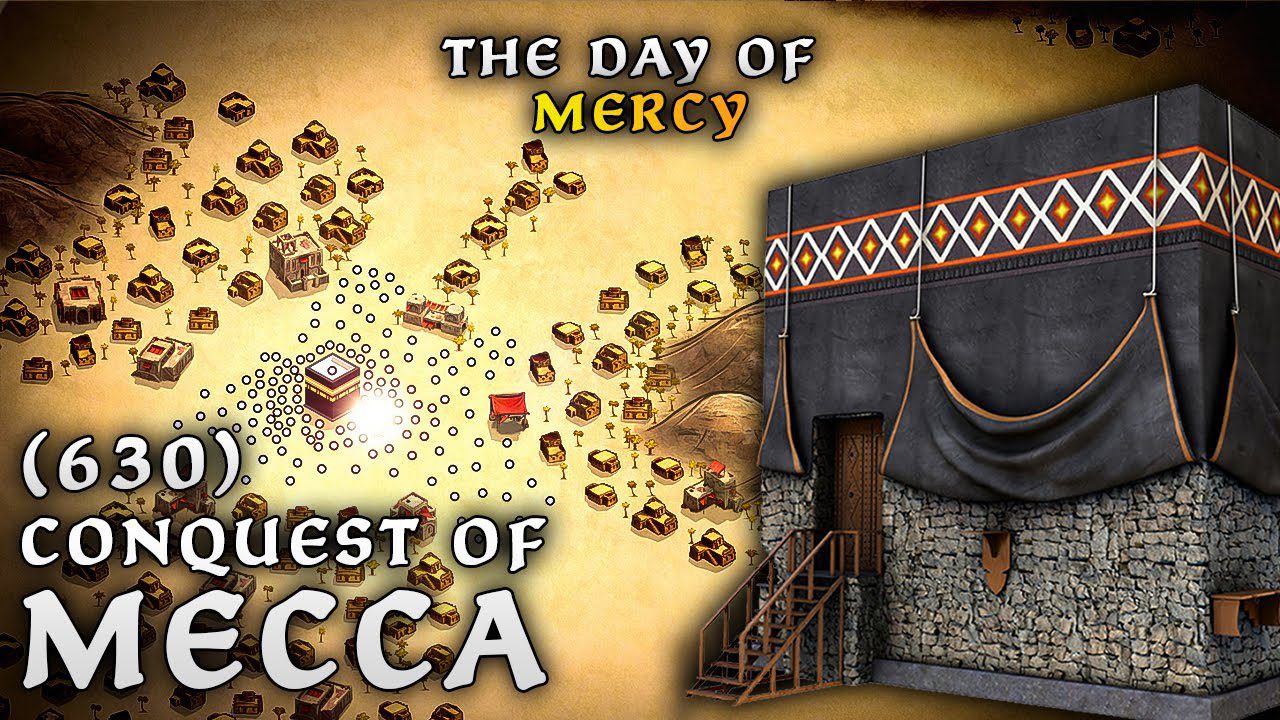
The conquest of Mecca by Muhammad stands as one of the most remarkable military achievements in Islamic history, demonstrating how victory can be achieved through strategic planning, moral superiority, and mercy rather than violence. This pivotal event in 630 CE (8 AH) marked the triumphant return of Prophet Muhammad to his birthplace after years of exile, transforming Makkah from the center of idol worship into the heart of monotheistic Islam.
Understanding the Conquest of Mecca
The conquest of Mecca represents a watershed moment when the tide definitively turned in favor of Islam. After enduring years of persecution, exile, and warfare, the Muslim community finally returned to reclaim the city that had once driven them out. What makes the conquest of Mecca in Islam particularly significant is not just the military victory but the manner in which it was achieved—with minimal bloodshed and maximum mercy.
The conquest of Mecca by Muhammad occurred in the eighth year after the Hijrah (migration to Madinah), roughly twenty years after the Prophet first began preaching Islam. By this time, Islam had grown from a small persecuted group into a formidable force controlling most of the Arabian Peninsula. The conquest of Mecca would cement this transformation and mark the beginning of Islam’s dominance in Arabia.
Events Leading to the Conquest of Mecca
The conquest of Mecca by Muhammad didn’t happen suddenly but was the result of a series of events that made military action necessary:
- The Treaty of Hudaybiyyah (628 CE) established a ten-year peace agreement between Muslims and the Quraysh
- Violation by Quraysh allies when the Banu Bakr tribe, allied with Quraysh, attacked the Banu Khuza’ah, who were allied with Muslims
- Request for help from the Banu Khuza’ah to Prophet Muhammad for protection
- Quraysh support of the Banu Bakr’s attack, which violated the treaty terms
- Failed negotiations when Abu Sufyan traveled to Madinah attempting to renew the treaty but was rejected
These events made the conquest of Mecca in Islam not an act of aggression but a justified response to treaty violations. The Prophet had maintained peace for two years, but the Quraysh’s breach of the Treaty of Hudaybiyyah left him with no choice but to take action. The conquest of Mecca by Muhammad was thus both a military necessity and a legal right under the treaty terms.
Preparation for the Conquest of Mecca
The conquest of Mecca by Muhammad was marked by meticulous planning and strategic secrecy:
- Secret mobilization of 10,000 Muslims from Madinah and surrounding tribes
- Information control to prevent the Quraysh from preparing a defense
- Strategic timing during Ramadan, the sacred month
- Multiple entry points with the army divided into four columns
- Clear instructions to commanders about avoiding unnecessary violence
- Special orders protecting certain houses and sanctuaries
The scale of the army assembled for the conquest of Mecca in Islam was unprecedented in Arabian history. Ten thousand warriors marching together represented overwhelming force, yet the Prophet’s strategy was designed to achieve surrender without battle. The conquest of Mecca by Muhammad demonstrates how military strength combined with moral authority can achieve objectives more effectively than violence alone.
The March to Mecca
As the Muslim army approached Makkah for the conquest of Mecca, the psychological impact was immense. The Quraysh, seeing the massive force camped outside their city with campfires lighting up the night, realized resistance was futile. Abu Sufyan, the Quraysh leader, ventured out to assess the situation and was brought before Prophet Muhammad.
In a pivotal moment during the conquest of Mecca by Muhammad, Abu Sufyan converted to Islam after witnessing the strength and organization of the Muslim army. The Prophet, demonstrating characteristic mercy, declared that anyone who entered Abu Sufyan’s house would be safe. This strategic clemency encouraged surrender and prevented bloodshed during the conquest of Mecca in Islam.
The Bloodless Victory
The conquest of Mecca by Muhammad is celebrated for being almost entirely bloodless:
- Four entry points with armies entering simultaneously from different directions
- Minimal resistance with only one location seeing brief fighting
- Strict orders against killing except in self-defense
- Protection guarantees for those who stayed in their homes or entered designated safe houses
- General amnesty proclaimed for most Quraysh despite years of persecution
- Peaceful occupation of the city within hours
What makes the conquest of Mecca in Islam remarkable is that only about 12-28 people died during the entire operation, most in one skirmish. Compare this to typical ancient warfare where conquering armies would massacre populations and plunder cities. The conquest of Mecca by Muhammad set a new standard for humane warfare and treatment of defeated enemies.
Cleansing the Kaaba
One of the most significant acts during the conquest of Mecca was the cleansing of the Kaaba. The Prophet entered the sacred sanctuary and ordered the destruction of the 360 idols that surrounded it. This moment symbolized the triumph of monotheism over polytheism and the restoration of the Kaaba to its original purpose as Abraham had intended.
During the conquest of Mecca by Muhammad, the Prophet personally supervised the removal of idols, striking them with his staff while reciting Quranic verses: “Truth has come and falsehood has vanished. Indeed, falsehood is bound to vanish.” This act during the conquest of Mecca in Islam transformed the Kaaba from a center of idol worship into the focal point of Islamic monotheism.
The cleansing of the Kaaba during the conquest of Mecca by Muhammad was done respectfully, with the Prophet ordering that the paintings of prophets inside the Kaaba be preserved while removing only the idols and inappropriate imagery. This showed that the conquest of Mecca in Islam aimed to restore rather than destroy the sacred nature of the sanctuary.
The General Amnesty
Perhaps the most extraordinary aspect of the conquest of Mecca by Muhammad was the general amnesty granted to the Quraysh:
- Public declaration of forgiveness for most inhabitants
- No revenge despite years of persecution, torture, and warfare
- Protection of property with no looting or plundering
- Voluntary conversion with no forced acceptance of Islam
- Restoration of dignity to former enemies
- Only specific exceptions for individuals guilty of particular crimes
The Prophet stood at the door of the Kaaba during the conquest of Mecca and asked the assembled Quraysh: “What do you think I will do with you?” They replied: “Good, for you are a noble brother and the son of a noble brother.” He then proclaimed: “Go, for you are free”—granting general amnesty despite having the power to take revenge for years of persecution.
This mercy during the conquest of Mecca by Muhammad surprised even his former enemies and led to mass conversions. People who had fought Islam for twenty years embraced it willingly when they saw the character of its Prophet. The conquest of Mecca in Islam thus achieved through forgiveness what violence never could—genuine transformation of hearts.
Immediate Impact of the Conquest
The conquest of Mecca by Muhammad had immediate and far-reaching consequences:
- Mass conversions to Islam throughout Arabia
- Unification of Arabian tribes under Islamic leadership
- End of idol worship at the Kaaba and throughout Makkah
- Establishment of Makkah as Islam’s spiritual center
- Political transformation from tribal divisions to unified Islamic community
- Security for Muslims to practice their religion freely
Within weeks of the conquest of Mecca in Islam, delegations from tribes throughout Arabia came to Madinah to pledge allegiance to Prophet Muhammad and accept Islam. The bloodless conquest of Mecca by Muhammad demonstrated Islam’s moral superiority and convinced many that this was indeed a divinely guided movement.
Strategic Brilliance of the Conquest
Fath mekkah by Muhammad showcases remarkable military and political strategy:
Military Strategy:
- Overwhelming force that discouraged resistance
- Multiple entry points preventing escape or organized defense
- Secrecy until the last moment
- Clear chain of command and rules of engagement
Political Strategy:
- Converting enemy leader (Abu Sufyan) before the conquest
- Offering safety guarantees to encourage surrender
- General amnesty to win hearts and minds
- Demonstrating power while showing restraint
Moral Strategy:
- Forbidding revenge despite justified grievances
- Protecting property and lives
- Allowing voluntary conversion rather than forcing it
- Setting an example of mercy that would define Islamic governance
The conquest of Mecca in Islam demonstrated that true victory comes not just from defeating enemies but from transforming them into allies through justice and mercy.
Long-term Significance
The conquest of Mecca by Muhammad remains significant for multiple reasons:
- Establishes Makkah as Islam’s permanent spiritual center and direction of prayer
- Demonstrates that moral authority can be more powerful than military might
- Sets precedent for Islamic rules of warfare and treatment of conquered peoples
- Marks completion of the Prophet’s mission to restore Abrahamic monotheism
- Unifies Arabia under Islamic governance for the first time
- Provides model of merciful leadership that influences Islamic political thought
The conquest of Mecca in Islam transformed not just one city but set in motion the rapid expansion of Islam throughout the Middle East and beyond. Within a century, Islamic civilization would stretch from Spain to India, often remembering the example set during the conquest of Mecca by Muhammad—that lasting victory comes through justice and mercy.
Summary
The conquest of Mecca by Muhammad in 630 CE (8 AH) represents one of history’s most remarkable military achievements, accomplished with minimal bloodshed through strategic brilliance and moral superiority. Following the Quraysh’s violation of the Treaty of Hudaybiyyah, Prophet Muhammad marched on Makkah with 10,000 warriors, achieving surrender through overwhelming force combined with offers of amnesty.
The conquest of Mecca in Islam is celebrated not for military prowess but for the mercy shown to former enemies. Despite years of persecution, the Prophet granted general amnesty to the Quraysh, declaring “Go, for you are free.” This unprecedented clemency led to mass conversions and unified Arabia under Islamic leadership. The conquest of Mecca by Muhammad also marked the cleansing of the Kaaba, restoring it to pure monotheistic worship.
The long-term impact of the conquest of Mecca extends beyond military victory. It established Makkah as Islam’s permanent spiritual center, set precedents for humane warfare, and demonstrated that moral authority combined with strategic strength can achieve more than violence alone. The conquest of Mecca by Muhammad remains a model of merciful leadership and strategic brilliance in Islamic history.
FAQs:
When did the conquest of Mecca by Muhammad occur?
The conquest of Mecca occurred in 630 CE, corresponding to the eighth year after Hijrah (8 AH), during the month of Ramadan. The Muslim army entered Makkah peacefully after the Quraysh violated the Treaty of Hudaybiyyah by supporting their allies in attacking a tribe allied with Muslims.
Why is the conquest of Mecca in Islam considered significant?
The conquest of Mecca in Islam is significant because it was achieved almost bloodlessly through strategic planning and mercy rather than violence. It transformed Makkah from a center of idol worship to Islam's spiritual heart, led to mass conversions throughout Arabia, and set precedents for humane treatment of defeated enemies in Islamic warfare.
How many people died during the conquest of Mecca by Muhammad?
The conquest of Mecca by Muhammad resulted in remarkably few casualties, with only 12-28 deaths reported during the entire operation. Most casualties occurred in one brief skirmish. This minimal bloodshed was due to the Prophet's strict orders against unnecessary violence and offers of amnesty that encouraged peaceful surrender.
What happened to the Quraysh after the conquest of Mecca?
What was done to the idols during the conquest of Mecca in Islam?
During the conquest of Mecca in Islam, Prophet Muhammad personally supervised the destruction of 360 idols surrounding the Kaaba, striking them while reciting Quranic verses about truth vanquishing falsehood. The Kaaba was cleansed and restored to its original purpose as a center of monotheistic worship, as Abraham had intended.