
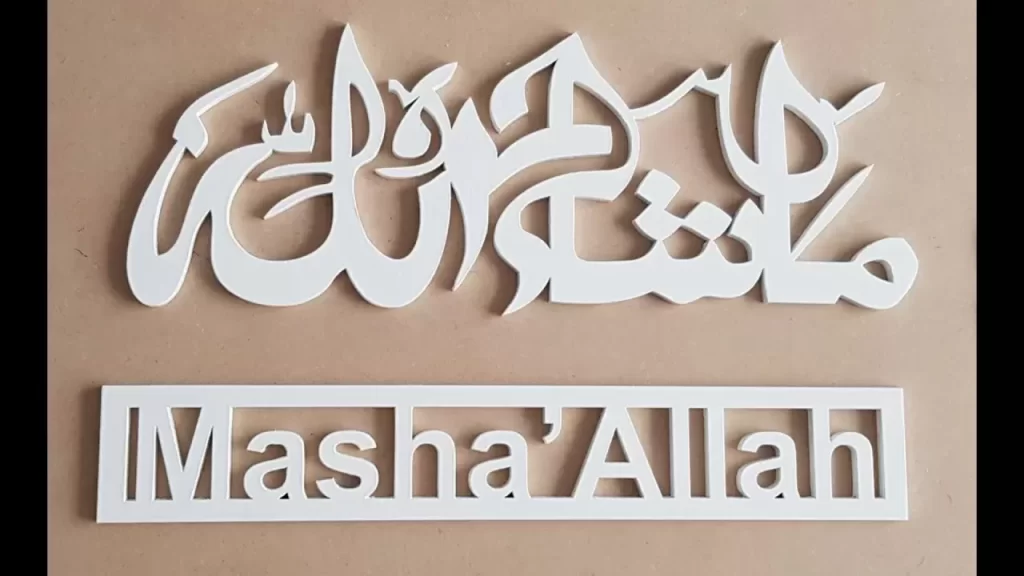
Mashallah, one of the most beloved expressions in Islamic culture, carries profound spiritual significance beyond simple admiration. This sacred Arabic phrase, meaning “what Allah has willed,” serves as both praise and protection, acknowledging Allah’s power in beautiful moments. When Muslims say mashallah, they express gratitude while seeking divine protection from envy and the evil eye. This powerful expression transforms ordinary appreciation into worship, reminding believers that all beauty and blessings flow from Allah’s infinite wisdom and divine will.
Mashallah Meaning
The phrase “mashallah” carries deep cultural and spiritual significance in Arabic-speaking communities. Rooted in Islamic traditions, it serves as both an expression of praise and a protective invocation against envy. Unlike simple compliments, “mashallah” is a phrase that acknowledges divine blessings while subtly warding off the “evil eye” (al-ayn).
What does Mashallah mean in English?
Mashallah is an Arabic phrase that literally translates to “what Allah has willed” or “that which God has willed” in English. The word breaks down into “ma” (what/that which) and “sha’a Allah” (Allah has willed), creating a complete expression of divine acknowledgment.
This beautiful phrase combines recognition of Allah’s power with praise for His creations and blessings. When someone says mashallah, they are acknowledging that whatever good, beautiful, or impressive thing they’re observing happened according to Allah’s divine will and plan.
The phrase serves a dual purpose: expressing genuine admiration and appreciation while simultaneously seeking protection from the evil eye or envy that might arise from such praise. In essence, mashallah transforms simple compliments into acts of worship by attributing all good things to Allah’s wisdom and power, making it both a spiritual practice and a form of gratitude.
How to Pronounce Mashallah?
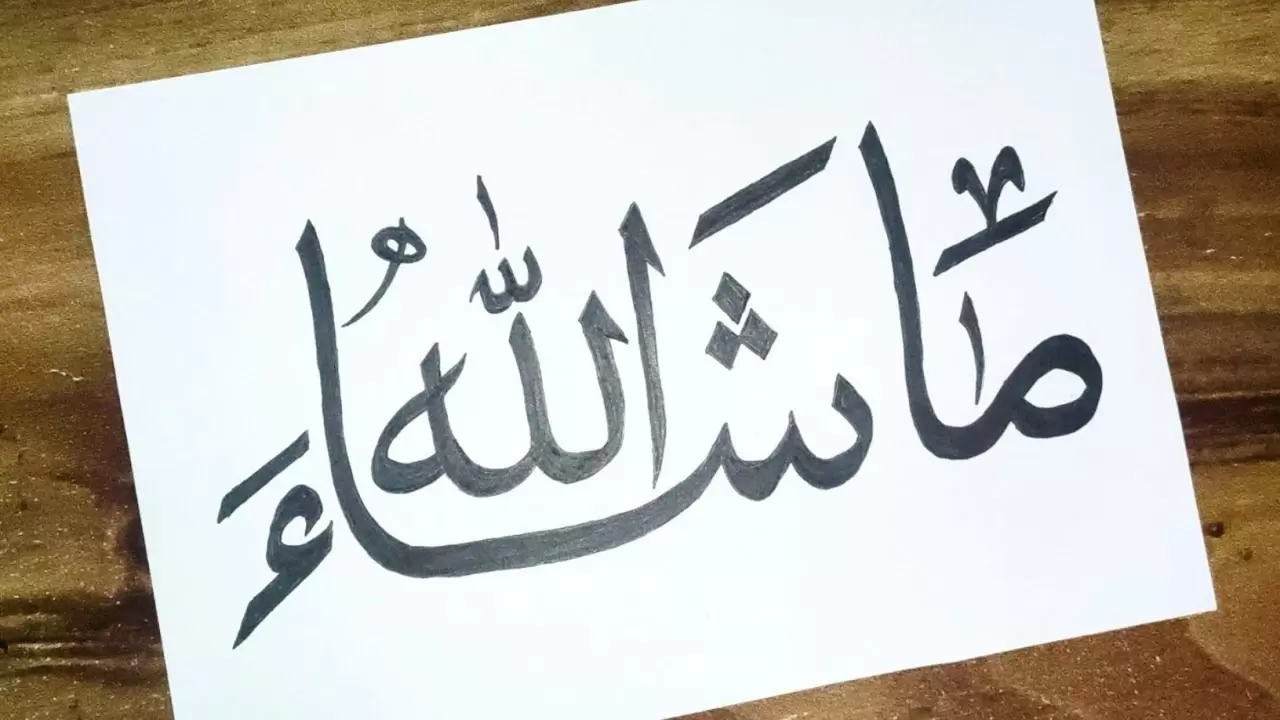
Pronouncing “mashallah” correctly is essential to respect its cultural significance. Here’s the breakdown:
- “Ma” – Pronounced like the English “ma” (short and sharp, similar to “mother”).
- “Shal” – The “sh” is a soft, guttural sound (like the “sh” in “shoe” but lighter).
- “Lah” – The “lah” ends with a soft “ah” sound (like “la” in “lawn”).
Full pronunciation: Muh-shah-lah (مَشَاءَ الله)
For visual learners,
the Arabic script (مَشَاءَ الله) shows the letters:
- م (Meem) – Bilabial sound
- ش (Sheen) – Guttural “sh”
- ا (Alif) – Long “a”
- ء (Hamza) – Glottal stop
Origin of Mashallah (Arabic & Islamic Usage)
The roots of “mashallah” trace back to the Quran and Hadith, where expressions of divine will (shā’a Allāh) appear frequently. The phrase emerged as a way to:
– Attribute success to Allah – Recognizing that all good comes from Him.
– Ward off envy – The “evil eye” (al-ayn) was believed to cause harm through jealousy, so “mashallah” acted as a spiritual barrier.
– Encourage humility – By saying “mashallah,” one avoids arrogance, reminding themselves that achievements are gifts from Allah.
Historically, Arabs used “mashallah” in daily life, from praising a child’s beauty to celebrating a harvest. Its Islamic usage reinforced the concept of tawakkul (trust in Allah), ensuring that praise remained connected to faith rather than human ego.
When Do You Say Mashallah?
“Mashallah” is versatile, used in various contexts to express admiration while invoking divine protection. Here’s when and how to use it appropriately:
When Praising Something Good (Compliment)
Use “mashallah” to acknowledge beauty, talent, or success. For example:
“Your new car looks amazing!” → “Mashallah! May Allah keep it blessed.”
“You cooked this dish perfectly!”→ “Mashallah! It’s delicious!”
This differs from a simple “nice!” because it adds a layer of spiritual gratitude.
When Celebrating Success (Achievement)
Whether it’s an exam result, a promotion, or a personal milestone, “mashallah” celebrates the achievement while attributing it to Allah’s will.
“You passed your exam!” → “Mashallah! Allah made it easy for you.”
After Good News (Gratitude)
Sharing joyful news (like a pregnancy, engagement, or recovery) calls for “mashallah” to express happiness and seek Allah’s continued blessings.
“She’s pregnant!” → “Mashallah! May Allah protect the baby.”
A Note on Envy / The “Evil Eye”
One of the most critical aspects of “mashallah meaning” is its role in protecting against envy. The “evil eye” (al-ayn) is believed to cause misfortune through jealous glances. By saying “mashallah,” you:
- Acknowledge the blessing – Preventing arrogance.
- Invite Allah’s protection – Shielding the praised person or thing.
- Discourage envy – Reminding others that success is from Allah, not human effort.
Example:
If someone admires your home, saying “mashallah” protects it from negative energy while expressing genuine praise.
وَلَوْلَا إِذْ دَخَلْتَ جَنَّتَكَ قُلْتَ مَا شَاءَ اللَّهُ لَا قُوَّةَ إِلَّا بِاللَّهِ إِن تَرَنِ أَنَا أَقَلَّ مِنكَ مَالًا وَوَلَدًا﴾ – الكهف: 39﴿
“And why did you, when you entered your garden, not say, ‘What Allah willed [has occurred]; there is no power except in Allah’? Although you see me less than you in wealth and children.” -Surah Al-Kahf: 39
عن عامر بن ربيعة أن النبي ﷺ قال: “إِذَا رَأَى أَحَدُكُمْ مِنْ أَخِيهِ مَا يُعْجِبُهُ فَلْيَدْعُ لَهُ بِالْبَرَكَةِ” – سنن ابن ماجه
Amer ibn Rabiah reported: The Prophet (ﷺ) said: “When one of you sees something in his brother that amazes him, let him invoke blessings for him.” – Sunan Ibn Majah
How Do You Reply to Mashallah?
Responding to “mashallah” is an art in itself, blending humility with gratitude. Here are the most common and meaningful replies:
Simple Replies
- “Alhamdulillah” (الْحَمْدُ لِلّٰه) – “All praise is due to Allah.”
- “Jazakallah khayran” (جَزَاكَ الله خَيْرًا) – “May Allah reward you with good.”
- “Wa iyyak” (وَإِيَّاك) – “And you too” (a reciprocal blessing).
Common Arabic Replies
- “Mashallah tabarakallah” (مَشَاءَ الله تَبَارَكَ الله) – A stronger version meaning “May Allah bless it further.”
This is a response to mashallah tabarakallah that amplifies the original blessing.
- “Allah yisallimak” (الله يَسَلِّمَاك) – “May Allah keep you safe.”
- “Inshallah” (إِنْ شَاءَ الله) – “If Allah wills,” acknowledging future uncertainties with faith.
For deeper spiritual replies, some use:
“Allahumma barik ‘alayna fiha” (اللهُمَّ بَارِكْ عَلَيْنَا فِيهَا) – “O Allah, bless us in it.”
This is the mashallah allahumma barik, meaning, seeking divine blessings for the praised thing or person.
Benefits of Saying Mashallah Regularly
Incorporating “mashallah” into daily conversations offers spiritual and social benefits:
- Strengthens Faith – Reminds you to attribute all good to Allah, fostering gratitude.
- Protects Against Envy – Acts as a shield, reducing the impact of negative energy.
- Encourages Humility – Prevents arrogance by acknowledging divine will.
- Builds Community Bonds – Shared faith expressions deepen connections among Arabic speakers.
- Promotes Positivity – Redirects focus from material success to spiritual blessings.
Psychologically, saying “mashallah” can also:
- Reduce stress by trusting in Allah’s plan.
- Increase mindfulness of blessings in everyday life.
- Foster a culture of appreciation over competition.
How does the Arabian Tongue shape your journey of learning the Quran and Arabic?
At Arabian Tongue, we help you understand the Quran deeply and connect with its meanings through simple and effective teaching methods. Our courses are designed to make your learning journey clear, engaging, and spiritually enriching.
Guidance from the Quran and Hadith
وَمَا تَشَاءُونَ إِلَّا أَن يَشَاءَ اللَّهُ رَبُّ الْعَالَمِينَ﴾ – التكوير: 29﴿
“And you do not will except that Allah wills – Lord of the worlds.” Surah At-Takwir: 29
قال رسول الله ﷺ: “مَن رَأَى شَيْئًا فَأَعْجَبَهُ فَلْيَقُلْ: مَا شَاءَ اللَّهُ لَا قُوَّةَ إِلَّا بِاللَّهِ” – صحيح الجامع
The Prophet (ﷺ) said: “Whoever sees something that amazes him, let him say: ‘Ma sha Allah, la quwwata illa billah’ (What Allah wills, there is no power except with Allah).” – Sahih al-Jami
FAQs
Is it okay for non-Muslims to say Mashallah?
Yes, non-Muslims can say Mashallah out of respect or cultural appreciation, as it expresses admiration and protection from the evil eye. However, the spiritual significance and blessings are primarily for those who believe in Allah and understand its religious meaning.
Is Mashallah religious?
Yes, Mashallah is deeply religious, as it means what Allah has willed and acknowledges Allah's power and blessing in all good things. It's an Islamic expression that combines gratitude to Allah with protection from envy and the evil eye.
When should you say Mashallah?
Say Mashallah when admiring something beautiful, praising someone's achievements, seeing children or blessings, or witnessing success. It's used to express appreciation while acknowledging that all good comes from Allah and seeking protection from the evil eye.
How do you write Mashallah in Arabic?
Mashallah is written as ماشاء الله in Arabic script. It can also be written as مَا شَاءَ اللَّهُ with diacritical marks, and literally translates to what Allah has willed or as Allah wished.