

Arabic is not just a language; it is the voice of the divine. Every prayer whispered at dawn, every verse recited in the stillness of the night, every supplication rising from the heart carries the weight of a language chosen by Allah Himself. To learn Arabic is to unlock a door that has stood between you and the full depth of your faith, hearing the Quran not as an approximation, but as it was revealed: pure, precise, and profoundly alive.
The importance of learning Arabic in Islam
The Arabic language holds a sacred and unparalleled position within the Islamic faith, serving as the divine tongue through which Allah communicated His final revelation to humanity. For Muslims worldwide, understanding the “importance of learning Arabic in Islam” is not merely an academic pursuit but a spiritual necessity that deepens one’s connection with their Creator. The Quran, Islam’s holy scripture, was revealed in Arabic, and its linguistic beauty, precision, and depth are inseparable from its meaning. When a Muslim engages with the Quran in its original language, they experience a level of comprehension and emotional resonance that translations simply cannot replicate. This linguistic connection fosters a more profound understanding of Islamic teachings, strengthens faith, and enables a more authentic worship experience.
The Role of Arabic in Daily Worship
Arabic is the language of worship in Islam, shaping every aspect of a Muslim’s daily spiritual practice. From the importance of learning the Arabic language in Islam to its practical application in rituals, Arabic serves as the bridge between the worshipper and the divine:
When a Muslim recites the Quran or prays in Arabic, they are participating in an act of worship preserved in its original form for over 1,400 years. This linguistic consistency ensures that the words reach Allah in the exact form He intended, free from the ambiguities that translations may introduce. Understanding Arabic allows Muslims to grasp the nuances of supplications, the meanings behind Quranic verses, and the deeper implications of the Prophet’s teachings. Without this linguistic foundation, worship risks becoming a series of memorized sounds rather than a heartfelt dialogue with the Divine.
- Prayer (Salah): Every word in the prayer — from “Allahu Akbar” to “Ameen” — holds specific meanings that enhance the spiritual experience.
- Quranic Recitation: Pronouncing the Quran correctly is a form of worship, and understanding its meaning deepens one’s connection to the text.
- Supplications (Duas): Many supplications in Islamic tradition are in Arabic, and knowing their meanings allows for more sincere and heartfelt prayers.
- Remembrance (Dhikr): Phrases like “La ilaha illallah” carry immense spiritual weight when understood in their original language.
The Connection Between Arabic and the Quran

The Quran is often described as a miracle of language, and its connection to Arabic is both profound and inseparable. Revealed as the literal word of Allah over 23 years, it preserves linguistic perfection that translations cannot fully replicate:
- Linguistic Precision: Arabic words often carry multiple meanings, and the Quran’s context determines the exact intended sense.
- Poetic Structure: The Quran’s verses are arranged in a way that enhances their rhythmic and melodic qualities, which are best appreciated in Arabic.
- Divine Preservation: The Quran’s linguistic integrity has been preserved in Arabic, ensuring its message remains unchanged over centuries.
- Emotional Resonance: Understanding Arabic allows Muslims to feel the full emotional impact of the Quran’s verses, from sorrow to joy, awe to comfort.
Understanding the Sunnah Through Arabic
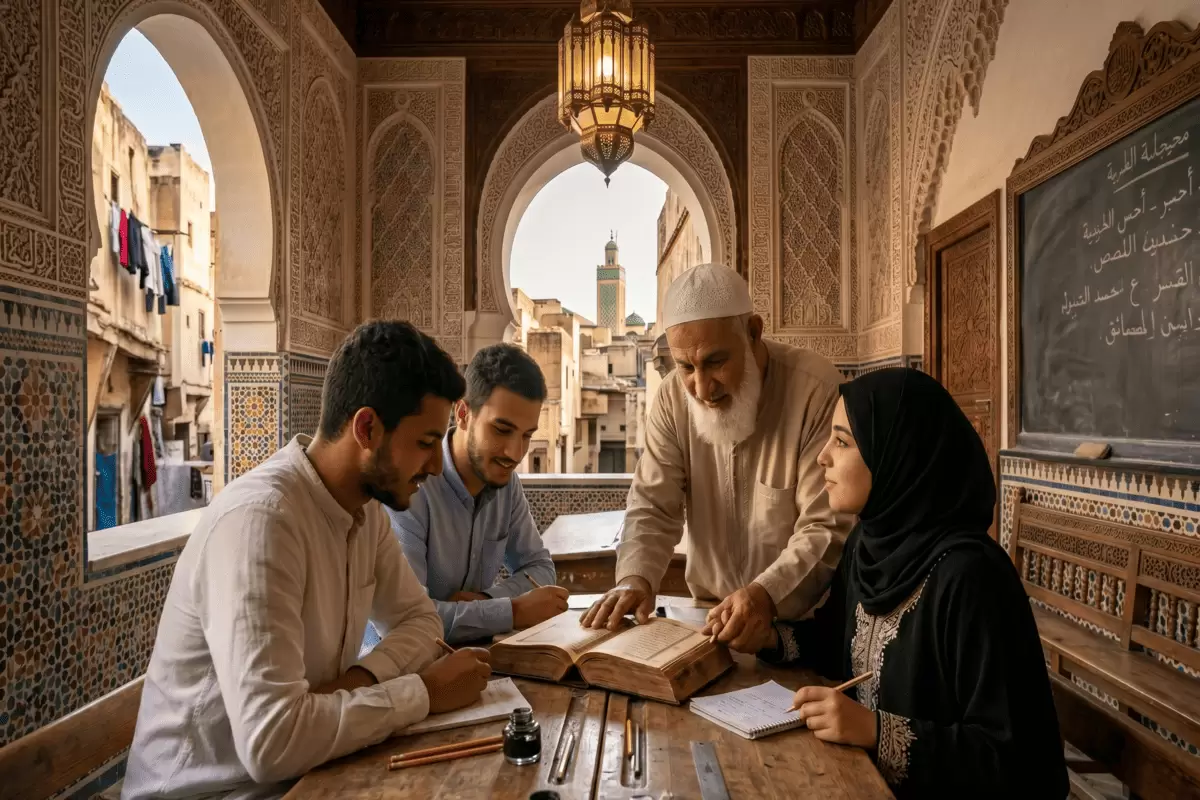
The Sunnah, encompassing the teachings, actions, and sayings of the Prophet Muhammad (peace be upon him), is another critical aspect of Islamic practice where Arabic plays a pivotal role. Hadith collections such as Sahih al-Bukhari and Sahih Muslim contain thousands of narrations that guide Muslims in their daily lives, and without a command of Arabic, Muslims risk misinterpreting these teachings.
Arabic phrases in Hadith literature often carry specific connotations that go beyond literal translation. A phrase like “Inna Lillahi wa inna ilayhi raji’un” is not just a statement of faith but a powerful reminder of Allah’s sovereignty and the transient nature of worldly life. Moreover, the Arabic language preserves the authenticity of the Sunnah, as scholars have meticulously transmitted every word with precision — even minor changes in wording can alter the meaning of a Hadith entirely. By learning Arabic, Muslims can access these authentic sources directly, ensuring their practices are rooted in the Prophet’s original teachings.
- Authentic Transmission: The Sunnah was recorded in Arabic, and its authenticity relies on linguistic precision.
- Nuanced Meanings: Arabic words in Hadith often carry subtle meanings that translations may overlook.
- Cultural Context: Understanding Arabic provides insight into the cultural and historical context of the Prophet’s teachings.
- Practical Application: Many Islamic practices, from ablution (Wudu) to business ethics, are explained in the Arabic Hadith.
How Arabic Helps in Reflecting on the Quran
The Quran is not merely a book of guidance but a living text that invites continuous reflection, meditation, and personal contemplation. When a Muslim reads the Quran in Arabic, they are immersing themselves in a text revealed with meticulous linguistic artistry — a level of reflection that translations cannot replicate.
One of the most profound ways Arabic aids in Quranic reflection is through its rhythmic and melodic qualities. The Quran is a masterpiece of Arabic poetry, with verses arranged to create a musical flow designed to evoke emotion and encourage pause for thought. For example, the repetition of certain phrases in Surah Ar-Rahman creates a sense of awe, inviting the reader to contemplate the magnificence of Allah’s creation. Arabic also provides access to Quranic exegesis (Tafsir) in its original form, offering layers of interpretation that explore linguistic roots, historical contexts, and theological implications essential for comprehensive understanding. Without Arabic, Muslims may rely on translations of Tafsir that can sometimes simplify or misrepresent these nuances.
- Linguistic Nuances: Arabic words often carry multiple layers of meaning that translations cannot fully capture, inviting deeper reflection.
- Rhythmic Flow: The Quran’s poetic structure in Arabic encourages a slower, more contemplative recitation.
- Access to Tafsir: Understanding Arabic allows Muslims to read classical and modern Tafsir works directly, gaining deeper insights.
- Personal Connection: Reciting the Quran in Arabic fosters a more intimate and personal relationship with the text, enhancing reflection.
How does the Arabian Tongue shape your journey of learning the Quran and Arabic?
At Arabian Tongue, we help you understand the Quran deeply and connect with its meanings through simple and effective teaching methods. Our courses are designed to make your learning journey clear, engaging, and spiritually enriching.
Guidance from the Quran and Hadith
(وَإِنَّهُ لَتَنزِيلُ رَبِّ الْعَالَمِينَ، نَزَلَ بِهِ الرُّوحُ الْأَمِينُ، عَلَىٰ قَلْبِكَ لِتَكُونَ مِنَ الْمُنذِرِينَ، بِلِسَانٍ عَرَبِيٍّ مُّبِينٍ)
“And indeed, the Quran is the revelation of the Lord of the worlds, brought down by the Trustworthy Spirit upon your heart that you may be of the warners, in a clear Arabic language.” (Surah Ash-Shu’ara: 192-195)
(تَعَلَّمُوا الْعَرَبِيَّةَ فَإِنَّهَا تُثَبِّتُ الْعَقْلَ وَتَزِيدُ فِي الْمُرُوءَةِ)
“Learn Arabic, for it strengthens the mind and increases nobility.” (Attributed to Umar ibn al-Khattab)
FAQs
What is the importance of learning Arabic in Islam?
Arabic is the language of the Quran and Sunnah, allowing Muslims to engage directly with their sacred texts and understand worship with deeper meaning and precision.
Why is Arabic important in Islam?
Arabic preserves the authentic message of the Quran and Hadith, ensuring that meanings are conveyed without the ambiguity or loss that translations may introduce.
Is it necessary for Muslims to learn Arabic?
While not obligatory, learning Arabic significantly enhances a Muslim's understanding of prayer, Quran, and Sunnah, transforming worship from memorized sounds into meaningful devotion.
Can Arabic be learned online effectively?
Yes, platforms like ArabianTongue.com offer structured online courses that make learning Arabic accessible, flexible, and tailored to individual goals and schedules.