
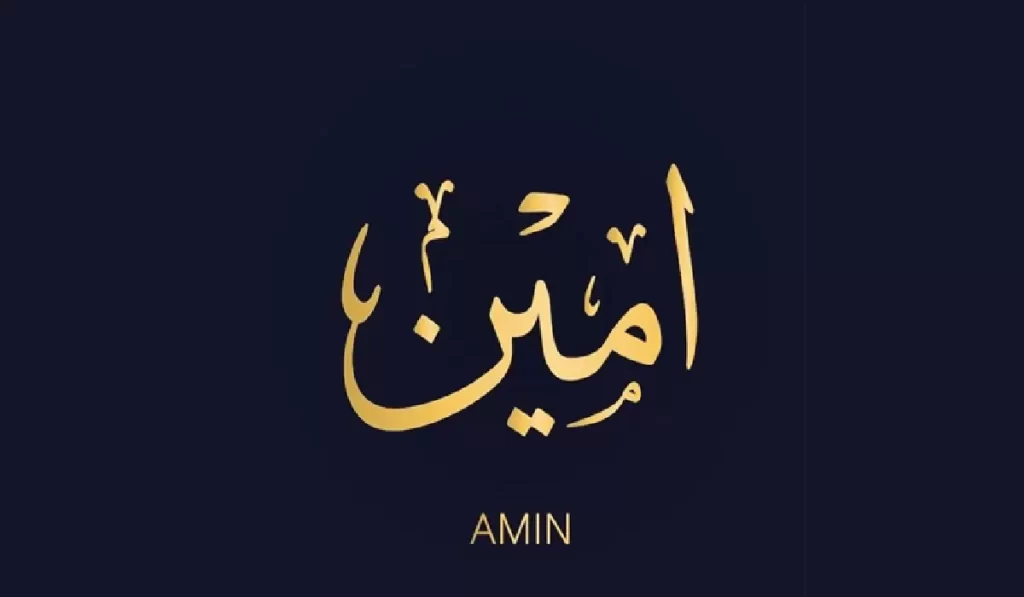
Have you ever wondered why a single word, uttered at the end of a prayer, carries the power to move hearts and transform supplications into sacred conversations with the Divine? Ameen — a word so simple yet so profound — has echoed through mosques, homes, and hearts for over fourteen centuries. It is not merely a response; it is a declaration of faith, a seal of trust, and a bridge between the worshipper and Allah. Discover the deeper meaning behind this powerful word and why it continues to resonate across generations.
The meaning of ameen in Arabic
The word ameen meaning in Arabic, carries profound spiritual and linguistic depth, transcending its simple pronunciation. Rooted in the Arabic language, ameen (أَمِين) is a word that resonates with trustworthiness, reliability, and divine affirmation. Its significance extends far beyond its literal translation, embedding itself deeply in Islamic worship, supplications, and communal prayers.
At its core, Ameen represents a response of affirmation, a declaration of faith, and an acknowledgment of Allah’s mercy. When uttered in the context of prayer, it serves as a bridge between the worshipper and the Divine, reinforcing the sincerity of one’s intentions.
The beauty of the ameen meaning lies in its dual nature — it is both a word and an act. Linguistically, it is derived from the verb aamana, meaning “to believe” or “to trust.” This connection highlights its role in affirming faith, not just in words but in action.
In the Quran, the word appears in various forms, reinforcing its spiritual weight. For instance, Allah describes Himself as Al-Ameen (الْأَمِين), the Trustworthy, emphasizing His reliability and faithfulness to His promises. This divine attribute underscores the importance of ameen in human interactions, urging believers to embody trustworthiness in their dealings with others.
Linguistic origin of the word ameen

The linguistic origin of ameen traces back to the Arabic root A-M-N, which encapsulates the concepts of trust, reliability, and security. Derived from the verb aamana — meaning “to believe” or “to entrust” — it reveals why ameen is so integral to Islamic worship: it embodies placing complete trust in Allah’s words and promises.
In Arabic grammar, ameen is classified as a noun of quality, describing a trustworthy entity. This aligns with its Quranic usage, where Allah is referred to as Al-Ameen, emphasizing His unparalleled reliability. The letter Ain (ع) at its root adds further depth, symbolizing the unseen and the divine.
Key facts about linguistic roots:
- The root A-M-N appears in over 100 Quranic verses, reinforcing its centrality in Islamic theology.
- Ameen shares its root with aman, meaning “security” or “peace.”
- Its consistent pronunciation across Arabic dialects ensures accessibility in prayers worldwide.
- Its structure reflects its spiritual weight, with the Ain letter symbolizing the divine.
When to say Ameen in Islam?
In Islam, the word ameen is not confined to a single moment or context; rather, it is woven into the fabric of daily worship, serving as a response that amplifies the power of prayer. The most common occasion for saying ameen is during congregational prayers (Salat), particularly in the Fatihah. When the imam recites the Fatihah, the congregation responds with ameen, marking a collective affirmation of faith and a plea for Allah’s acceptance of their supplications. This practice is deeply rooted in the Sunnah, as Prophet Muhammad (peace be upon him) encouraged believers to say ameen loudly and with conviction.
Beyond congregational prayers, ameen is also used in personal supplications (dua). When a person recites a dua, saying ameen serves as a seal of sincerity and trust in Allah’s response. The timing of ameen is crucial — it should follow the completion of a dua, acting as a final declaration of faith and submission.
Another significant context for Ameen is during the recitation of the Quran, especially in Surah Al-Fatiha or Surah Al-Ikhlas. Saying ameen afterward is a way of affirming the truth of the words and seeking Allah’s protection and guidance. This practice is not obligatory but highly recommended, as it deepens the connection between the worshipper and the Divine.
- Say ameen after the Fatihah in congregational prayers to amplify its spiritual impact.
- Use ameen in personal dua to seal your supplications with trust in Allah.
- Recite ameen after Surah Al-Ikhlas or Al-Fatiha to affirm their meanings.
- The Prophet (peace be upon him) emphasized saying ameen loudly in Salat for greater rewards.
Use of ameen in prayer
The use of ameen in prayer is one of the most visible and impactful aspects of Islamic worship, serving as a unifying element in both individual and communal acts of devotion. The power of ameen lies in its ability to elevate the worshipper’s intentions, strengthening the connection between the worshipper and Allah:
- During the Salat, particularly in the first rak’ah, the imam recites Surah Al-Fatiha and the congregation responds with ameen after the phrase “Ihdina al-sirata al-mustaqim” (Guide us to the straight path).
- This response is not merely a repetition but a collective affirmation of the believer’s desire for divine guidance.
- The Prophet Muhammad (peace be upon him) highlighted the significance of this practice, stating that the one who says ameen with conviction will have his sins forgiven, provided he has no major sins.
- When said with sincerity and focus, ameen acts as a spiritual amplifier, strengthening the connection between the worshipper and Allah.
- Scholars emphasize the importance of pronouncing ameen clearly and audibly, even in personal prayers.
- The act of saying ameen is a reminder of the believer’s role as a trustworthy servant (khaleefah), entrusted with the responsibility of upholding Allah’s commands.
- The word’s simplicity belies its depth, making it accessible yet profoundly meaningful for all believers, regardless of their level of religious knowledge.
عن وائل بن حُجر رضي الله عنه، قال رسول الله صلى الله عليه وسلم: «كَانَ إِذَا قَرَأَ ﴿وَلَا الضَّالِّينَ﴾ قَالَ: آمِينَ، وَرَفَعَ بِهَا صَوْتَهُ»
— سنن أبي داود
(Narrated by Wa’il ibn Hujr, the Messenger of Allah ﷺ used to say Ameen after reciting “wala al-dallin” and would raise his voice with it) — Sunan Abu Dawud
The Significance of Ameen in Dua
The role of ameen in dua extends far beyond a mere verbal response — it is a spiritual act that transforms supplication into a sacred dialogue with the Divine. When a believer concludes a dua with ameen, they are invoking Allah’s acceptance, reinforcing their trust in His wisdom, and sealing their request with sincerity. This practice is deeply rooted in the Sunnah, where the Prophet Muhammad (peace be upon him) frequently emphasized the importance of saying ameen after supplications:
- Ameen in dua acts as a seal of trust in Allah’s response, ensuring the supplication is presented with complete faith in His mercy.
- The Prophet (peace be upon him) frequently said ameen after his supplications with such conviction that it would resonate through the mosque.
- The significance of ameen lies in its ability to elevate the supplicant’s intentions, transforming a personal request into a declaration of faith in Allah’s ability to fulfill it.
- Saying ameen in congregation — such as during communal gatherings or after the Adhan — amplifies the spiritual impact and strengthens the bond between believers.
- Even in personal dua, saying ameen serves as a reminder that the believer is part of a larger ummah united in faith.
- The timing of ameen should be immediate after the completion of the supplication, reflecting the believer’s eagerness in seeking Allah’s response.
- Pronouncing ameen clearly and audibly, even if alone, demonstrates the sincerity of the heart.
- Avoid hastening the dua before saying ameen, as it weakens its spiritual impact.
- Encourage others to say ameen in communal dua to strengthen unity in faith.
Virtues of Saying Ameen in the Sunnah
The virtues of saying ameen in the Sunnah are vast and deeply rooted in the teachings of the Prophet Muhammad (peace be upon him). The practice is not merely a tradition but a means of earning immense rewards, purification of the heart, and strengthening one’s connection with Allah:
- The Prophet (peace be upon him) frequently highlighted the significance of ameen, often saying it himself and encouraging his companions to do the same.
- Abu Hurayrah (may Allah be pleased with him) reported that the Prophet (peace be upon him) said, “When the imam says, ‘Ameen,’ say ‘Ameen,’ for whoever says ‘Ameen’ with the imam, his sins will be forgiven.” (Sahih Muslim)
- Saying ameen loudly and with conviction during congregational prayers (Salat) is a Sunnah that carries great merit and increases the rewards of one’s prayers.
- The Prophet (peace be upon him) once said, “The one who says ‘Ameen’ with the imam will have his sins forgiven, and if he does not say ‘Ameen,’ his sins will not be forgiven.” (Sunan Ibn Majah)
- The virtues of ameen extend beyond the Salat — saying ameen after reciting Surah Al-Ikhlas, Al-Falaq, or An-Nas is a practice encouraged by the Prophet (peace be upon him) as a shield against evil and a means of inviting divine mercy.
- Saying ameen after a dua increases the likelihood of its acceptance, as it demonstrates the supplicant’s trust in Allah’s power and wisdom.
- The act of saying ameen purifies the heart and strengthens one’s faith by affirming belief in Allah’s words and promises.
- The Prophet (peace be upon him) said, “Say ‘Ameen,’ for it is a key to the acceptance of supplications.” (Sunan at-Tirmidhi)
- Say ameen after every dua to increase the chances of its acceptance.
- Encourage children to say ” Ameen “ in prayers to instill good habits from an early age.
- Say ameen with conviction, as the Prophet (peace be upon him) did, to maximize its spiritual benefits.
- Use ameen as a reminder of Allah’s trustworthiness in times of difficulty.
How does the Arabian Tongue shape your journey of learning the Quran and Arabic?
At Arabian Tongue, we help you understand the Quran deeply and connect with its meanings through simple and effective teaching methods. Our courses are designed to make your learning journey clear, engaging, and spiritually enriching.
Guidance from the Quran and Hadith
عن أبي هريرة رضي الله عنه، قال رسول الله صلى الله عليه وسلم: «إِذَا أَمَّنَ الإِمَامُ فَأَمِّنُوا، فَإِنَّهُ مَنْ وَافَقَ تَأْمِينُهُ تَأْمِينَ الْمَلَائِكَةِ غُفِرَ لَهُ مَا تَقَدَّمَ مِنْ ذَنْبِهِ»
— صحيح البخاري
(Narrated by Abu Hurayrah, the Messenger of Allah ﷺ said: “When the imam says Ameen, say Ameen, for whoever’s Ameen coincides with that of the angels, his past sins will be forgiven”)
— Sahih Al-Bukhari
FAQs
Is saying Ameen obligatory or recommended?
Saying Ameen is a strongly recommended Sunnah (Sunnah mu'akkadah) according to the majority of scholars. The Shafi'i school considers it obligatory during prayer, but most agree that leaving it is disliked rather than sinful.
What is the significance of Ameen in prayer?
Ameen means O Allah, accept and respond, and it acts as the worshipper's personal seal on the supplication of Al-Fatiha. The Prophet ﷺ linked it to the forgiveness of past sins when said in unison with the imam.
What are common mistakes when saying Ameen?
The most common mistakes are poor timing — saying it too early or too late after Aal-Fatiha— and incorrect pronunciation by over-elongating or shortening the vowels. Many also forget that it should be said aloud in loud prayers like Fajr and Maghrib.
How does saying Ameen affect faith?
Saying Ameen with presence and sincerity deepens tawakkul, reminding the worshipper that only Allah answers du'a. In congregation, it creates a powerful moment of unity where all hearts are aligned in one supplication.