
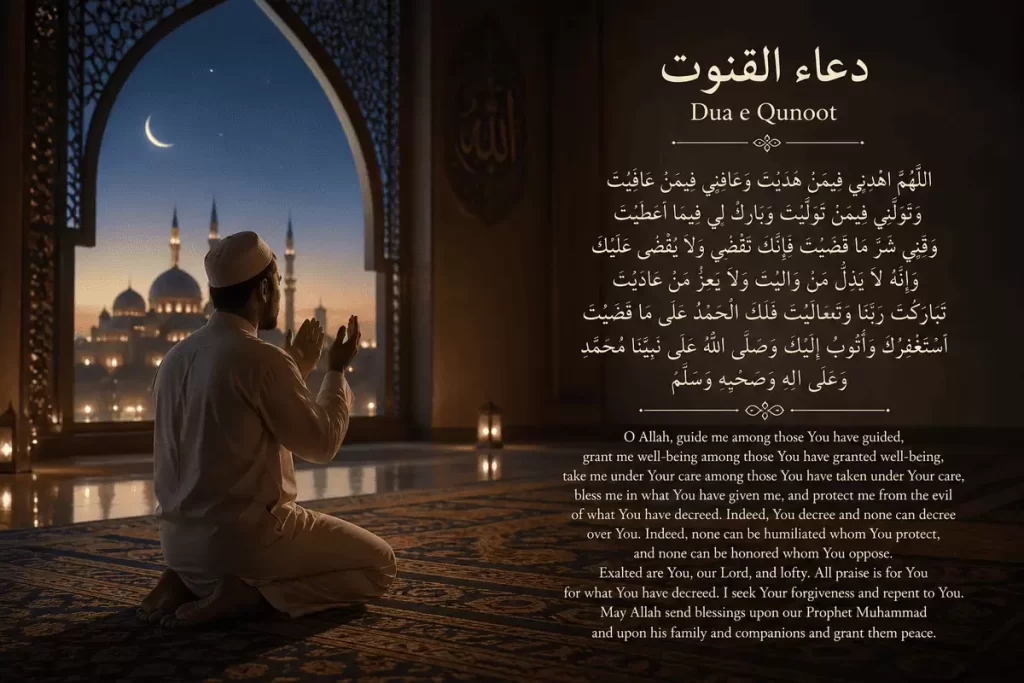
In the quiet moments of the night, when the world falls silent, and the heart seeks something greater, there is a prayer that has echoed through centuries of Islamic devotion: dua e qunoot. Short in words yet vast in meaning, this powerful supplication has been on the lips of believers since the time of the Prophet Muhammad (PBUH), offering a direct and intimate connection with Allah (SWT). Whether you are new to Islamic prayer or deepening a lifelong practice, understanding this dua can transform the way you worship forever.
What is dua e qunoot?
Dua e qunoot is a powerful and revered prayer in Islam that holds deep spiritual significance. It is a dua (invocation) recited during specific moments of daily prayers, particularly in the Witr prayer performed after Isha. The name translates to “the supplication of kneeling” or “the supplication of standing,” as it is traditionally recited while standing during prayer.
This dua is a profound expression of a believer’s reliance on Allah (SWT) for guidance, protection, and fulfillment of needs. Its origins trace back to the Prophet Muhammad (PBUH), who emphasized its importance in seeking divine help during times of distress or uncertainty. Dua e qunoot is considered a Sunnah practice — highly recommended but not obligatory in all prayers — though its recitation in the Witr prayer is particularly encouraged, in line with the Prophet’s (PBUH) own practices.
At its core, dua e qunoot encapsulates themes of humility, surrender, and trust in Allah’s wisdom. Its words convey a sense of urgency and sincerity, making it a favorite among those seeking spiritual closeness and divine intervention.
When to recite Dua e Qunoot?
The timing of reciting Dua e Qunoot is closely tied to specific moments within the Islamic prayer cycle, with the most prominent being during the Witr prayer. Here’s a breakdown of the key times when it is traditionally recited:
- During the Witr Prayer, Dua eQunoott is most commonly recited in the Witr prayer, performed after Isha. The dua is recited after the tashahhud and before the final tasleem, underscoring its role as a supplication for divine protection during the late hours of the night.
- In the Last Two Rak’ahs of Fajr, some scholars recommend reciting Dua e Qunoot in the last two rak’ahs of Fajr, particularly after the tashahhud — rooted in the Hadith, where the Prophet (PBUH) encouraged believers to seek Allah’s mercy during the early morning hours.
- In Times of Distress or need, Dua e Qunoot can be recited at any time a believer feels the need for divine intervention. Its brevity and depth make it accessible for spontaneous recitation, even outside the mosque.
- During the Month of Ramadan, many Muslims incorporate dua e qunoot into their Taraweeh prayers or personal supplications during Ramadan, as the month’s heightened spiritual focus makes it an ideal time to deepen one’s connection with Allah.
- Before or After Optional Prayers Some believers recite Duaa e qunoot before or after nafl prayers as a means of seeking blessings or expressing gratitude, infusing extra devotion into their daily worship.
Placement of dua e qunoot in prayer

The placement of dua e qunoot within the structure of Islamic prayer is deliberate, designed to maximize its spiritual impact. Understanding these placements ensures believers can integrate them seamlessly into their worship.
1. In the Witr Prayer
The most common placement for dua e qunoot is during the Witr prayer:
- After completing the required rak’ahs, the believer sits in the tashahhud position .
- Following the tashahhud and attahiyyat, dua e qunoot is recited aloud or silently.
- The prayer concludes with the final tasleem.
This placement aligns with the Prophet’s (PBUH) practice, emphasizing its role as a supplication for divine protection during the late-night hours.
2. In the Last Two Rak’ahs of Fajr
For those who choose to recite Dua e Qunoot in Fajr:
- After the first tashahhud in the second rak’ah, the believer stands for the third rak’ah.
- Upon sitting again for the second tashahhud, dua e qunoot is recited before the final tasleem.
3. During Other Prayers (Optional)
Dua e qunoot can be recited in other prayers, such as Maghrib or Isha, always after the tashahhud and before the final tasleem, mirroring its placement in the Witr prayer.
4. Outside of Structured Prayers
Dua e qunoot can be recited at any time, especially during moments of distress or reflection. Its brevity makes it ideal for spontaneous supplication, whether before sleep, after waking up, or during personal meditation.
Full text of Duaa e Qunoot
The full text of Dua e Qunoot, as narrated by the Prophet Muhammad (PBUH), is a concise yet profound supplication that encapsulates themes of surrender, protection, and divine mercy.
Arabic Text:
اللَّهُمَّ إِنِّي أَعُوذُ بِكَ أَنْ أُشْرِكَ بِكَ شَيْئًا وَأَنَا أَعْلَمُ بِهِ وَأَسْتَغْفِرُكَ لِمَا لَا أَعْلَمُ بِهِ وَأَتُوبُ إِلَيْكَ مِنْ لَمَا أَعْلَمُ
English Transliteration:
The dua e qunoot is a profound expression of a Muslim’s faith, humility, and reliance on Allah (SWT). Each phrase carries deep spiritual significance, reflecting the believer’s awareness of their limitations and their complete trust in Allah’s wisdom.
Explanation of the meaning of Dua e Qunoot

Each word of Dua e Qunoot carries a profound meaning that goes far beyond its simple structure. Understanding its phrases transforms recitation from a routine act into a deeply personal conversation with Allah (SWT):
1. “Allahumma” – “O Allah.”
This opening invocation establishes a direct and intimate connection with the Creator. The use of “Allahumma” signifies that the supplication is addressed exclusively to Allah, emphasizing the oneness of worship (tawhid) and setting the tone for sincerity and humility.
2. “Inni a’udhu bika an ushrika bika shay’an” – “I seek refuge in You from associating anything with You.”
This phrase is a declaration of faith at the heart of the dua, affirming the believer’s conscious rejection of shirk. The addition of “wa ana a’lamu bihi” (“and I know this”) underscores the believer’s awareness of their faith and their steadfastness against any form of false worship.
3. “Wa astaghfiruka lima la a’lamu bihi” – “And I seek Your forgiveness for what I do not know.w”
This phrase highlights human fallibility and the need for divine mercy. It refers to sins committed unknowingly — through ignorance, forgetfulness, or oversight — reflecting the belief that Allah (Ghaffar) extends His forgiveness even to unintentional mistakes.
4. “Wa atubu ilayka min lima a’lamu” – “And I repent to You for what I know. ow”
Here, the believer takes full responsibility for their conscious sins. This phrase is a powerful act of tawba (repentance), aligning the believer’s heart with Allah’s pleasure and serving as a spiritual reset — a renewed commitment to follow the straight path (Siratal Mustaqim).
Virtues of dua e qunoot
Dua e qunoot holds a distinguished place among Islamic supplications, praised by scholars across generations for its depth and comprehensiveness. Among its many virtues:
- A Complete Spiritual Exercise: It combines three essential acts of worship in a single recitation: seeking refuge from shirk, asking for forgiveness, and making sincere repentance.
- A Prophetic Sunnah: The Prophet Muhammad (PBUH) regularly recited it, particularly in the Witr prayer, which elevates its status and encourages believers to follow his example.
- Strengthens the Bond with Allah: Its consistent recitation keeps the heart in a constant state of awareness, humility, and reliance on Allah’s mercy.
- Comprehensive in Forgiveness: It covers both intentional and unintentional sins, reflecting the vastness of Allah’s mercy toward those who repent sincerely.
- Universal Relevance: Its themes transcend specific situations, making it a meaningful supplication in times of ease and hardship alike.
- A Daily Spiritual Reminder: More than a ritual, it serves as a constant reminder of the believer’s purpose, limitations, and ultimate return to Allah.
How does the Arabian Tongue shape your journey of learning the Quran and Arabic?
At Arabian Tongue, we help you understand the Quran deeply and connect with its meanings through simple and effective teaching methods. Our courses are designed to make your learning journey clear, engaging, and spiritually enriching.
Guidance from the Quran and Hadith
قال الله تعالى: “وَقَالَ رَبُّكُمُ ادْعُونِي أَسْتَجِبْ لَكُمْ” (غافر: 60)
Allah says: “And your Lord said: Call upon Me, I will respond to you.” (Ghafir: 60)
عن النعمان بن بشير رضي الله عنه أن النبي ﷺ قال: “الدعاء هو العبادة.”
Al-Nu’man ibn Bashir (RA) reported that the Prophet (PBUH) said: “Supplication is worship itself.” (Abu Dawud, Al-Tirmidhi)
FAQs
Is dua e qunoot obligatory or Sunnah?
Dua e qunoot is considered a Sunnah practice, meaning it is highly recommended but not obligatory. Its recitation in the Witr prayer is particularly encouraged, as it follows the Prophet's (PBUH) own example.
Can Dua e Qunoot be recited in every prayer?
While most commonly recited in Witr and Fajr, it is not restricted to these prayers. Believers may recite it in other prayers or at any time of personal need, though it remains optional outside of Witr.
What mistakes should be avoided when reciting it?
The most common mistakes include reciting it mechanically without focus on its meaning and rushing through the words without sincerity. Believers should also avoid the misconception that its recitation alone guarantees an immediate response to their supplication.