
Imagine being called by name on the Day of Resurrection, not for your wealth or status, but for the words of Allah you carried in your heart. The Quran is not merely a book to be read; it is a covenant between the believer and their Creator, a light that illuminates the path in both this life and the Hereafter. Those who dedicate themselves to memorizing it are promised rewards beyond human comprehension. But what exactly did the Prophet (PBUH) say about the virtues of Hifz? The answer may change the way you see this noble journey forever.
Importance of the Quran in Islam
The Quran is the holy book of Islam, revered as the literal word of Allah (SWT) revealed to the Prophet Muhammad (PBUH) over 1,400 years ago. It serves as the ultimate guide for Muslims in all aspects of life, spiritual, moral, and practical. Unlike other religious texts, the Quran is believed to be preserved in its original form, unchanged since its revelation, ensuring that every word carries immense weight and significance.
Memorizing the Quran, or Hifz, is considered one of the highest acts of worship in Islam. The Prophet (PBUH) emphasized its importance repeatedly, stating that those who dedicate themselves to memorizing and reciting the Quran will receive unparalleled rewards. The Quran itself describes its reciters as noble and honored, promising them a place of dignity in Paradise. For Muslims, engaging with the Quran is not just an academic pursuit but a spiritual journey that strengthens faith and brings one closer to Allah.
What does it mean to memorize the Quran?
Memorizing the Quran, or Hifz, is the process of committing the entire text to memory with perfect accuracy. This practice is rooted in the Sunnah of the Prophet (PBUH), who encouraged his companions to memorize the Quran as a means of preserving its teachings for future generations. Unlike rote learning, Hifz requires a deep connection with the text, ensuring that the memorizer not only recalls the words but also understands their meanings and applications.
The journey of Hifz begins with selecting a suitable Quranic portion, often starting with shorter Surahs before progressing to longer chapters. Each memorizer follows a personalized schedule, balancing daily recitation with regular reviews to reinforce retention. The process demands discipline, patience, and a strong spiritual connection, as the memorizer seeks Allah’s blessings to aid in their efforts.
Hadith about the virtues of memorizing the Quran:
The Prophet Muhammad (PBUH) frequently highlighted the extraordinary rewards associated with memorizing the Quran. His teachings serve as a constant reminder of the spiritual and worldly benefits that await those who dedicate themselves to this noble pursuit. Below are some of the most profound Hadiths that emphasize the virtues of Hifz:
1. Status of Hafiz in Islam
The Prophet (PBUH) stated, “The one who memorizes the Quran will be called on the Day of Resurrection, ‘Recite and ascend in rank, O reciter of the Quran!'” This Hadith underscores the elevated status of a Hafiz in both this life and the Hereafter. Their honor is unmatched, and they are granted a position of respect that transcends worldly achievements.
2. Rewards in this life and the Hereafter
Another Hadith narrated by Abu Hurayrah (RA) reveals that the Prophet (PBUH) said, “The one who recites the Quran beautifully, smoothly, and precisely will be given a crown of honor on the Day of Resurrection.” This crown, made of pearls and rubies, symbolizes the divine recognition of their efforts. Additionally, the Quran itself promises its reciters a place in the highest levels of Paradise, where they will be shielded from the trials of the grave and the Day of Judgment.
3. Intercession of the Quran on the Day of Judgment
The Quran is not just a book of guidance but also an intercessor for its memorizers. The Prophet (PBUH) explained that the Quran will intercede for those who commit it to memory, presenting their good deeds to Allah and pleading for forgiveness. This intercession is a unique privilege granted solely to those who engage deeply with the Quran’s verses.
4. Elevation of ranks in Paradise
A Hadith in Sahih Muslim states that the Prophet (PBUH) said, “The best among you are those who learn the Quran and teach it.” This Hadith emphasizes that those who memorize the Quran and share its knowledge with others will be elevated to the highest ranks in Paradise. Their reward is multiplied not only for their personal recitation but also for their efforts in educating others.
5. Honor for the family of the one who memorizes
The Prophet (PBUH) also mentioned that the family of a Hafiz will be honored in this life and the Hereafter. Their parents, siblings, and children will benefit from the blessings associated with their loved one’s commitment to Hifz. This Hadith serves as an encouragement for families to support and celebrate the achievements of those who embark on this spiritual journey.
Explanation of selected authentic Hadiths:
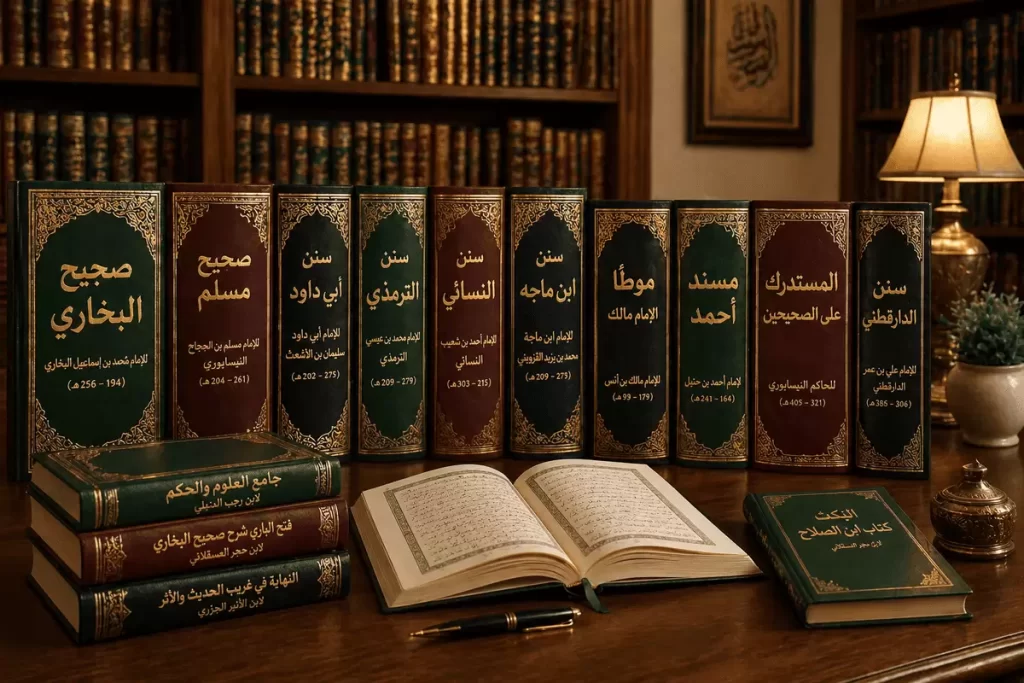
The Hadiths related to the virtues of memorizing the Quran are not merely historical accounts but living testimonies of the Prophet’s (PBUH) teachings. Below are explanations of three key Hadiths that highlight the profound rewards awaiting those who dedicate themselves to Hifz:
1. “The best among you are those who learn the Quran and teach it.”
قال رسول الله صلى الله عليه وسلم: «خَيْرُكُمْ مَنْ تَعَلَّمَ الْقُرْآنَ وَعَلَّمَهُ»
The Prophet (PBUH) said: “The best among you are those who learn the Quran and teach it.”
المصدر: صحيح البخاري | Source: Sahih Al-Bukhari
This Hadith, narrated by Abdullah ibn Mas’ud (RA), underscores the dual responsibility of memorizing and teaching the Quran. The Prophet (PBUH) did not stop at encouraging personal recitation; he also emphasized the importance of sharing knowledge with others. Those who memorize the Quran and subsequently teach others are rewarded not only for their personal efforts but also for their role in spreading divine guidance.
2. Hadith about crowns for parents of Hafiz
قال رسول الله صلى الله عليه وسلم: «يُجَاءُ بِوَالِدَيْهِ يَوْمَ الْقِيَامَةِ فَيُلْبَسَانِ حُلَّتَيْنِ لَمْ يُرَ فِي الدُّنْيَا مِثْلُهُمَا»
The Prophet (PBUH) said: “On the Day of Resurrection, his parents will be dressed in garments the like of which have never been seen in this world.”
المصدر: سنن أبي داود | Source: Sunan Abi Dawud
The Prophet (PBUH) stated that the parents of a Hafiz will be given crowns of light on the Day of Resurrection. This Hadith reveals that the blessings of Hifz extend beyond the individual memorizer to their entire family. Parents who support their children’s journey in memorizing the Quran will be honored in the Hereafter, serving as a motivation for families to invest in their children’s spiritual growth.
3. Hadith about companionship with noble angels
قال رسول الله صلى الله عليه وسلم: «الْمَاهِرُ بِالْقُرْآنِ مَعَ السَّفَرَةِ الْكِرَامِ الْبَرَرَةِ»
The Prophet (PBUH) said: “The one who is proficient in the Quran will be with the noble and obedient angels.”
المصدر: صحيح مسلم | Source: Sahih Muslim
This Hadith narrates that those who memorize and recite the Quran beautifully will be accompanied by noble angels, who will bear witness to their righteous deeds. This companionship is a sign of Allah’s approval and a source of spiritual comfort for the memorizer.
How does the Arabian Tongue shape your journey of learning the Quran and Arabic?
At Arabian Tongue, we help you understand the Quran deeply and connect with its meanings through simple and effective teaching methods. Our courses are designed to make your learning journey clear, engaging, and spiritually enriching.
Guidance from the Quran and Hadith
قال الله تعالى: «إِنَّا نَحْنُ نَزَّلْنَا الذِّكْرَ وَإِنَّا لَهُ لَحَافِظُونَ»
سورة الحجر، الآية 9
Allah (SWT) said: “Indeed, it is We who sent down the Qur’an,n and indeed, We will be its guardian.”
Surah Al-Hijr:9
قال رسول الله صلى الله عليه وسلم: «اقْرَأِ الْقُرْآنَ فَإِنَّهُ يَأْتِي يَوْمَ الْقِيَامَةِ شَفِيعًا لِأَصْحَابِهِ»
صحيح مسلم
The Prophet (PBUH) said: “Recite the Quran, for it will come on the Day of Resurrection as an intercessor for its companions.”
Sahih Muslim
FAQs
What rewards are promised to those who memorize the Quran?
Those who memorize the Quran are promised a crown of honor on the Day of Resurrection and a place in the highest levels of Paradise. Their ranks will be elevated with every verse they recite, and they will be shielded from the trials of the grave and the Day of Judgment.
What is the status of a Hafiz in Islam?
A Hafiz holds one of the highest positions of honor in Islam, both in this life and the Hereafter. They are granted a position of respect that transcends worldly achievements and will be called upon on the Day of Resurrection to recite and ascend in rank.
How does the Quran intercede on the Day of Judgment?
The Quran will intercede for those who commit it to memory, presenting their good deeds to Allah and pleading for their forgiveness. This intercession is a unique privilege granted solely to those who engage deeply with the Quran's verses.
Are there benefits for the family of someone who memorizes the Quran?
The family of a Hafiz will be honored in both this life and the Hereafter, with their parents being dressed in garments of light on the Day of Resurrection. The blessings of Hifz extend beyond the individual memorizer to their entire family.