
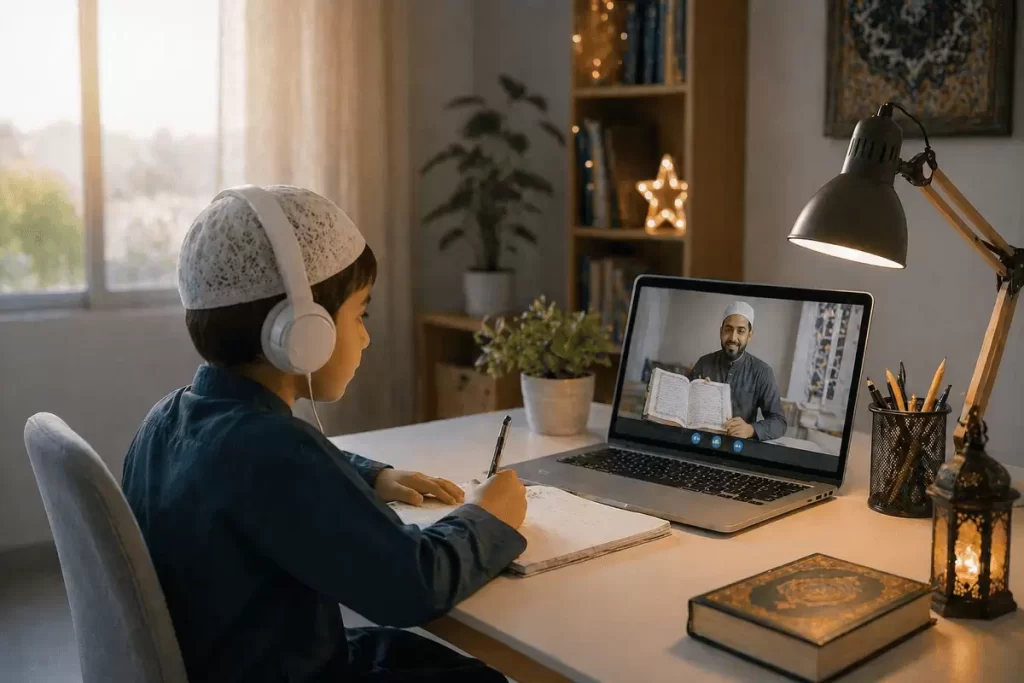
In a world where digital boundaries are fading, the journey to the heart of the Quran has never been more accessible. Imagine your child mastering the art of Tajweed, their voice resonating with clarity and confidence, all from the comfort of home. A Quran recitation online course for kids is more than just lessons; it is a gateway to spiritual growth, linguistic excellence, and lifelong discipline. Discover how interactive technology and expert guidance are transforming traditional learning into an inspiring, joyful adventure for young hearts.
Why online learning is suitable for children
Digital education for Quran learning offers flexibility and personalized attention. Online courses eliminate geographical barriers and travel, allowing learning at a pace that suits the child through interactive tools and recorded sessions.
Main Points:
- Flexibility in scheduling: Arrange lessons around family routines and the child’s energy levels without commutes.
- Access to expert instructors: Qualified, native Arabic speakers and certified educators specializing in children’s education.
- Safe environment: Focused interactions that eliminate distractions and allow parental supervision.
- Cost-effectiveness: Affordable models with included digital resources and no travel expenses.
- Global community: Interaction with peers from diverse backgrounds and exposure to different recitation styles.
What is a quran recitation online course for kids?
A quran recitation online course for kids is a structured program teaching children recitation with proper pronunciation and Tajweed. These courses use age-appropriate, interactive methods and prioritize recitation skills over rote memorization. The curriculum starts with the Arabic alphabet and basic Tajweed, progressing to complex techniques like elongation and pauses, often using storytelling to connect children with the verses.
1. Core components
- Interactive live sessions with certified instructors.
- Recorded lessons for self-paced learning.
- Digital textbooks, audio references, and progress tracking.
2. Key features to look for
- Certified teachers and a structured curriculum.
- Engaging multimedia (videos, animations, quizzes).
- Regular feedback and personalized attention.
3. Differences from traditional learning
- Uses technology and gamification to enhance engagement.
- Focuses on recitation skills rather than memorization.
- Employs modern tools like interactive whiteboards and offers flexible pacing.
4. Who can benefit?
- Children aged 4 to 12.
- Homeschooling families.
- Parents seeking a balanced Quranic education for busy children.
5. Effective teaching methods
- Storytelling for context and repetition exercises.
- Group recitation to build confidence.
- Visual aids and props for better retention.
Key benefits of online Quran recitation courses

Enrolling in a quran recitation online course for kids develops discipline, consistency, and time management. The interactive nature provides immediate feedback, keeping children motivated. It also strengthens Arabic language skills, including pronunciation, grammar, and vocabulary, preparing children for religious and academic success.
1. Developmental benefits
- Enhances memory, concentration, and public speaking confidence.
- Encourages curiosity and fosters emotional intelligence through feedback.
2. Academic and linguistic advantages
- Strengthens Arabic proficiency and improves articulation.
- Introduces basic Tajweed rules and expands vocabulary.
3. Social and emotional growth
- Encourages safe peer interaction and a sense of community.
- Reduces anxiety through gradual progression and instills pride in achievements.
4. Convenience for parents
- No physical attendance required; ability to monitor and support remotely.
- Access to progress reports and flexibility in choosing instructors.
5. Long-term spiritual benefits
- Creates a lifelong connection with the Quran and encourages daily recitation.
- Instills values like patience and prepares children for advanced studies.
How to choose the right course for your child
Selecting the ideal quran recitation online course for kids requires evaluating instructor qualifications and ensuring the curriculum is age-appropriate and progressive. Parents should consider the course’s flexibility (one-on-one vs. group), the reliability of technological tools like interactive whiteboards, and reviews from other parents to gauge effectiveness.
1. Factors to consider
- Instructor qualifications, experience, and curriculum structure.
- Flexibility in scheduling, class sizes, and platform reliability.
- Parent and student feedback.
2. Questions to ask before enrolling
- Teacher-to-student ratio and availability of trial classes.
- Methods for tracking progress and technical support.
- Availability of additional resources like e-books.
3. Red flags to watch out for
- Lack of transparency regarding credentials or learning objectives.
- Poor customer support and unresponsive communication.
- Hidden fees or negative reviews about the platform.
4. Tips for smooth enrollment
- Schedule a consultation and request a sample lesson.
- Check for trial periods or money-back guarantees.
- Ensure the platform is child-friendly, secure, and aligns with family values.
Simple and effective methods to teach kids recitation
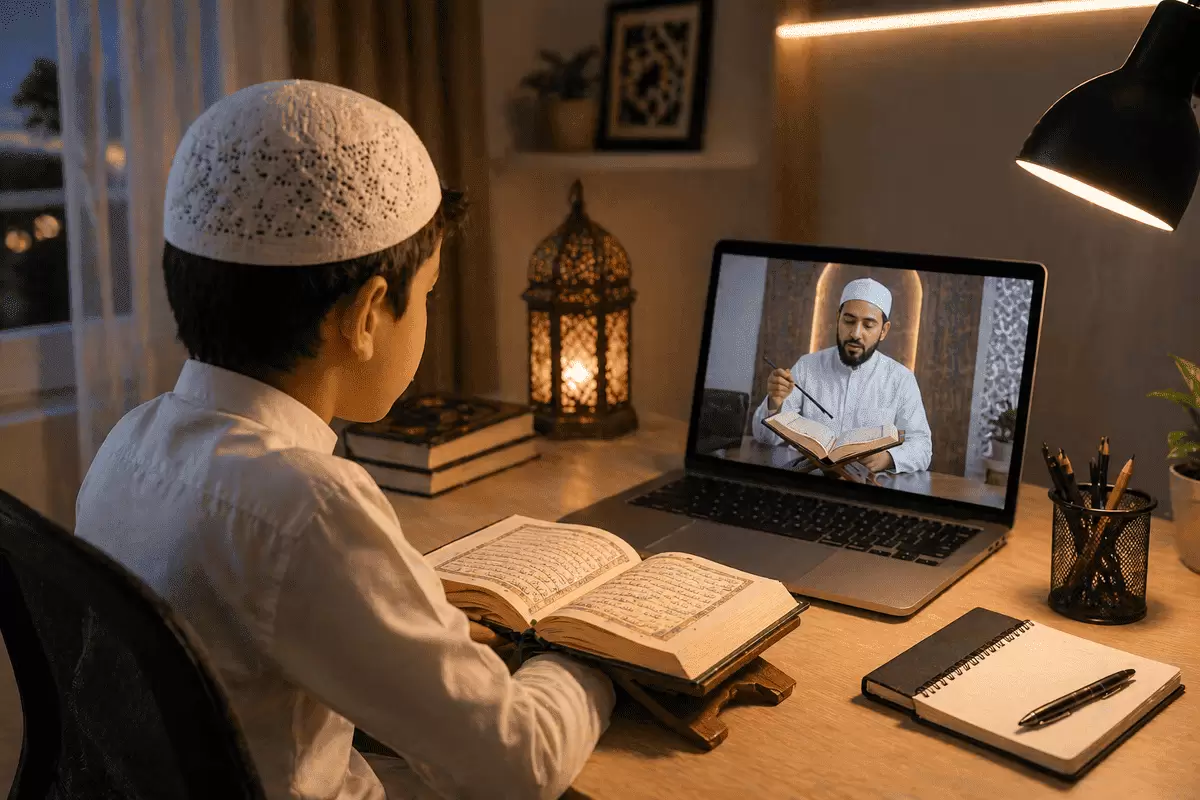
Teaching Quran recitation to children can be enjoyable through gamification (e.g., flashcards, competitions) and repetition with variation (e.g., songs, dramatic readings). Technology, including apps with audio feedback, further enhances the experience, making it engaging and relatable.
1. Engaging Teaching Techniques
- Storytelling: Using Quranic stories to create emotional connections and relate verses to real-life situations.
- Multimedia & Visual Aids: Animated videos, colorful letters, and audio recordings of professional reciters.
- Role-Playing: Acting out scenes from Quranic stories to make lessons dynamic.
- Gamified Learning: Using treasure hunts, level-up systems, and rewards like virtual coins.
2. Structured Practice for Fluency
- Recitation Drills: Breaking verses into chunks, using finger-pointing, and recording sessions for self-improvement.
- Repetition & Variation: Reciting in different tones, speeds, and mixing recitation with movement.
- Tajweed Exercises: Using tongue twisters, color-coded rules, and catchy tunes to remember rules.
- Progressive Difficulty: Starting with short Surahs and gradually introducing longer segments.
3. Supportive Learning Environment
- Positive Reinforcement: Praising effort over perfection and using reward systems for milestones.
- Parental Involvement: Modeling pronunciation and holding family recitation sessions.
- Peer Interaction: Virtual recitation circles and encouraging children to teach siblings.
- Consistency: Setting fixed daily routines and using visual schedules.
4. Overcoming Common Challenges
- Motivation: Letting children choose Surahs and connecting recitation to their interests.
- Pronunciation: Using mirrors to see lip positions and syllable breakdowns.
- Attention Spans: Keeping sessions short (15–30 minutes) and incorporating movement breaks.
- Fear of Mistakes: Normalizing errors and focusing on progress rather than perfection.
5. Long-Term Strategies
- Personal Connection: Discussing Quranic themes and encouraging reflection on favorite verses.
- Advanced Techniques: Introducing Tajweed-colored Qurans and different recitation styles.
How does the Arabian Tongue shape your journey of learning the Quran and Arabic?
At Arabian Tongue, we help you understand the Quran deeply and connect with its meanings through simple and effective teaching methods. Our courses are designed to make your learning journey clear, engaging, and spiritually enriching.
Guidance from the Quran and Hadith
قال رسول الله ﷺ: «الَّذِي يَقْرَأُ القُرْآنَ وَهُوَ مَاهِرٌ بِهِ مَعَ السَّفَرَةِ الكِرَامِ البَرَرَةِ» (رواه البخاري ومسلم).
The Prophet (PBUH) said: “The one who is proficient in the recitation of the Quran will be with the honorable and obedient scribes (angels).” (Narrated by Al-Bukhari & Muslim).
- الدلالة: تشجيع الأطفال على الوصول لمرحلة المهارة والإتقان في التلاوة.
- The Significance: Encouraging children to reach the level of proficiency and mastery in Quranic recitation.
FAQs
Are online Quran classes effective for kids?
Yes, they provide personalized attention and use interactive tools like virtual whiteboards and multimedia to keep children engaged. They also eliminate geographical barriers, allowing kids to learn at their own pace from expert instructors.
At what age should Quran recitation start?
The ideal age to begin is between 4 and 12 years old, as children at this stage are highly receptive to language. Starting early helps them build a strong foundational connection and master correct pronunciation more naturally.
How can kids improve their recitation skills?
Children can improve through consistent repetition, recording their voices to identify errors, and participating in group recitation circles. Using educational apps with audio feedback and practicing with different speeds also builds fluency and confidence.
Do children need to learn Tajweed?
Yes, learning basic Tajweed is essential to ensure proper pronunciation, rhythm, and the correct delivery of the Quranic text. Introducing these rules early through color-coded guides or catchy tunes makes mastering them much easier for young learners.