
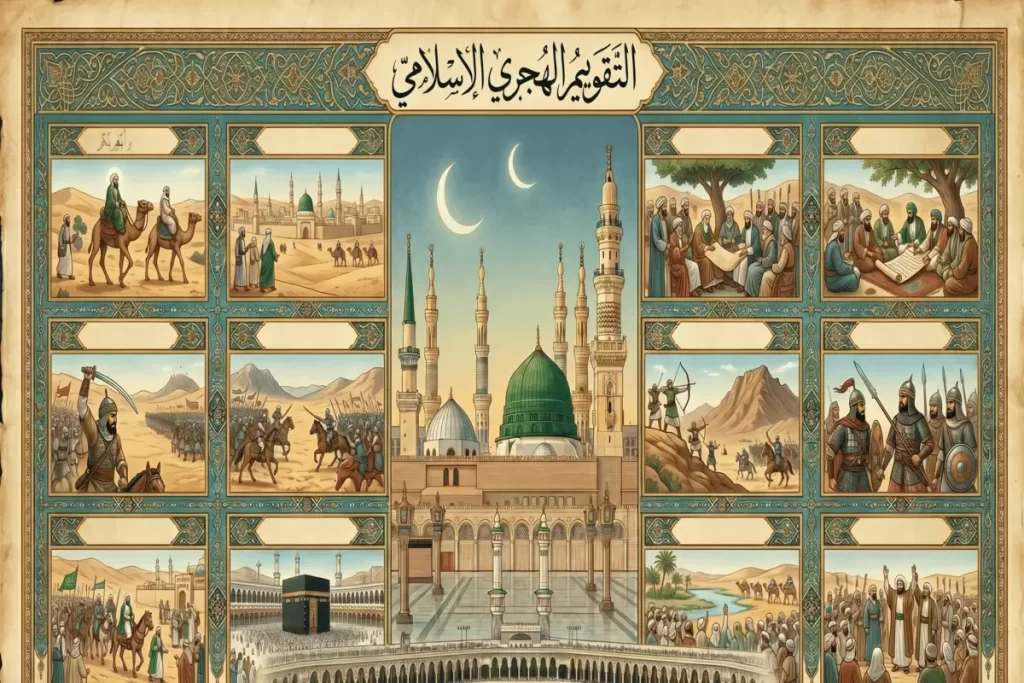
The Islamic calendar guides the rhythm of Muslim life, shaping when sacred months and celebrations occur. It connects daily routines with spiritual moments, from fasting in Ramadan to performing Hajj. By following the lunar cycle, Muslims experience a sense of unity and timing in their worship. This calendar not only organizes religious practices but also links generations through centuries of tradition. Exploring its workings deepens understanding of Islamic culture and spiritual discipline.
Definition of the Islamic Calendar
The “Islamic calendar”, also known as the “Hijri calendar”, is a lunar calendar consisting of 12 months in a year of 354 or 355 days. Unlike the Gregorian calendar, which is solar-based and aligns with the Earth’s revolution around the Sun, the Islamic calendar follows the cycles of the Moon. This means that Islamic months begin with the sighting of the new moon and last for 29 or 30 days, depending on the lunar cycle. The calendar is purely lunar, which is why Islamic years are shorter than Gregorian years by approximately 11 days. This difference affects how dates shift annually, making the Islamic calendar a unique system deeply tied to the Islamic faith and its religious observances.
History and Origin of the Hijri Calendar
The Islamic calendar originated in 622 CE with the Hijra, when Prophet Muhammad migrated from Mecca to Medina, marking the beginning of the Islamic era. Caliph Umar ibn al-Khattab later formalized this lunar-based system after consulting with the Prophet’s companions to standardize Islamic events and historical records.
The Islamic year consists of 12 lunar months totaling 354-355 days, making it shorter than the 365-day Gregorian calendar. This difference causes Islamic months like Ramadan to shift through different seasons over time. Beyond religious observance, the Hijri calendar preserves Islamic heritage by dating historical events such as the conquest of Jerusalem in 638 CE, maintaining a unified temporal framework that connects Muslims worldwide to their shared past and continuing traditions.
How Months Are Calculated in the Islamic Calendar
The Islamic calendar is a lunar system that guides Muslims in observing religious events. It plays a vital role in determining the timing of worship, festivals, and communal practices.
- The Islamic calendar is based on the sighting of the new moon to mark the start of each month.
- A new month begins once the crescent (hilal) is confirmed by authorized observers or committees.
- Months last 29 or 30 days depending on the lunar cycle (about 29.5 days).
- Astronomical calculations are used to predict moon sightings but support, not replace, actual observation.
- Some regions combine moon sighting and calculations to reach a unified decision.
- There is no fixed leap year system, but occasional adjustments keep alignment with the lunar cycle.
- Methods of determining the start of months vary between countries.
- The calendar is essential for determining key religious events like Ramadan, Eid, and Hajj.
- It serves as a spiritual and social framework for Muslims worldwide.
Importance of the islamic calendar in Islam
The Islamic calendar holds great significance in Islam as it organizes religious life and sacred events. It guides Muslims in observing key acts of worship and important occasions throughout the year.
- The Islamic calendar determines the timing of essential acts of worship like fasting in Ramadan and performing Hajj.
- It helps Muslims identify important religious occasions such as Eid al-Fitr and Eid al-Adha.
- It preserves key historical events in Islam, including the Hijra (migration of Prophet Muhammad ﷺ).
- It unifies Muslims worldwide by providing a shared system for religious observances.
- It connects daily life with spiritual practices and Islamic traditions.
- It reinforces the importance of lunar cycles in Islamic teachings and rituals.
- It supports the organization of Islamic months and sacred periods.
- It strengthens the sense of identity and continuity within the Muslim community.
189:يَسْأَلُونَكَ عَنِ الْأَهِلَّةِ قُلْ هِيَ مَوَاقِيتُ لِلنَّاسِ وَالْحَجّ) البقرة)
“They ask you about the new moons. Say, ‘They are markers for time and for Hajj.’”Al-Baqarah :189
Role of Moon Sighting in Determining Months
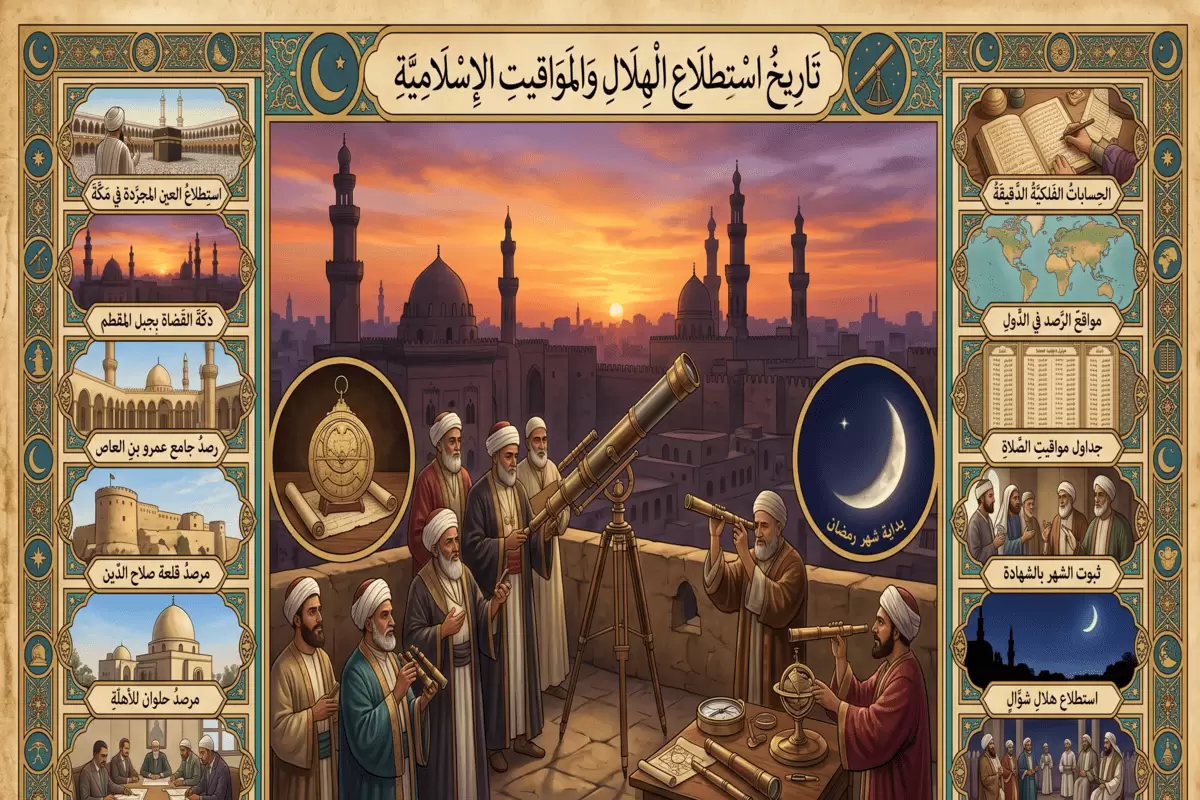
Moon sighting plays a fundamental role in determining the start of each month in the Islamic calendar. It ensures accuracy in religious observances by aligning the calendar with the natural lunar cycle.
1. The Process of Moon Sighting
Moon sighting combines scientific prediction with religious verification to ensure accuracy and proper observance.
- Astronomical Prediction: Experts calculate when and where the moon is likely to appear, helping communities prepare in advance.
- Visual Confirmation: Trusted observers confirm the crescent after sunset, usually requiring reliable witnesses to validate the sighting.
- Official Announcement: Authorities announce the start of the new month through mosques and media once the sighting is confirmed.
- Regional Variations: Different countries follow varying methods, such as local sighting or combining it with calculations.
2. Scientific and Religious Justification
Moon sighting is supported by both scientific reasoning and strong foundations in Islamic teachings.
- Quranic Reference: The Quran highlights the importance of the Moon’s phases as signs that guide timekeeping.
- Sunnah Practice: The Prophet Muhammad (peace be upon him) emphasized announcing the new month based on moon sighting.
- Not Relying on Calculations Alone: Visual confirmation is prioritized to avoid errors from calculations.
- Maintaining Accuracy: This method keeps the Islamic calendar aligned with the actual lunar cycle.
3. Challenges and Controversies
Modern developments have introduced new challenges to traditional moon sighting practices.
- Technological Advancements: Advanced tools and global communication sometimes create differences in determining the start of months.
- Differences Between Countries: Variations in methods can lead to differences in dates for events like Ramadan.
Use of the islamic calendar in daily life
The Islamic calendar plays a central role in organizing the everyday life of Muslims, linking spiritual duties with practical scheduling.
- Timing of Worship: It helps determine when to perform daily and special acts of worship, such as fasting in Ramadan or offering Eid prayers.
- Planning Religious Events: Families and communities use it to prepare for important occasions like weddings, funerals, and communal gatherings.
- Educational and Social Activities: Schools, mosques, and organizations follow the calendar to schedule Islamic classes, lectures, and cultural events.
- Agricultural and Economic Decisions: In some regions, the lunar calendar influences farming cycles and trade activities tied to Islamic months.
- Maintaining Spiritual Awareness: By following the Islamic calendar, Muslims stay mindful of sacred periods, encouraging reflection and devotion throughout the year.
Impact of the Islamic Calendar on Religious Practices
The Islamic calendar profoundly influences how Muslims observe their religious duties, ensuring rituals occur at the correct times each year.
- Fasting in Ramadan: The start and end of Ramadan are determined by the lunar months, guiding the timing of daily fasts and nightly prayers.
- Hajj Pilgrimage: Dates for Hajj are fixed according to the Islamic calendar, allowing Muslims worldwide to synchronize their pilgrimage.
- Eid Celebrations: Eid al-Fitr and Eid al-Adha are celebrated based on the sighting of the new moon, marking the conclusion of Ramadan and Hajj rituals.
- Observance of Sacred Days: Other important days, such as Ashura or the Day of Arafah, are scheduled according to lunar months, maintaining consistency in religious practice.
- Community Cohesion: Following the calendar helps communities observe rituals together, reinforcing unity and shared spiritual experience.
How does the Arabian Tongue shape your journey of learning the Quran and Arabic?
At Arabian Tongue, we help you understand the Quran deeply and connect with its meanings through simple and effective teaching methods. Our courses are designed to make your learning journey clear, engaging, and spiritually enriching.
Guidance from the Quran and Hadith
هُوَ الَّذِي جَعَلَ الشَّمْسَ ضِياءً وَالْقَمَرَ نُورًا وَقَدَّرَهُ مَنَازِلَ لِتَعْلَمُوا عَدَدَ السِّنِينَ وَالْحِسَابَ ) يونس: 5)
“It is He who made the sun a shining light and the moon a derived light and determined for it phases, that you may know the number of years and calculation of time.” Yunus:5
FAQs
When did the Hijri calendar start?
The Hijri calendar started in 622 CE, marking the migration (Hijra) of Prophet Muhammad ﷺ from Mecca to Medina, which became year 1 AH.
How can you convert Hijri dates to Gregorian?
Hijri dates can be converted using astronomical calculations or online converters, though minor variations may occur due to moon sightings.
Does the Islamic calendar differ between countries?
Yes, the start of months can vary between countries depending on local moon sightings or reliance on calculations.
Why is the Islamic calendar important for Muslims?
It governs religious practices, festivals, and rituals, ensuring acts of worship are observed at the correct lunar dates.