
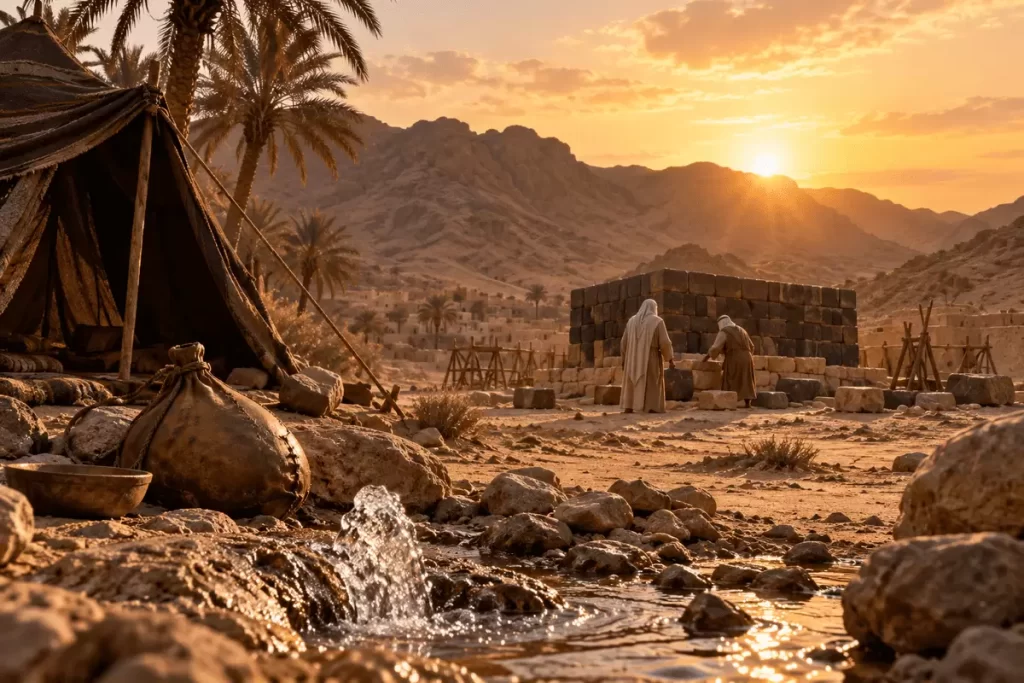
The Story of Prophet Ismael, also known as Ismail, is closely tied to some of the most important places and rituals in Islam. His life begins with his mother Hajar searching for water in a barren valley, leading to the miracle of Zamzam. As a young man, he submitted to Allah’s command in the great test of sacrifice, which Muslims commemorate every year on Eid al-Adha. Later, he helped his father Ibrahim raise the foundations of the Kaaba. His obedience, patience, and truthfulness made him a prophet whose legacy lives on in Hajj and in the hearts of all believers.
Who Was Prophet Ismail?
Ismail was the firstborn son of Prophet Ibrahim and his wife Hajar, born after Ibrahim prayed for a righteous child. Key facts about him include:
- Parents: Prophet Ibrahim and Hajar.
- Quranic description: a forbearing boy, true to his promise, a messenger and a prophet.
- Home: the valley of Makkah, where he grew up.
- Legacy: ancestor of the northern Arabs and of Prophet Muhammad ﷺ.
Hajar, Ismail and the Story of Zamzam
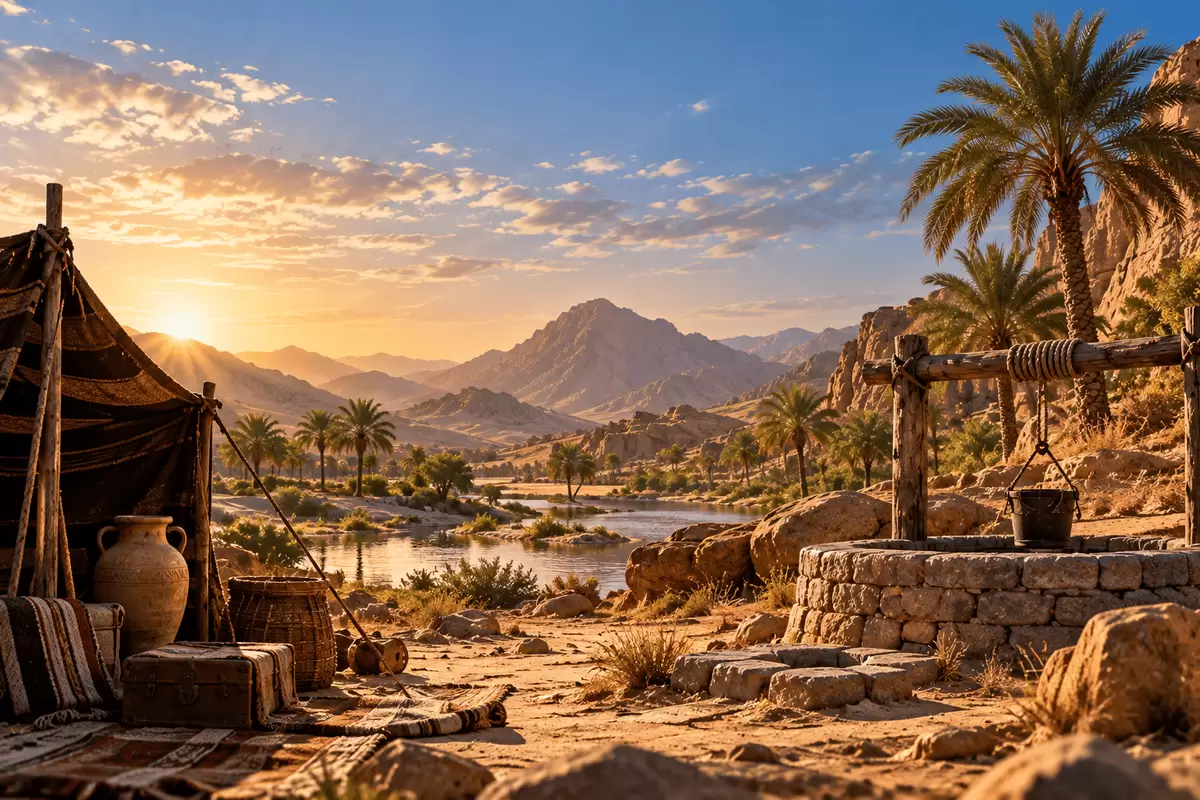
By Allah’s command, Ibrahim brought Hajar and the infant Ismail to the barren valley of Makkah. The miracle of Zamzam unfolded in these stages:
- Ibrahim left them with a bag of dates and a skin of water.
- Hajar asked whether Allah had commanded this, and when he said yes, she replied that Allah would not neglect them.
- When the water ran out, she ran seven times between the hills of Safa and Marwah searching for help.
- An angel struck the ground, and the spring of Zamzam burst forth beside Ismail.
- Her running became the ritual of sa’y performed by every pilgrim.
Prophet Ismail and the Sacrifice
When Ismail grew old enough to work alongside his father, Ibrahim faced the greatest test of his life. Surah As-Saffat describes it in moving detail:
- Ibrahim saw in a dream that he was sacrificing his son, and the dreams of prophets are revelation.
- He told Ismail, who replied, “O my father, do as you are commanded. You will find me, if Allah wills, among the patient.”
- Both submitted, and Ibrahim laid his son down on his forehead.
- Allah called out that Ibrahim had fulfilled the vision and ransomed Ismail with a great sacrifice.
Ibrahim and Ismail Building the Kaaba
Years later, Ibrahim returned to Makkah with a new command: to build the House of Allah. Father and son worked together:
- Ismail brought the stones while Ibrahim built the walls.
- Ibrahim stood on a stone to raise the walls higher, known today as Maqam Ibrahim.
- Both prayed, “Our Lord, accept this from us. You are the All-Hearing, the All-Knowing.”
- They asked Allah to send a messenger from their descendants, a prayer fulfilled in Prophet Muhammad ﷺ.
Prophet Ismail in the Quran
Ismail is mentioned by name about twelve times in the Quran, and his story appears in several surahs. Key passages include:
- Surah Al-Baqarah (2:125 to 129): building the Kaaba and the prayer of father and son.
- Surah Maryam (19:54 to 55): praise for his truthfulness and his call to prayer and zakah.
- Surah As-Saffat (37:101 to 107): the test of sacrifice, though his name is not stated there.
- Surah Al-Anbiya (21:85): his mention among the patient.
Eid Al-Adha and the Story of Ismail
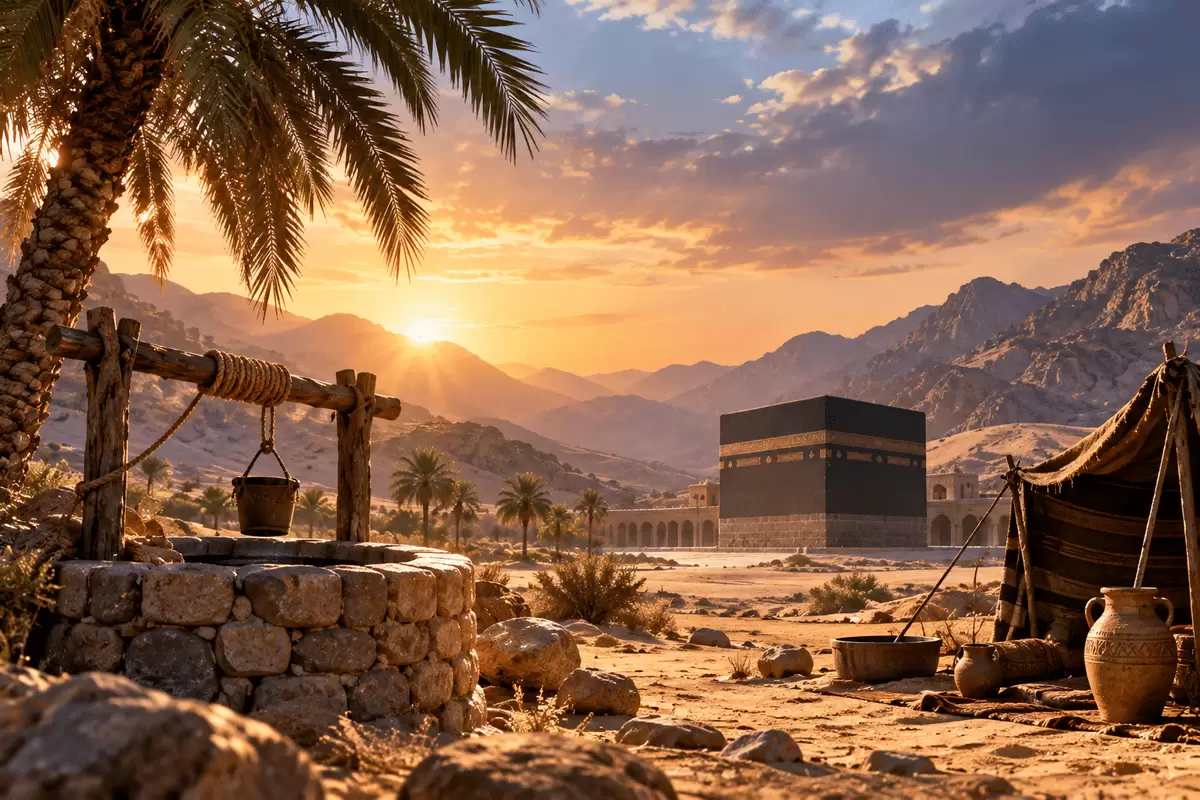
Eid al-Adha, the Festival of Sacrifice, keeps the memory of Ibrahim and Ismail alive every year. Its connection to their story appears in several practices:
- Muslims sacrifice animals in remembrance of the ram that ransomed Ismail.
- Pilgrims perform sa’y between Safa and Marwah, following Hajar’s steps.
- Pilgrims drink from Zamzam, the blessed water that saved mother and child.
Ismail the Father of the Arabs
Ismail grew up among the Arab tribe of Jurhum, who settled near Zamzam. He learned their language, married from among them, and his descendants became known as the Arabized Arabs. Through his line came the tribe of Quraysh and, ultimately, Prophet Muhammad ﷺ, making Ismail a forefather of the final messenger.
The Story of Prophet Ismael for Kids
Children can enjoy this story as a lesson in trust: baby Ismail and his mother were alone in the desert, and Allah gave them the water of Zamzam. When Ismail grew up, he obeyed Allah happily and helped his father build the Kaaba, which Muslims visit today.
Lessons from Prophet Ismail’s Obedience
The Story of Prophet Ismael offers lessons that every Muslim can apply:
- Trust in Allah brings relief in the hardest situations.
- Obedience to Allah comes before personal desires.
- Respect and cooperation between parents and children bring blessings.
- Keeping promises is a quality of the prophets.
- Sincere deeds are completed with the prayer that Allah accepts them.
FAQs
Was the son of the sacrifice Ismail or Ishaq?
Most scholars hold that the son was Ismail, since the Quran gives glad tidings of Ishaq only after describing the sacrifice. Ismail was also Ibrahim's only son at the time, which made the test of sacrificing him far more difficult.
What does the name Ismail mean?
The name Ismail is generally understood to mean God hears. It reflects the answered prayer of Ibrahim, who asked Allah for a righteous son in his old age, and Allah heard his supplication and granted him this blessed, forbearing child.
Why did Ibrahim tell Ismail to change his doorstep?
Ibrahim once visited Ismail's home while he was away and found his wife ungrateful and complaining. He left a message to change his threshold, which Ismail understood as advice to divorce her. He later married a grateful and content woman.
What is Hijr Ismail?
Hijr Ismail is the semicircular area beside the Kaaba, enclosed by a low wall. It was originally part of the Kaaba's foundation laid by Ibrahim, and praying inside it is considered by scholars like praying inside the noble Kaaba itself.
Why is the name spelled Ismail, Ismael, and Ishmael?
These spellings reflect different transliterations of the same name. Ismail follows the Arabic pronunciation used in the Quran, Ismael is a simplified variation common in English writing, and Ishmael comes from the Hebrew form used in many English Bible translations.