

There is a difference between looking at the words of the Quran and truly reading them. One is a glance; the other is a conversation with Allah. Quran reading in Arabic is not merely a skill; it is the key that unlocks the divine message in its purest, most complete form. Every letter you learn to read correctly brings you one step closer to the Quran as it was revealed, as it was recited, and as it was always meant to reach your heart.
Importance of Reading the Quran in Its Original Language
The Quran’s true essence and spiritual impact are best experienced in its original language, Arabic. Quran reading in Arabic is not merely recitation; it is a sacred act that connects the reader directly to the words of Allah, preserving the nuances of meaning, rhythm, and pronunciation that translations cannot capture.
The Arabic language is deeply intertwined with the Quran’s structure, with words carrying layers of meaning that shift based on context and pronunciation. For instance, the word “qara’a” (قَرَأَ) can mean “to read,” “to recite,” or “to study” depending on how it is articulated, a richness entirely lost in translation. By learning Quran reading in Arabic, believers engage in a spiritual dialogue with the divine text in its purest form.
Beyond personal worship, Quran reading in Arabic fosters a deeper connection to Islamic heritage, allowing Muslims to participate in communal prayers and recitations with authenticity. Key reasons why reading the Quran in Arabic matters:
- Spiritual depth: The sounds and rhythms of Arabic evoke a profound sense of reverence and connection to Allah that no translation can replicate.
- Accuracy in meaning: Arabic pronunciation dictates which meaning is intended, and mispronunciation can alter the message entirely.
- Cultural preservation: Preserving Arabic in Quranic recitation maintains the integrity of Islamic traditions across generations.
- Community unity: Shared recitation in Arabic fosters unity among Muslims worldwide, as the language transcends geographical and cultural boundaries.
Benefits of Learning Quran Reading in Arabic
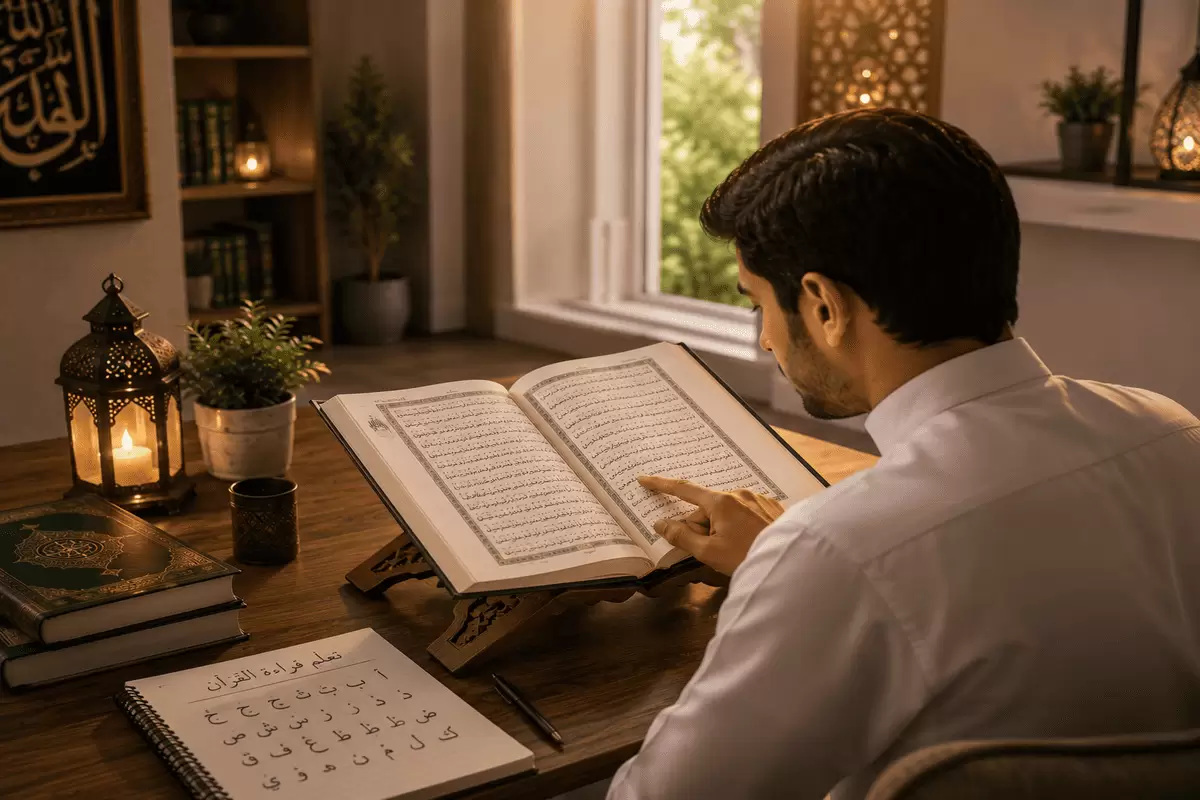
Embarking on the path of learning quran reading in Arabic offers transformative benefits that extend beyond religious practice. One of the most significant advantages is the ability to engage with the Quran on a profound level, where every word carries weight and intention. Unlike translations, which may soften or alter the original meaning, quran reading in Arabic ensures that the reader experiences the text as it was intended—with all its poetic beauty and theological depth.
1. Enhanced Spiritual Connection
Reciting the Quran in Arabic allows the reader to feel the rhythm and melody of the verses, which deepens meditation and reflection. The act of recitation becomes a form of worship, as the tongue moves in harmony with the divine words. Many Muslims report a heightened sense of peace and clarity when engaging in quran reading in Arabic.
2. Precision in Worship
The Quran contains rules of Tajweed which dictate how each letter should be articulated, as mispronunciation can change the meaning of a verse. For example, the letter “qaf” (ق) must be pronounced with a specific throaty sound, while “ba” (ب) requires a softer lip touch. These distinctions are crucial for accurate recitation.
3. Strengthened Faith and Discipline
Learning quran reading in Arabic requires patience, practice, and dedication—qualities that strengthen a Muslim’s character. The process of memorizing and reciting verses builds discipline, as learners must repeatedly practice until mastery is achieved. Many find that their faith grows as they understand the Quran’s language better, leading to a more meaningful relationship with their religion.
4. Access to Authentic Resources
While translations provide general ideas, quran reading in Arabic allows access to commentaries (Tafsir), recitation styles (Qira’at), and historical contexts that enrich understanding. Learners can study the Quran alongside scholars, listen to renowned reciters, and participate in group recitations, all of which deepen their connection to the text.
Basics of the Arabic Alphabet for Quran Reading
Before diving into quran reading in Arabic, it’s essential to grasp the foundational elements of the Arabic alphabet. Arabic is an abjad script, meaning it primarily represents consonants, with vowels and diacritics added later for clarity. The Quran includes vowel marks (Tashkeel) and other symbols to guide pronunciation, making understanding these basics the first step toward accurate recitation.
1. The Arabic Alphabet: Letters and Sounds
Arabic has 28 letters, each with a unique sound. Some letters, like “alif” (أ) and “lam” (ل), are simple, while others, such as “qaf” (ق) and “ghayn” (غ), require specific tongue and throat placements. Letters can also change shape based on their position in a word, which adds complexity to the script. For quran reading in Arabic, mastering these sounds is critical, as even slight mispronunciations can alter meanings.
2. Vowels and Diacritics (Tashkeel)
The Quran uses three primary vowel marks: Fathah (َ) for a short “a” sound, Dammah (ُ) for a short “u” sound, and Kasrah (ِ) for a short “i” sound. These marks are crucial for quran reading in Arabic, as they dictate how words should be pronounced. Without them, Arabic text can be ambiguous, which is why the Quran includes them in printed editions.
3. Special Symbols in Quranic Text
Three symbols are essential for accurate recitation: Sukoon (ْ) indicates the absence of a vowel, Shaddah (ّ) doubles the consonant sound, and Tanwin (ً،ٍ،ٌ) adds a nasal sound to the end of a word. These are often overlooked by beginners, yet remain fundamental to proper quran reading in Arabic.
4. Practical Steps to Learn the Alphabet
Start with the basic letters and their sounds, using audio resources to hear correct pronunciation. Practice writing each letter in its different forms: isolated, initial, medial, and final. Use flashcards or apps designed for reading Arabic online for adults to reinforce learning, then gradually introduce words and short verses while applying letters and vowels correctly.
Understanding Arabic Pronunciation and Sounds

Accurate pronunciation is the cornerstone of quran reading in Arabic. The Quran’s verses were revealed in a specific dialect of Arabic, and deviations in pronunciation can lead to misunderstandings or even spiritual missteps. Tajweed provides rules to ensure that every letter is articulated correctly, maintaining the integrity of the text.
The Quran’s linguistic beauty lies not only in its words but also in the precise articulation of its sounds. Arabic phonetics differ significantly from many other languages, requiring learners of the Quran reading in Arabic to develop an ear and tongue attuned to its unique phonological system.
1. Consonants and Their Articulation Points
Arabic consonants are classified based on where they are pronounced in the mouth. Lip consonants include Ba (ب), Fa (ف), Mim (م), and Waw (و), while tongue consonants cover a wider range, such as Ta (ت), Ra (ر), Sin (س), Qaf (ق), and Nun (ن). Each consonant has a specific point of articulation, whether the tongue tip, tongue blade, or throat. For quran reading in Arabic, misplacing a consonant, such as pronouncing Qaf (ق) like Kaf (ك), can alter the meaning of a verse entirely.
2. Vowel Sounds and Their Impact
Arabic vowels are short and distinct: Fathah (َ) for a short “a” sound, Dammah (ُ) for a short “u” sound, and Kasrah (ِ) for a short “i” sound. In quran reading in Arabic, vowels are often marked with diacritics, but experienced reciters rely on context and Tajweed rules to determine correct pronunciation when omitted.
3. Elongation (Madd) and Its Rules
Elongation occurs when a vowel sound is extended beyond its natural short duration. There are six types of Madd in Tajweed: Natural Elongation (Madd Al-Tabii), Elongation at Pause (Madd Al-Waqf), Elongation of Ya or Waw (Madd Al-Leen), Hidden Elongation (Madd Al-Ikhfaa), Reversal Elongation (Madd Al-Iqlab), and Absolute Elongation (Madd Al-Mutlaq). Mastering elongation is critical for quran reading in Arabic as it directly affects the rhythm and melody of recitation.
4. Stopping Rules (Waqf) and Their Significance
Waqf refers to pausing during recitation, and improper stopping can disrupt the flow or change meanings. There are three types: Waqf Jazm, which is a mandatory stop at the end of a verse, Waqf Laazi,m which is permissible but not mandatory, and Waqf Jaiz, which offers flexible stopping points that do not affect meaning. For reading Arabic online for adults, understanding Waqf rules helps learners avoid awkward pauses that disrupt the Quran’s natural flow.
How does the Arabian Tongue shape your journey of learning the Quran and Arabic?
At Arabian Tongue, we help you understand the Quran deeply and connect with its meanings through simple and effective teaching methods. Our courses are designed to make your learning journey clear, engaging, and spiritually enriching.
Guidance from the Quran and Hadith
قال الله تعالى: “الَّذِينَ آتَيْنَاهُمُ الْكِتَابَ يَتْلُونَهُ حَقَّ تِلَاوَتِهِ” — سورة البقرة: ١٢١
Allah said: “Those to whom We have given the Book recite it with its true recital.” — Al-Baqarah: 121
قال رسول الله ﷺ: “اقْرَؤُوا الْقُرْآنَ فَإِنَّهُ يَأْتِي يَوْمَ الْقِيَامَةِ شَفِيعًا لِأَصْحَابِهِ” — رواه مسلم، عن أبي أمامة الباهلي رضي الله عنه
The Prophet ﷺ said: “Recite the Quran, for it will come on the Day of Resurrection as an intercessor for its companions.” — Narrated by Muslim, on the authority of Abu Umamah al-Bahili (may Allah be pleased with him)
FAQs
How can beginners start learning to read the Quran in Arabic?
Beginners should start by learning the Arabic alphabet and basic vowel marks (Tashkeel). From there, practicing short verses daily with a qualified tutor builds a strong foundation for quran reading in Arabic.
Do learners need to know Arabic before reading the Quran?
No prior Arabic knowledge is required to begin quran reading in Arabic. Most learners start from scratch, focusing on letter recognition and pronunciation before moving to full verses.
What are the basic Tajweed rules for Quran reading?
The essential Tajweed rules cover correct letter articulation, vowel pronunciation, elongation (Madd), and stopping points (Waqf). Mastering these basics ensures that quran reading in Arabic is both accurate and spiritually meaningful.
How long does it take to learn to read the Quran in Arabic?
With consistent daily practice, most beginners can read basic verses within three to six months. Reaching fluency in quran reading in Arabic with proper Tajweed typically takes one to two years, depending on dedication and guidance.