

Every parent dreams of hearing their child recite the Quran beautifully. Not just memorized words, but a recitation that carries weight, rhythm, and reverence. Tajweed classes for kids online have made that dream more achievable than ever, giving children access to qualified instructors, structured lessons, and interactive tools that transform recitation from a task into a lifelong spiritual gift. The earlier a child begins, the deeper the roots grow.
What Is Tajweed and Why Does It Matter for Children
Tajweed, meaning “proper recitation,” is the science of pronouncing the Quranic text with precision and clarity. For children, it is not just about memorizing verses; it is about cultivating a deep connection with the Quran while developing linguistic and spiritual discipline. Mastering Tajweed early ensures that every letter, vowel, and pause is recited exactly as revealed, preventing misinterpretation and maintaining the beauty of the Quran’s melodic flow.
Beyond spiritual benefits, Tajweed plays a critical role in a child’s linguistic development. Rules like idgham, where two letters merge in pronunciation, sharpen a child’s ability to distinguish between similar sounds, benefiting their overall communication skills in both Arabic and other languages. This makes Tajweed a valuable tool for cognitive development that extends well beyond religious education.
Most importantly, Tajweed transforms recitation from a mechanical exercise into a deeply emotional and spiritual experience. When a child recites the Quran with Tajweed, the words flow with rhythm and meaning that create a profound connection to the text, nurturing a
Benefits of Learning Tajweed at an Early Age
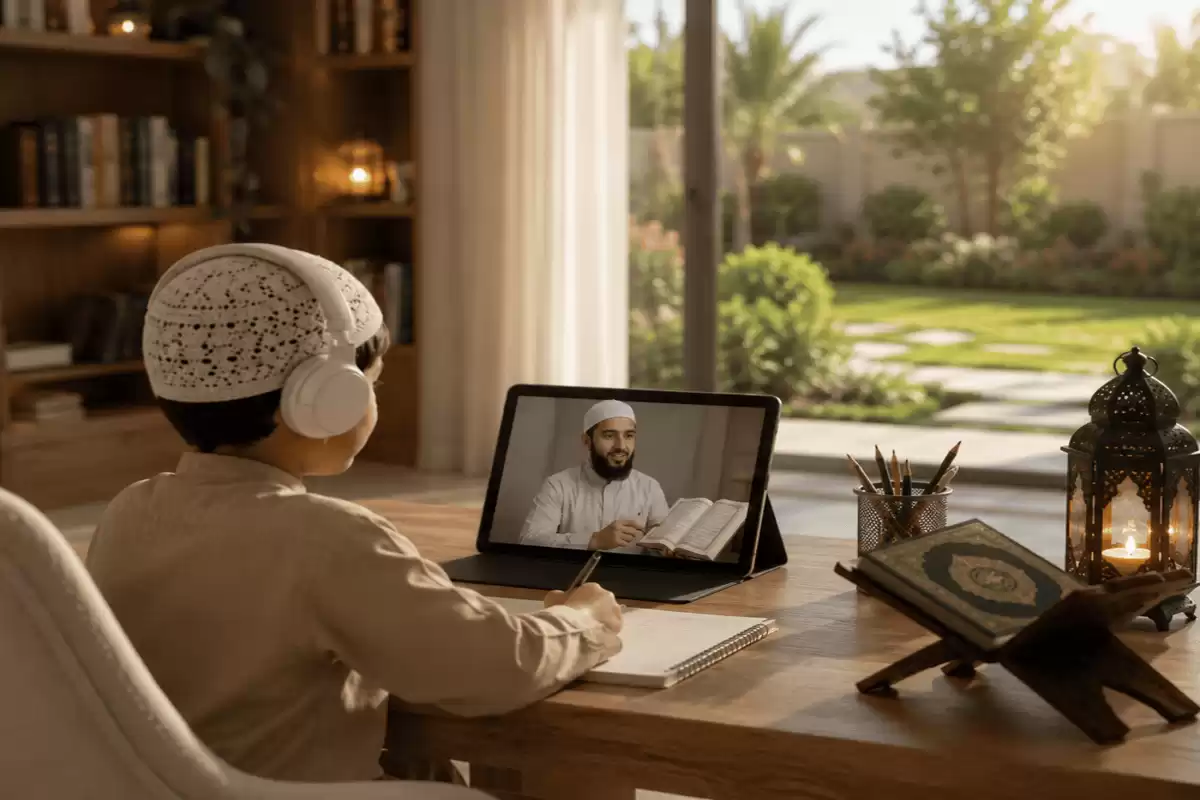
Introducing children to Tajweed at a young age offers benefits that extend far beyond religious education, shaping their cognitive, spiritual, and linguistic development in profound ways:
- Natural skill absorption: Children who begin learning Tajweed early absorb its rules naturally, reducing the risk of forming bad habits that are difficult to correct later in life.
- Enhanced memory and concentration: Practicing elongation (madd), stopping (waqf), and idgham rules strengthens memory retention and the ability to focus for extended periods.
- Cognitive development: Analyzing and applying Tajweed rules stimulates problem-solving and critical thinking skills in ways similar to learning a new language or solving puzzles.
- Spiritual connection: Children who recite the Quran with Tajweed experience a deeper sense of awe and reverence, fostering a lifelong habit of engaging with the Quran as a source of guidance rather than a memorization task.
- Preservation of Quranic integrity: By learning Tajweed, children honor the sanctity of the Quran’s recitation, safeguarding its purity across generations and preventing mispronunciations that can distort meaning.
- Increased religious engagement: Parents often report that children who learn Tajweed show increased curiosity about Islamic teachings and a stronger desire to participate in acts of worship such as prayer and reflection.
How Online Tajweed Classes Work
Online Tajweed classes have revolutionized the way children learn Quranic recitation, offering flexibility, accessibility, and personalized instruction from the comfort of home. Unlike traditional in-person classes, online programs eliminate geographical barriers and scheduling conflicts, making quality Tajweed education accessible to every child regardless of location.
How online Tajweed classes work:
- Classes begin with an assessment to determine the child’s current level, allowing instructors to tailor their approach accordingly.
- Beginners start with basic letter pronunciation while advanced learners explore complex topics like idgham and iqlaf.
- Live sessions incorporate interactive tools such as whiteboards, audio clips, and one-on-one instruction.
- Real-time chat features ensure no confusion goes unanswered during sessions.
The role of recorded lessons:
- Children can revisit topics at their convenience, reinforcing learning outside scheduled classes.
- A child who struggles with madd rules can watch a recorded lesson multiple times until confident.
- Parents can use these resources to supplement their child’s education between sessions.
Creating the ideal learning environment at home:
- Set aside a quiet, distraction-free space dedicated to online classes.
- Ensure the child has a good-quality headset and a reliable device.
- Actively participate in the child’s learning journey by reviewing lessons and practicing recitation together as a family.
Features of a Good Online Tajweed Program
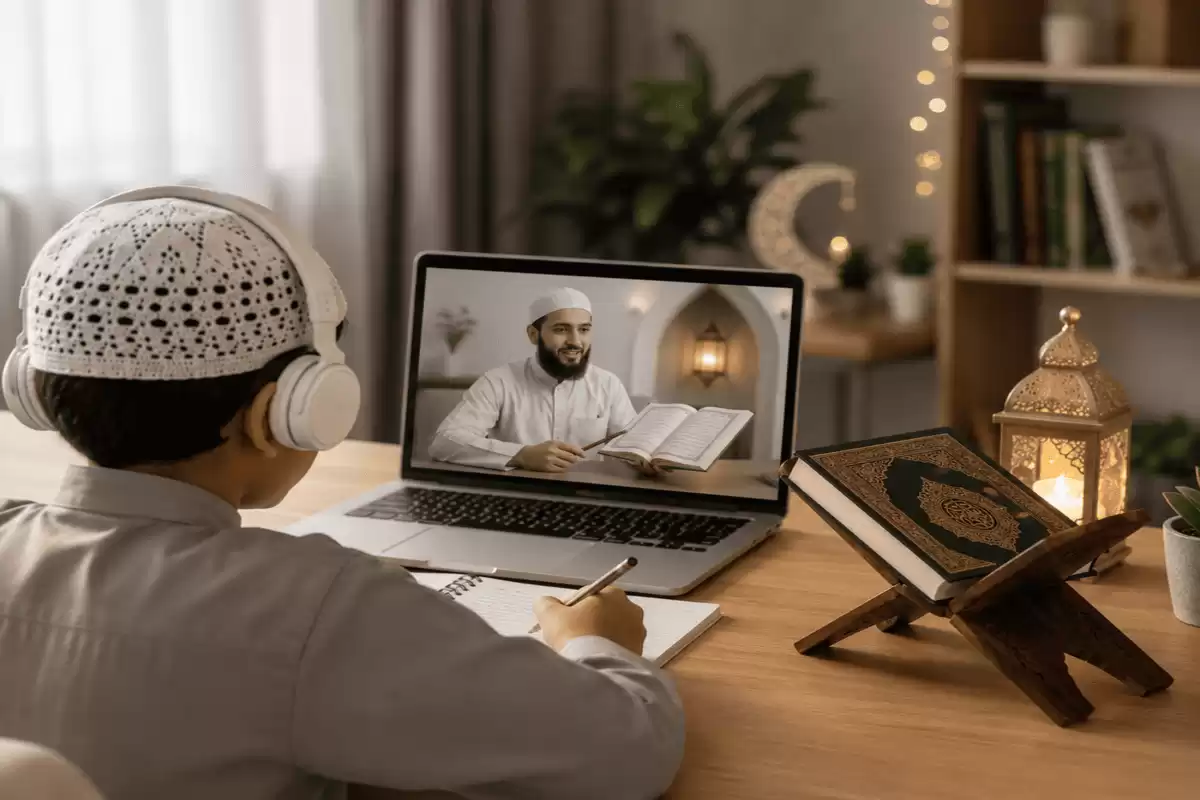
A high-quality online Tajweed program for children should be designed with their unique learning needs in mind, blending educational rigor with accessibility and engagement. Key features to look for include:
- Certified and experienced instructors: Teachers should hold certifications from recognized Islamic institutions and be trained in child psychology and pedagogy, adapting their methods through storytelling, games, and interactive exercises.
- Structured and progressive curriculum: A logical sequence starting with foundational rules like letter pronunciation (Huroof Mukhafa) before advancing to idgham, iqlaf, and izhar, with regular assessments to track progress.
- Interactive and multimedia-rich content: Animated videos, audio clips, and gamification elements such as quizzes and rewards make abstract concepts tangible and keep children motivated to practice consistently.
- Personalized feedback: One-on-one sessions, recorded feedback on recitations, and customized practice plans ensure each child receives targeted support to overcome individual challenges.
- Flexibility: Multiple session options, including live classes at different times and on-demand lessons, allow learning to fit seamlessly into a family’s busy schedule without becoming a source of stress.
- Parental involvement: Progress reports, tips for reinforcing lessons at home, and parent-teacher meetings keep parents actively engaged, fostering motivation and accountability in children.
- Supportive and inclusive environment: A safe space where children feel comfortable asking questions and making mistakes, with peer learning opportunities and culturally sensitive instruction that values every learner’s background.
How does the Arabian Tongue shape your journey of learning the Quran and Arabic?
At Arabian Tongue, we help you understand the Quran deeply and connect with its meanings through simple and effective teaching methods. Our courses are designed to make your learning journey clear, engaging, and spiritually enriching.
Guidance from the Quran and Hadith
قال الله تعالى: “وَلَقَدْ يَسَّرْنَا الْقُرْآنَ لِلذِّكْرِ فَهَلْ مِن مُّدَّكِرٍ” — سورة القمر: 17
Allah said: “And We have certainly made the Quran easy for remembrance, so is there any who will remember?” — Al-Qamar: 17
قال رسول الله ﷺ: “مَثَلُ الَّذِي يَقْرَأُ الْقُرْآنَ وَهُوَ حَافِظٌ لَهُ مَعَ السَّفَرَةِ الْكِرَامِ الْبَرَرَةِ” — رواه البخاري ومسلم، عن عائشة رضي الله عنها
The Prophet ﷺ said: “The one who recites the Quran and has memorized it will be with the noble and righteous scribes.” — Narrated by Al-Bukhari and Muslim, on the authority of Aisha (may Allah be pleased with her)
FAQs
At what age should kids start learning Tajweed?
Most Islamic scholars and educators recommend introducing Tajweed between the ages of five and seven, when children have developed sufficient focus and language awareness to absorb its rules naturally. Starting early allows the correct pronunciation habits to become second nature, making it significantly easier to build on these foundations as they grow.
How long does it take for kids to learn basic Tajweed rules?
Most children can grasp the foundational Tajweed rules, such as correct letter pronunciation and basic elongation (madd), within six months to a year of consistent practice. Mastering the full set of rules, however, is a gradual process that deepens over several years of regular recitation and guided instruction.
How can parents help children practice Tajweed at home?
Parents can support their child's progress by setting aside a dedicated daily recitation time, listening attentively to their recitation and offering gentle corrections, and reviewing recorded lessons together between classes. Creating a positive and encouraging environment where mistakes are treated as learning opportunities rather than failures makes a significant difference in a child's confidence and motivation.
What devices or tools are needed for online Quran classes?
A reliable internet connection, a laptop, tablet, or desktop computer, and a good-quality headset with a microphone are the essential requirements for online Tajweed classes. Some platforms also recommend a quiet, dedicated learning space and access to a digital Quran or Tajweed workbook to supplement live instruction and reinforce what is learned during sessions.