

Exploring the profound spiritual and practical guidance embedded within Surah Al-Qasas reveals numerous Surah Qasas benefits for believers seeking solace, wisdom, and strength in their daily lives. This Meccan Surah, rich with the narrative of Prophet Musa (Moses), offers timeless lessons on perseverance, divine providence, and the ultimate triumph of justice over oppression. Understanding the comprehensive advantages of this Surah allows individuals to navigate contemporary challenges with faith and wisdom, drawing inspiration from its powerful verses and historical accounts.
What is Surah Al-Qasas and Its Historical Context?
Surah Al-Qasas, the 28th chapter of the Quran, is a Meccan Surah that primarily recounts the life story of Prophet Musa (Moses) from his miraculous infancy to his confrontation with Pharaoh. Revealed during a period of intense persecution for early Muslims in Mecca, the Surah served as a source of comfort, reassurance, and strategic guidance, emphasizing Allah’s support for the oppressed and the inevitable downfall of tyranny. Reflecting on the Surah Qasas benefits provides believers with timeless wisdom, spiritual resilience, and hope when navigating life’s greatest trials.
The Revelation Period & Key Themes
- Historical Context: Revealed during a severe phase of hardship and opposition from the Quraish in Mecca, offering direct solace to Prophet Muhammad ﷺ and his companions.
- Core Themes: Highlights the absolute sovereignty of Allah, the certainty of divine justice, and the ultimate victory of truth over falsehood.
- Enduring Hope: Reminds believers that human power is fleeting and that divine planning ultimately prevails over systemic oppression.
The Narrative of Prophet Musa (Moses) in Surah Al-Qasas
- Early Life & Exile: Details Musa’s miraculous rescue from the Nile, his upbringing in Pharaoh’s palace, his accidental killing of an Egyptian, and his flight to Madyan.
- Commission & Duty: Covers his marriage in Madyan, his encounter with the divine fire, and his solemn commission by Allah to return to Egypt and confront Pharaoh.
- Lessons in Struggle: Frames Musa’s journey as a model of personal growth, reliance on Allah (Tawakkul), and steadfast perseverance through trials.
Significance of Pharaoh’s Story
- Warning Against Arrogance: Serves as a stark cautionary tale against systemic tyranny, pride, and the abuse of earthly power.
- Fragility of Tyranny: Demonstrates that no amount of wealth, military strength, or authority can shield an oppressor from divine retribution.
- Universal Principle: Reassures marginalized communities throughout history that justice is inescapable and oppression is inherently unsustainable.
قال الله تعالى: «نَتْلُو عَلَيْكَ مِن نَّبَإِ مُوسَىٰ وَفِرْعَوْنَ بِالْحَقِّ لِقَوْمٍ يُؤْمِنُونَ» (سورة القصص 28:3).
Allah says: “We recite to you from the news of Moses and Pharaoh in truth for a people who believe.” (Surah Al-Qasas 28:3).
Practical Applications and Surah Qasas Benefits in Daily Life

The profound lessons embedded within Surah Al-Qasas offer practical guidance for navigating modern life, extending far beyond historical accounts. Reflecting on the trials of Prophet Musa (Moses) and understanding these Surah Qasas benefits provides believers with a timeless roadmap for cultivating resilience, trusting divine providence, and upholding justice across personal and communal spheres.
Guidance for Facing Challenges and Trials
- Enduring Adversity: Prophet Musa’s continuous struggles—from escaping Egypt as a fugitive to confronting a tyrant—serve as a masterclass in perseverance.
- Seeking Divine Refuge: Demonstrates that during moments of extreme vulnerability, turning to sincere prayer and supplication brings immediate divine relief and clarity.
- Overcoming Fear: Reminds individuals facing daunting obstacles that faith transforms overwhelming hardship into opportunities for personal growth.
Cultivating Trust in Divine Providence (Tawakkul)
- Unwavering Faith: Highlights how Musa’s absolute reliance on Allah delivered miraculous outcomes, from safe refuge in Madyan to provision when he was completely destitute.
- Sustenance & Effort: Teaches that true trust (Tawakkul) pairs sincere personal effort with the firm belief that ultimate provision (Rizq) comes strictly from Allah.
- Surrendering the Outcome: Encourages launching new personal or professional endeavors with full dedication while entrusting the final results to divine wisdom.
Inspiring Righteous Conduct and Justice
- Speaking Truth to Power: Emphasizes the duty to oppose oppression and defend the vulnerable, directly mirroring Musa’s confrontation with Pharaoh’s systemic injustice.
- Moral Courage: Inspires individuals to advocate for fairness, transparency, and social justice within their communities, regardless of personal risk.
- Active Support: Encourages standing up for the marginalized and upholding ethical integrity in everyday decisions, ensuring actions align with divine principles.
قال الله تعالى: «وَأَوْحَيْنَا إِلَىٰ أُمِّ مُوسَىٰ أَنْ أَرْضِعِيهِ ۖ فَإِذَا خِفْتِ عَلَيْهِ فَأَلْقِيهِ فِي الْيَمِّ وَلَا تَخَافِي وَلَا تَحْزَنِي» (سورة القصص 28:7).
Allah says: “And We inspired the mother of Moses, ‘Suckle him; but when you fear for him, cast him into the river and do not fear and do not grieve.’” (Surah Al-Qasas 28:7).
Addressing Common Misconceptions About Surah Al-Qasas
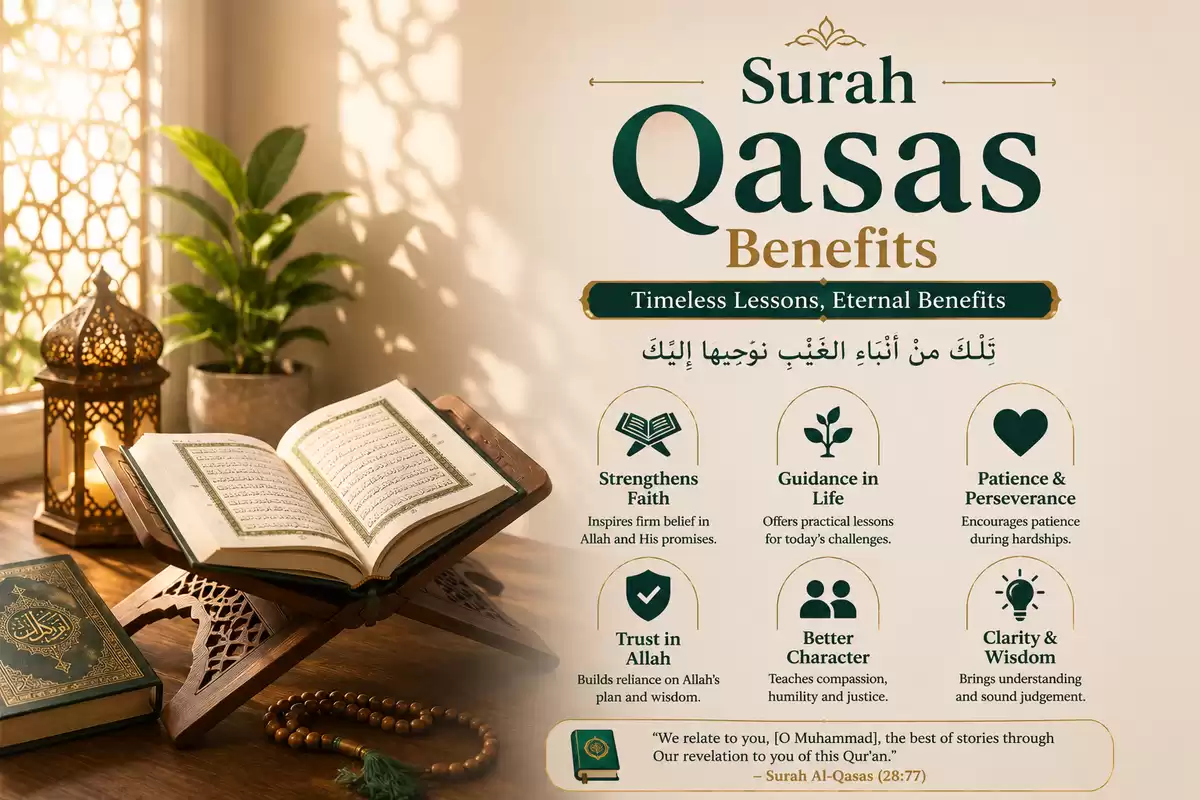
While Surah Al-Qasas offers profound spiritual and practical guidance, addressing common misconceptions and unfounded claims regarding its virtues is essential. Distinguishing authentic Quranic teachings from folk beliefs ensures believers build a balanced, sound, and rewarding connection with this chapter.
Clarifying Interpretations of Specific Verses
- The Scope of Verse 24: Musa’s supplication (“My Lord, indeed I am, for whatever good You would send down to me, in need”) is often cited as a specific formula for marriage or wealth.
- Sincerity over Ritual Formula: While it is a beautiful, recommended Quranic prayer (Dua), its core blessing lies in expressing genuine humility, vulnerability, and complete reliance on Allah—not in treating the verse as a magical guarantee for immediate material outcomes.
- Understanding Context: The verse illustrates a desperate servant turning to his Creator; divine response comes through Allah’s supreme wisdom, timing, and will.
Dispelling Myths Surrounding Its Benefits
- Unverified Recitation Rituals: Claims promising specific worldly fortunes, guaranteed physical cures, or fixed material gains by reciting the Surah a prescribed number of times lack authentic evidence in the Quran or Sunnah.
- Spiritual vs. Superstition: Genuine rewards stem from sincere recitation, reflection (Tadabbur), and applying its moral lessons rather than superstitious practices.
- Verification Duty: Believers should always cross-reference specific claims about Quranic virtues with authentic Islamic scholarship and primary Hadith sources.
The Balanced Approach to Understanding Its Rewards
- Prioritizing Moral & Spiritual Growth: The primary purpose of Surah Al-Qasas is to transform character, build resilience, foster Tawakkul, and offer timeless lessons on divine justice.
- Contextualizing Worldly Blessings: While Allah may grant material ease or a righteous spouse as a result of sincere prayer, these outcomes are secondary to earning divine pleasure and spiritual closeness.
- Lessons from Musa’s Marriage: The Surah’s guidance regarding marriage (such as Ayat 27–28) emphasizes noble character, work ethic, trust, and modesty rather than passive expectation.
How does the Arabian Tongue shape your journey of learning the Quran and Arabic?
At Arabian Tongue, we help you understand the Quran deeply and connect with its meanings through simple and effective teaching methods. Our courses are designed to make your learning journey clear, engaging, and spiritually enriching.
Guidance from the Quran and Hadith
قال الله تعالى: «إِنَّ فِرْعَوْنَ عَلَا فِي الْأَرْضِ وَجَعَلَ أَهْلَهَا شِيَعًا يَسْتَضْعِفُ طَائِفَةً مِّنْهُمْ» (سورة القصص 28:4).
Allah says: “Indeed, Pharaoh exalted himself in the land and made its people into factions, oppressing a sector among them.” (Surah Al-Qasas 28:4).
قال رسول الله ﷺ: «مَنْ كَذَبَ عَلَيَّ مُتَعَمِّدًا، فَلْيَتَبَوَّأْ مَقْعَدَهُ مِنَ النَّارِ» (رواهُ البُخارِيُّ ومُسْلِمٌ).
The Prophet ﷺ said: “Whoever lies about me intentionally, let him take his seat in the Fire.” (Sahih al-Bukhari and Sahih Muslim).
FAQs:
What are the main themes of Surah Al-Qasas?
It focuses on divine sovereignty, absolute justice, and the eventual triumph of truth over oppression through Musa's life. The chapter instills hope, patience, and unwavering reliance on Allah during times of hardship and trial.
How does Surah Al-Qasas offer guidance for modern challenges?
It models how to navigate persecution, uncertainty, and exile while keeping faith and moral integrity intact. Its lessons inspire individuals to stand up for justice, trust divine timing, and remain resilient against modern adversity.
Why is the story of Prophet Musa so central to Surah Al-Qasas?
Musa’s narrative serves as a complete blueprint of divine support, showing a vulnerable infant rising to confront a tyrant. His journey demonstrates that worldly power is fleeting and that Allah ultimately aids the oppressed.
When is the best time to recite Surah Al-Qasas for maximum benefit?
No specific hour is fixed by Islamic tradition, as reciting it at any time brings immense spiritual reward. Maximum benefit comes from deep reflection (Tadabbur) on its verses and applying its ethical lessons in daily life.
What specific Surah Al-Qasas benefits are mentioned in Hadith?
No authentic Hadith attributes unique worldly claims exclusively to reciting this specific Surah. Its true blessings align with the general virtues of Quranic recitation: spiritual elevation, moral guidance, and divine reward.