
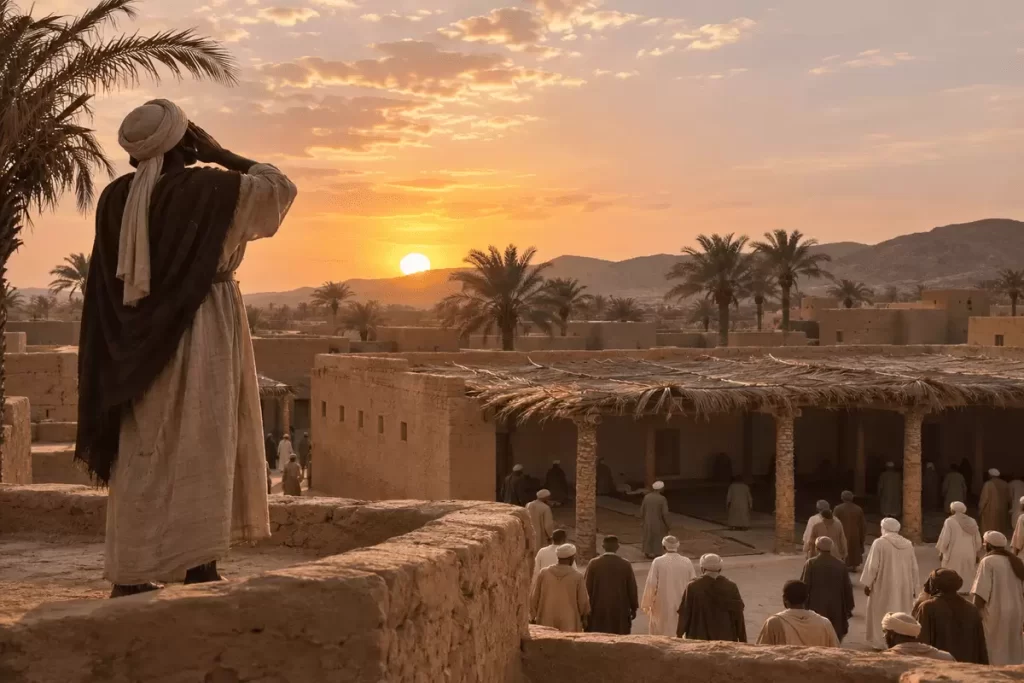
The Story Of Bilal Ibn Rabah is one of the most inspiring journeys in Islamic history, moving from slavery and torture in Makkah to honor as the first muezzin of Islam. Bilal, may Allah be pleased with him, endured burning sand and crushing rocks while repeating one word: Ahad, the One. Freed by Abu Bakr al-Siddiq, he became a close companion of the Prophet ﷺ and the voice that called believers to prayer. His life shows that faith and piety, not lineage or color, determine a person’s value. Remarkably, his footsteps were heard in Paradise even during his own lifetime.
Who Was Bilal Ibn Rabah?
Bilal ibn Rabah was an enslaved man in Makkah owned by Umayyah ibn Khalaf, one of the fiercest enemies of Islam. He accepted Islam in its earliest days, and his steadfastness made him a symbol of faith. Key facts about him include:
- Kunya: Abu Abdullah.
- Title: the muezzin of the Messenger of Allah ﷺ.
- Status: one of the companions given glad tidings of Paradise.
- Battles: present at Badr, Uhud, the Trench, and the major campaigns.
روى جابر بن عبد الله رضي الله عنهما: «كَانَ عُمَرُ يَقُولُ: أَبُو بَكْرٍ سَيِّدُنَا، وَأَعْتَقَ سَيِّدَنَا. يَعْنِي بِلالًا»
(صحيح البخاري، حديث 3754)
Jabir ibn Abdullah رضي الله عنهما narrated: “Umar used to say, ‘Abu Bakr is our master, and he freed our master,’ meaning Bilal.”
(Sahih al-Bukhari 3754)
The Torture of Bilal: Ahad, Ahad
When Umayyah learned that Bilal had accepted Islam, he subjected him to cruel punishment to force him back to idolatry. The torture followed a painful pattern:
- Bilal was dragged out at midday into the scorching heat of Makkah.
- He was laid on burning sand with a heavy rock placed on his chest.
- He was ordered to deny Muhammad ﷺ and worship al-Lat and al-Uzza.
- He refused each time, repeating “Ahad, Ahad,” affirming that Allah is One.
Abu Bakr Freeing Bilal
Abu Bakr al-Siddiq passed by while Bilal was being tortured and offered to buy him from Umayyah. After completing the purchase, he freed Bilal immediately for the sake of Allah. Umayyah mocked him for paying a high price, but Abu Bakr replied that he would have paid far more for such a man.
قال بلال رضي الله عنه لأبي بكر: «إِنْ كُنْتَ إِنَّمَا اشْتَرَيْتَنِي لِنَفْسِكَ فَأَمْسِكْنِي، وَإِنْ كُنْتَ إِنَّمَا اشْتَرَيْتَنِي لِلَّهِ فَدَعْنِي وَعَمَلَ اللَّهِ»
(صحيح البخاري، حديث 3755)
Bilal رضي الله عنه said to Abu Bakr: “If you bought me for yourself, then keep me. But if you bought me for Allah’s sake, then leave me to work for Allah.”
(Sahih al-Bukhari 3755)
Bilal the First Muezzin of Islam
After the Hijrah, the Muslims needed a way to gather for prayer. The adhan was established after a companion, Abdullah ibn Zayd, saw its words in a dream. The Prophet ﷺ chose Bilal for several reasons:
- His voice was strong, clear, and far-reaching.
- His faith and sincerity had been proven through years of trial.
- His selection honored a formerly enslaved man before the whole community.
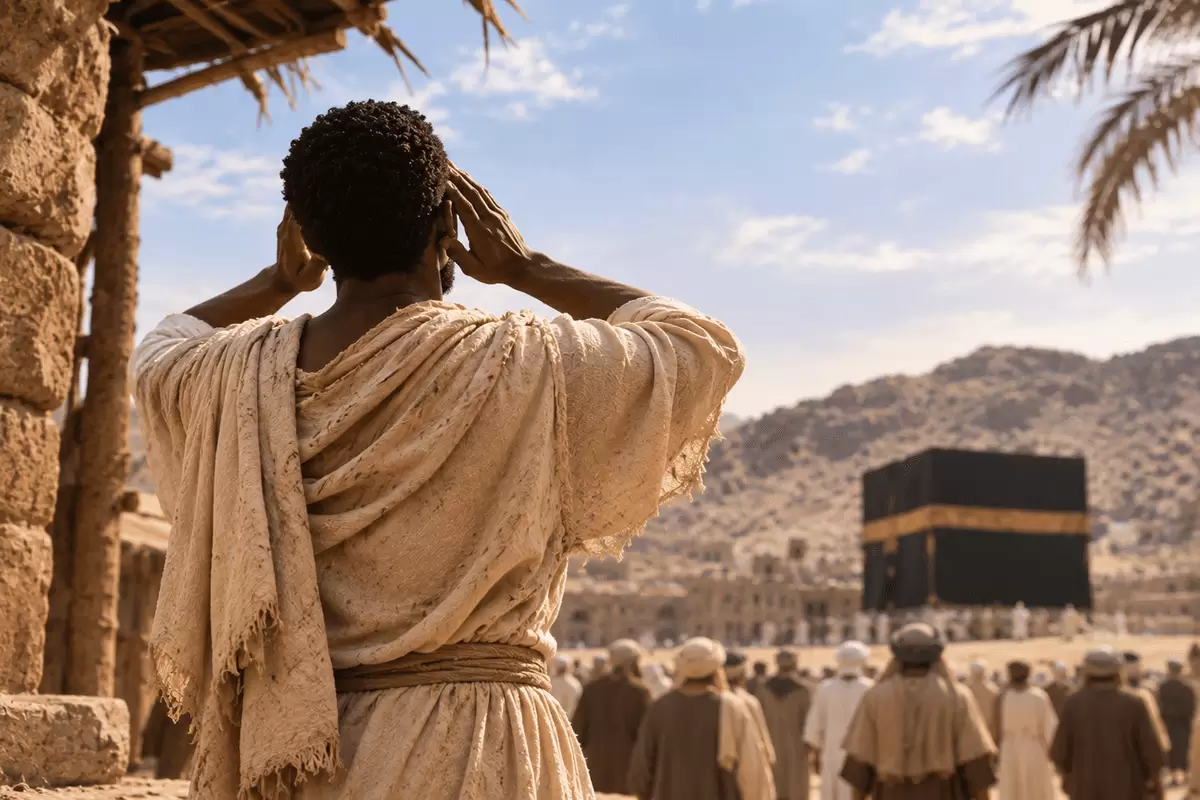
Bilal’s Adhan at the Conquest of Makkah
In 8 AH, the Muslims entered Makkah, the city where Bilal had once been tortured. The moment carried deep meaning:
- The Prophet ﷺ cleared the Kaaba of its idols.
- He commanded Bilal to climb onto the roof of the Kaaba.
- Bilal called the adhan from above the House of Allah.
- The leaders of Quraysh who once despised him heard the call to the One God.
قال الله تعالى: ﴿وَقُلْ جَاءَ الْحَقُّ وَزَهَقَ الْبَاطِلُ ۚ إِنَّ الْبَاطِلَ كَانَ زَهُوقًا﴾
(سورة الإسراء 17:81)
Allah says: “And say, ‘Truth has come, and falsehood has vanished. Indeed, falsehood is bound to vanish.’”
(Surah Al-Isra 17:81)
The Hadith of Bilal’s Footsteps in Paradise
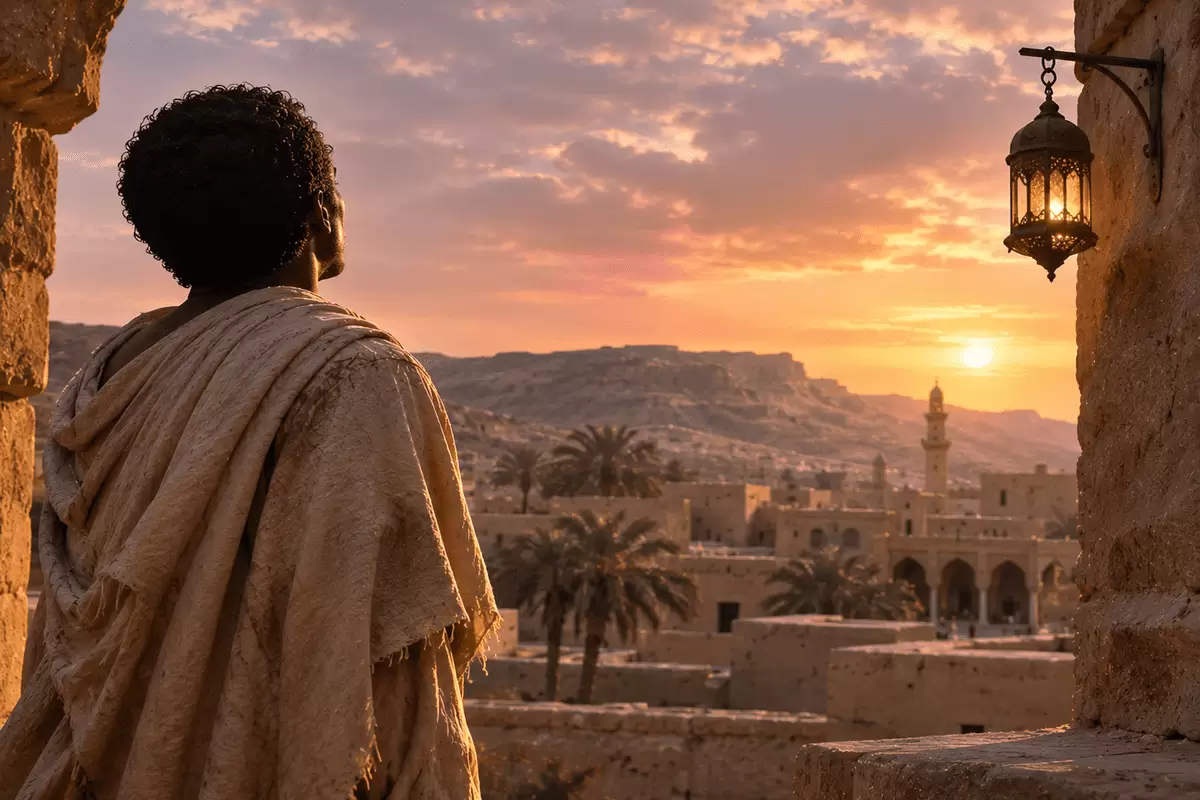
In Sahih al-Bukhari, the Prophet ﷺ asked Bilal about the deed he hoped for most, because he had heard his footsteps ahead of him in Paradise. Bilal replied that whenever he performed wudu, at any hour of the day or night, he prayed as much as Allah allowed afterward.
Bilal After the Death of the Prophet
The death of the Prophet ﷺ deeply affected Bilal, and his life changed significantly afterward:
- Many reports state that he could no longer call the adhan in Madinah because of his grief.
- He asked to leave for Sham to take part in jihad, and Abu Bakr eventually allowed him.
- When Umar visited Sham, Bilal called the adhan, and the companions wept as they remembered the Prophet ﷺ.
قال الله تعالى: ﴿وَمَا مُحَمَّدٌ إِلَّا رَسُولٌ قَدْ خَلَتْ مِن قَبْلِهِ الرُّسُلُ ۚ أَفَإِن مَّاتَ أَوْ قُتِلَ انقَلَبْتُمْ عَلَىٰ أَعْقَابِكُمْ﴾
(سورة آل عمران 3:144)
Allah says: “Muhammad is only a messenger. Other messengers have passed away before him. If he dies or is killed, will you then turn back on your heels?”
(Surah Aal-Imran 3:144)
Bilal Ibn Rabah and Equality in Islam
Bilal’s life is a powerful example of the equality Islam brought to a society divided by tribe and status. His story reflects several principles:
- Honor in Islam is measured by piety, as the Quran states in Surah Al-Hujurat.
- The Prophet ﷺ declared in his Farewell Sermon that no Arab is superior to a non-Arab except by righteousness.
- A man once enslaved became one of the most respected companions in the Muslim community.
Where Is Bilal Ibn Rabah Buried?
Bilal died in Damascus around 20 AH, in his sixties. He is buried in the Bab al-Saghir cemetery, where his grave remains a well-known site. Some historians mention other locations, such as Aleppo, but Damascus is the most widely accepted view.
قال الله تعالى: ﴿كُلُّ نَفْسٍ ذَائِقَةُ الْمَوْتِ ۗ وَإِنَّمَا تُوَفَّوْنَ أُجُورَكُمْ يَوْمَ الْقِيَامَةِ﴾
(سورة آل عمران 3:185)
Allah says: “Every soul will taste death, and you will only receive your rewards in full on the Day of Resurrection.”
(Surah Aal-Imran 3:185)
The Story of Bilal Ibn Rabah for Kids
Children can learn this story as a lesson in courage: Bilal believed in Allah even when he was hurt for it. Abu Bakr set him free, and the Prophet ﷺ chose Bilal’s beautiful voice to call everyone to prayer.
Lessons from the Life of Bilal Ibn Rabah
The story of Bilal ibn Rabah offers lasting guidance for Muslims of every background:
- Firm faith can withstand the harshest trials.
- Freeing and helping the oppressed is among the greatest good deeds.
- Honor comes from piety, not race or status.
- Small consistent deeds, like praying after wudu, carry great reward.
- Love for the Prophet ﷺ should remain alive in the heart.
How does the Arabian Tongue shape your journey of learning the Quran and Arabic?
At Arabian Tongue, we help you understand the Quran deeply and connect with its meanings through simple and effective teaching methods. Our courses are designed to make your learning journey clear, engaging, and spiritually enriching.
Guidance from the Quran and Hadith
قال الله تعالى: ﴿فَإِنَّ مَعَ الْعُسْرِ يُسْرًا إِنَّ مَعَ الْعُسْرِ يُسْرًا﴾
(سورة الشرح 94:5–6)
Allah says: “Surely, with hardship comes ease. Surely, with hardship comes ease.”
(Surah Ash-Sharh 94:5–6)
روى عبد الرحمن بن عوف رضي الله عنه: «فَرَآهُ بِلَالٌ، فَذَهَبَ إِلَى مَجْلِسٍ مِنَ الْأَنْصَارِ فَقَالَ: أُمَيَّةُ بْنُ خَلَفٍ، لَا نَجَوْتُ إِنْ نَجَا»
(صحيح البخاري، حديث 2301)
Abd Al-Rahman ibn Awf رضي الله عنه narrated: “Bilal saw him and went to a gathering of the Ansar, saying, ‘Umayyah ibn Khalaf! May I not escape if he escapes!’”
(Sahih al-Bukhari 2301)
FAQs
Who killed Umayyah ibn Khalaf?
At the Battle of Badr, Bilal recognized his former master Umayyah ibn Khalaf among the captives and called the Muslims to act. Umayyah was killed that day, ending the life of the man who had once tortured Bilal in Makkah.
Was Bilal among the first Muslims?
Yes. Abdullah ibn Mas'ud reported that the first seven to declare their Islam openly included the Prophet ﷺ, Abu Bakr, Ammar, his mother Sumayyah, Suhayb, Bilal, and al-Miqdad. Bilal was among those who paid the highest price for that declaration.
What did Umar say about Bilal?
Umar ibn al-Khattab used to say that Abu Bakr was their master and that he had freed their master, meaning Bilal. This statement, recorded in Sahih al-Bukhari, shows the high status Bilal held among the leading companions of the Prophet ﷺ.
Where was Bilal originally from?
Bilal was born in Makkah to parents of Abyssinian origin, which is why he is often called Bilal al-Habashi. His mother, Hamamah, was also enslaved, and he grew up serving the powerful clan of Banu Jumah before he embraced Islam.
What were Bilal's last words?
As Bilal lay dying, his wife cried in grief, but he replied with joy that tomorrow he would meet his beloved ones, Muhammad ﷺ and his companions. His words reflected the deep love that filled his heart until the end.