
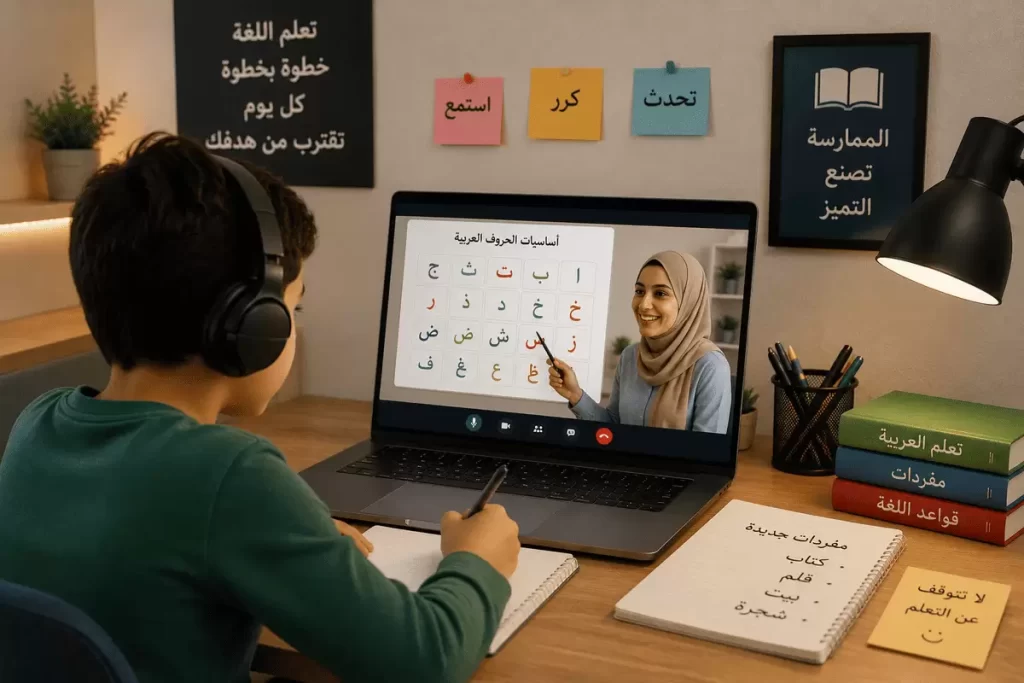
Did you know that the secret to mastering one of the world’s most beautiful languages lies in its strokes and sounds? Understanding Arabic Alphabet Fundamentals is more than just a first step; it is the transformative journey that allows you to decode the depth and elegance of the Arabic script. Whether you aim to recite the Quran perfectly or communicate fluently with millions, building a rock-solid foundation with the letters is your golden gateway. Let’s unlock the magic together!
What are the Arabic Alphabet Fundamentals?
Mastering the Arabic Alphabet Fundamentals is the cornerstone of learning the language, whether for reading, fluent communication, or exploring beautiful Arabic vocabulary for beginners. Unlike English, Arabic letters are dynamic, changing their shape based on their position in a word: initial, medial, final, or isolated.
Core Characteristics
- Structure: The alphabet consists of 28 letters, each with distinct shapes and sounds.
- Direction: Arabic is written from right to left, requiring a shift in perspective for English speakers.
- Adaptability: Letters connect fluently; for example, the letter ب (ba) transforms its appearance depending on its placement within a word.
Vowels and Pronunciation
Understanding Arabic Alphabet Fundamentals also involves harakat (diacritical marks). These small symbols above or below letters:
- Alter pronunciation and dictate an accurate reading.
- Distinguish meanings between words that might otherwise look identical.
Learning Approach
To make the process manageable, beginners often start with Basic Arabic words for beginners. This method focuses on high-frequency letters and simple vocabulary, providing immediate practical benefits and a smooth transition from alphabet mastery to conversational skills.
Importance of Learning Arabic Alphabet Fundamentals
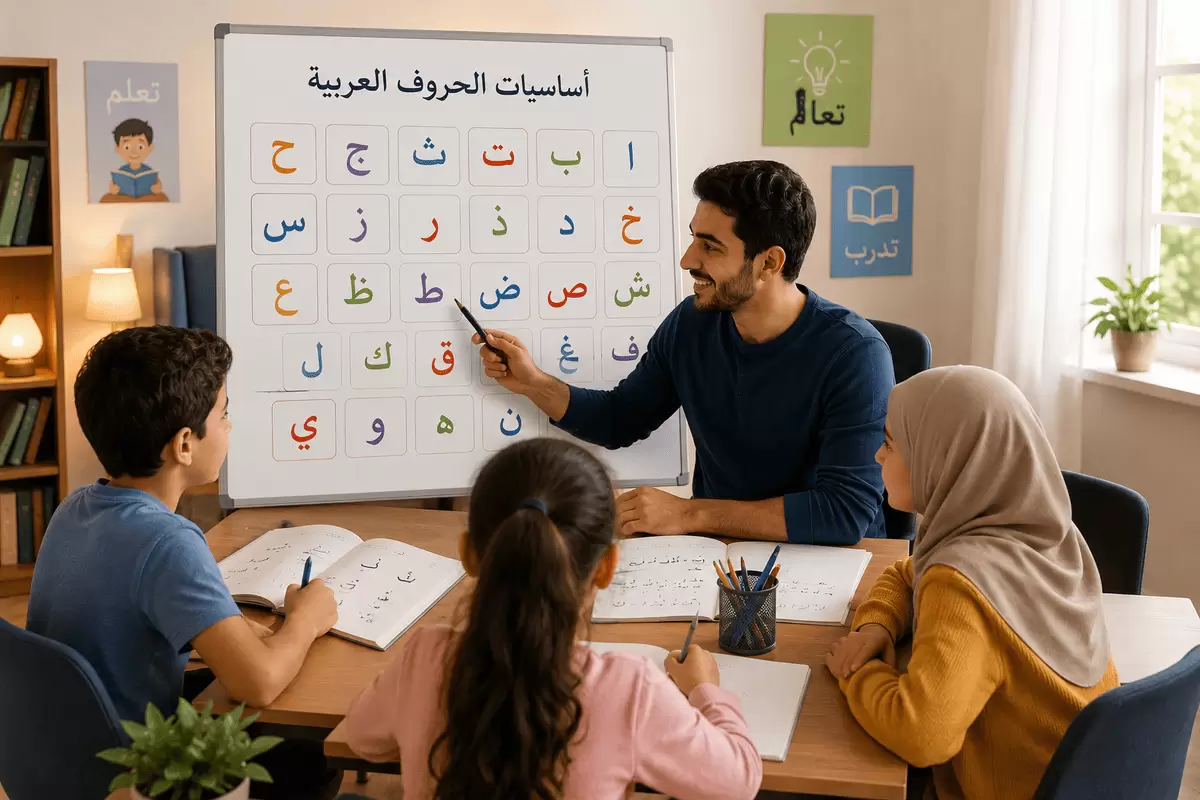
Understanding the Arabic Alphabet Fundamentals is the key to unlocking the entire language. Without a solid grasp, learners struggle with pronunciation, reading, and writing. For example, mispronouncing ج (jeem) versus ح (ha) can completely change a word’s meaning, making alphabet precision a top priority.
1. Foundations for Quran Reading
Prioritizing the alphabet is essential for quran reading in Arabic. Since the Quran relies on accurate pronunciation and harakat (diacritical marks), mastering the fundamentals allows learners to approach the text with confidence and respect for its linguistic nuances.
2. Enhancing Vocabulary Retention
For those focused on Arabic Vocab for Beginners, starting with the alphabet ensures new words are retained more effectively. Recognizing letters in context—such as breaking down سلام (salam) into س-ل-م—reinforces both the script and basic greetings simultaneously.
3. Cultural and Structural Significance
- Art and Heritage: The alphabet is the basis of Arabic calligraphy, an art form that highlights the script’s beauty and versatility.
- Linguistic Roots: Many modern words in science and technology retain traditional root letters, keeping the alphabet relevant in contemporary contexts.
- Grammar Base: Most Arabic grammar rules are tied to letter shapes and sounds, forming the necessary foundation for advanced studies.
4. Logical Learning Progression
An Arabic grammar course online for beginners typically begins with the alphabet to ensure a logical progression. Combining theory with practical exercises, such as writing different letter forms and pronunciation drills, helps learners avoid common pitfalls like confusing similar-sounding letters or misplacing harakat.
Overview of the 28 Arabic Letters
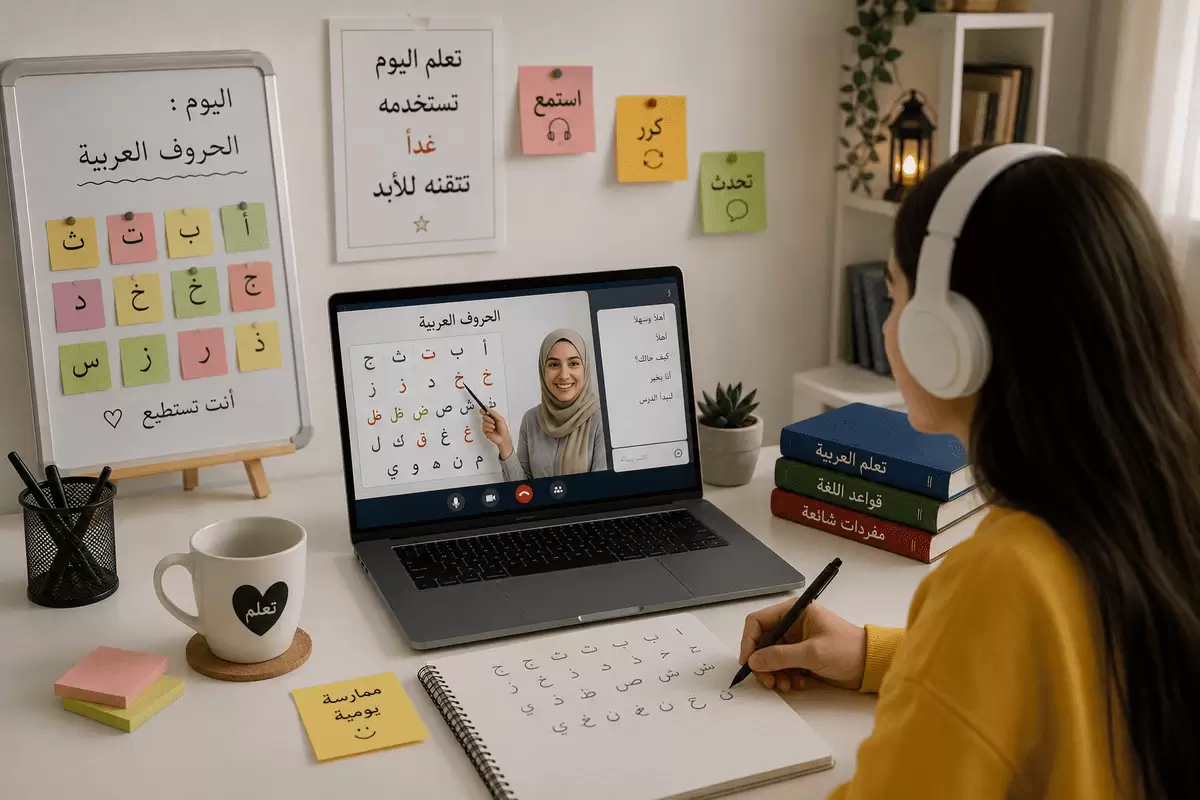
The Arabic alphabet consists of 28 letters, each with a unique name, sound, and shape. Unlike English, Arabic letters are contextual and change their form based on their position within a word to ensure a smooth visual flow.
1. Letter Categorization
- Sun and Moon Letters: These groups determine how the “Al-” (ال) prefix is pronounced. Sun letters (like س, ش, د) assimilate the “L” sound, while Moon letters (like ق, ك, ب) keep it distinct.
- Non-Connecting Letters: Certain letters, such as ا (Alif) and و (Waw), do not connect to the following letter, which affects how the word is written.
- Distinguishing Marks: Diacritical dots are used to differentiate between similar shapes, such as ض (Dhad) vs. ص (Sad) or ظ (Dhah) vs. ط (Ta).
2. The Four Forms of Letters
Understanding how a letter looks in its four different states reduces memorization stress through pattern recognition. Take the letter Ba (ب) as an example:
- Initial: بــ (at the start)
- Medial: ــبــ (connected on both sides)
- Final: ــب (at the end)
- Isolated: ب (standing alone)
3. Practical Learning Tips
- Visual Tools: Use flashcards that display all four forms of each letter.
- Muscle Memory: Practice tracing letters on paper to make the flow of the script feel natural.
- Pattern Recognition: Focus on high-frequency letters first to build confidence in reading simple words quickly.
Letter Shapes: Initial, Medial, Final, and Isolated Forms
One of the most distinctive Arabic Alphabet Fundamentals is how letters transform based on their position in a word. This adaptability creates the script’s fluid, cursive appearance.
1. Initial Form (Beginning of a Word)
When a letter starts a word, it adopts a shape designed to connect to the following letter.
- Examples: ك (Kaf), س (Sin), ق (Qaf).
- Significance: These forms set the flow for the entire word.
2. Medial Form (Middle of a Word)
In this position, letters typically connect to both the preceding and following letters.
- Examples: ـبـ (Ba), ـتـ (Ta), ـلـ (Lam).
- Significance: This is the most common form, ensuring the word is written in a continuous stroke.
3. Final Form (End of a Word)
At the end of a word, letters often take a distinct shape to signal the word’s conclusion.
- Examples: ـد (Dal), ـق (Qaf), ـس (Sin).
- Note: Recognizing final forms is essential for identifying where one word ends and another begins.
4. Isolated Form (Standalone Letter)
When a letter appears alone, it returns to its basic, original shape.
- Examples: ب (Ba), ت (Ta), ث (Thah).
Structure of the Arabic Alphabet
The Arabic alphabet is composed of 28 distinct letters. Unlike some languages, this count remains consistent across all Arabic-speaking regions.
Letter Categories by Articulation
- Guttural (Throat): Produced deep in the throat, such as ح (Ha) and ع (Ain).
- Dental (Teeth): Articulated with the tongue against the teeth, such as ث (Thah) and د (Dal).
- Labial (Lips): Formed using the lips, such as ب (Ba) and م (Meem).
- Emphatic: Pronounced with deep emphasis, such as ض (Dhad) and ط (Ta).
Classification by Visual Shape
- Linear Letters: Resemble simple lines or curves, like ا (Alif) or و (Waw).
- Dotted Letters: Use dots to distinguish similar shapes, such as ب (Ba) vs. ت (Ta).
- Non-Connecting Letters: These letters (like د, ذ, ر, ز, و, ا) do not connect to the following letter, even in the middle of a word.
Summary Table of Transformations
| Letter | Initial | Medial | Final | Isolated |
| Ba | بــ | ــبــ | ــب | ب |
| Kaf | كــ | ــكــ | ــك | ك |
| Qaf | قــ | ــقــ | ــق | ق |
How does the Arabian Tongue shape your journey of learning the Quran and Arabic?
At Arabian Tongue, we help you understand the Quran deeply and connect with its meanings through simple and effective teaching methods. Our courses are designed to make your learning journey clear, engaging, and spiritually enriching.
Guidance from the Quran and Hadith
قال الله تعالى: “الرَّحْمَنُ، عَلَّمَ الْقُرْآنَ، خَلَقَ الْإِنسَانَ، عَلَّمَهُ الْبَيَانَ” (سورة الرحمن: 1-4)
Allah says: “The Most Merciful, taught the Qur’an, created man, [and] taught him eloquence” (Surah Ar-Rahman: 1-4).
عن ابن مسعود رضي الله عنه قال: قال رسول الله ﷺ: “مَنْ قَرَأَ حَرْفًا مِنْ كِتَابِ اللَّهِ فَلَهُ بِهِ حَسَنَةٌ، وَالْحَسَنَةُ بِعَشْرِ أَمْثَالِهَا، لا أَقُولُ الم حَرْفٌ، وَلَكِنْ أَلِفٌ حَرْفٌ وَلامٌ حَرْفٌ وَمِيمٌ حَرْفٌ”
The Prophet ﷺ said: “Whoever recites a letter from Allah’s Book is credited with a good deed, and a good deed gets a tenfold reward. I do not say ‘Alif-Lam-Mim’ is one letter; but Alif is a letter, Lam is a letter, and Mim is a letter.”
FAQs
How many letters are in the Arabic alphabet?
The Arabic alphabet consists of 28 basic letters, all of which are consonants. Each letter has a unique name and sound, forming the foundation for all Arabic vocabulary.
How do Arabic letters change shape in words?
Letters change their shape based on their position: initial, medial, final, or isolated. This transformation allows letters to connect smoothly, creating the script's characteristic cursive flow.
What is the best way to learn Arabic alphabet pronunciation?
The best way is to listen to native speakers and practice the articulation points of each letter. Focusing on Guttural and Emphatic sounds is especially important to distinguish between similar-sounding letters.
What are harakat and how are they used?
Harakat are small diacritical marks placed above or below letters to represent short vowel sounds. They are essential for correct pronunciation and help clarify the meaning of words that share the same spelling.