

Have you ever wondered how a few simple words can unlock the doors to an ancient culture and a vast history? Mastering Arabic Vocab for Beginners is more than just memorizing a list; it is the magic key to connecting with millions and discovering the beauty of the “Dhad” language. Whether you dream of traveling, seeking new career opportunities, or exploring literary treasures, your journey starts here. In this guide, we provide the essential dictionary and practical steps to make learning your first words an exciting and rewarding experience. Get ready to find your voice in Arabic!
Arabic Vocab for Beginners
Building a strong foundation in Arabic vocabulary is the first step toward mastering the language, whether you’re learning for travel, cultural appreciation, or religious studies. The Arabic language boasts over 12 million words, but beginners don’t need to memorize them all at once. Instead, focus on vocabulary that covers daily interactions, essential phrases, and common expressions, ensuring you can engage in basic conversations quickly while building confidence.
The key to effective learning lies in understanding how words function in context. For beginners, the journey starts with recognizing the Arabic alphabet, its sounds, and basic writing rules. Once you grasp the alphabet, expanding your vocabulary becomes more manageable through associating words with images, sounds, or personal experiences, which enhances retention and makes learning more enjoyable.
- Why Vocabulary Matters in Language Learning:
-
- Vocabulary is the gateway to comprehension and expression.
- A strong word base improves listening, speaking, and reading skills.
- It reduces reliance on translations and fosters natural communication.
- How to Approach Vocabulary Learning:
- Start with high-frequency words used in daily conversations.
- Use visual aids like flashcards or apps to reinforce memory.
- Practice speaking aloud to associate words with pronunciation.
- Learn words in thematic groups such as greetings, food, and family.
Importance of Building a Strong Vocabulary Base
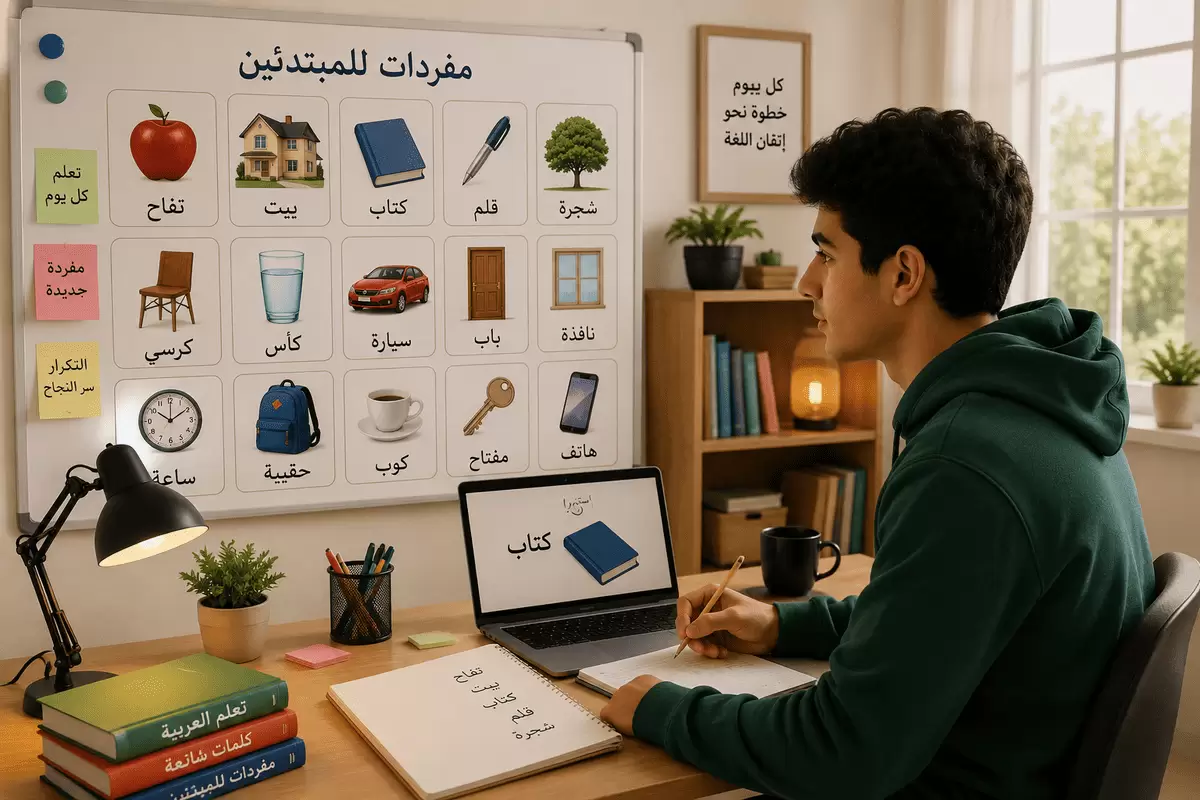
A robust vocabulary base is the cornerstone of language proficiency, meaning beginners should focus on words that appear frequently in conversations, media, and written texts. When you understand a wide range of words, you can follow conversations more easily, read Arabic texts with greater confidence, and express ideas clearly and accurately.
The Arabic language is rich in dialects, but Modern Standard Arabic (MSA) serves as the unified standard for writing and formal speech, providing a neutral foundation that works across different regions. Exposure to regional dialects such as Egyptian, Levantine, or Gulf Arabic can further deepen your understanding and help you connect with native speakers.
- Benefits of a Strong Vocabulary:
- Enhanced comprehension in listening and reading.
- Greater confidence in speaking and writing.
- Ability to understand cultural nuances and idioms.
- Easier transition to advanced grammar and literature.
- Common Mistakes Beginners Make:
- Memorizing words without context.
- Ignoring word roots and patterns.
- Overlooking pronunciation and stress patterns.
- Limiting vocabulary to only formal or informal registers without balance.
For those interested in religious studies, integrating Quran reading into vocabulary practice can be highly rewarding, as the Quran contains many repeated words and phrases that make it an excellent resource for reinforcement.
Common Arabic Words Used in Daily Life
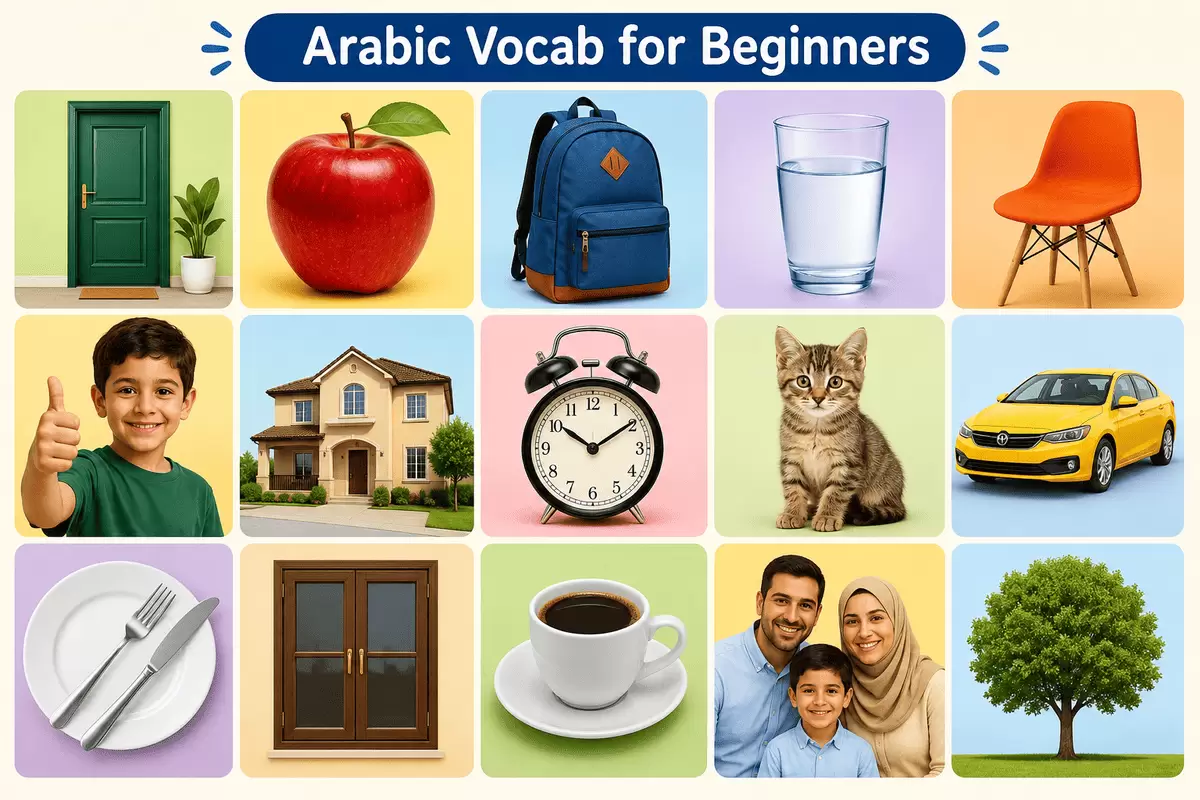
Daily interactions are the core of practical language learning. Here is a concise list of essential words categorized for easy reference:
1. Greetings and Polite Phrases
- Marhaba (مرحبا): Hello
- Shukran (شكرا): Thank you
- Ma’a al-salaama (مع السلامة): Goodbye
- Min fadlak/ik (من فضلك): Please (m/f)
- A’ththar (أعتذر): Excuse me / I’m sorry
2. Family and Relationships
- Waaled / Waaleda (والد / والدة): Father / Mother
- Akh / Akht (أخ / أخت): Brother / Sister
- Zawj / Zawja (زوج / زوجة): Husband / Wife
3. Food and Dining
- Ta’am (طعام): Food
- Ma’ (ماء): Water
- Shai (شاي): Tea
- Laymoon (ليمون): Lemon
- Hulwa (حلوى): Dessert / Sweets
4. Directions and Travel
- Ayna? (أين؟): Where?
- Kayfa? (كيف؟): How?
- Ilayna ayna? (إلى أين؟): Where to?
- Yameen / Yasar (يمين / يسار): Right / Left
5. Numbers and Time
- Waahid, Ithnaan, Thalaatha: One, Two, Three
- Sa’a (ساعة): Hour / Clock
- Daqeeqa (دقيقة): Minute
Tips for Memorizing Arabic Vocabulary
To enhance retention and master new words, consider the following proven techniques:
1. Spaced Repetition Systems (SRS)
- Use apps like Anki or Memrise that schedule reviews at optimal intervals.
- This method reinforces words just before you are likely to forget them.
2. Thematic Word Lists
- Group words by themes (e.g., travel, emotions).
- Example: For travel, group “طائرة” (airplane), “جواز سفر” (passport), and “مطار” (airport).
3. Mnemonics and Visuals
- Associate words with vivid images or stories.
- Use rhymes or songs, which are especially helpful for auditory learners.
4. Active Recall
- Test yourself without looking at your notes.
- Use flashcards and quiz yourself daily to strengthen your memory.
5. Language Immersion
- Watch Arabic shows, listen to music, or follow Arabic social media accounts.
- Label household objects with their Arabic names (e.g., “باب” for door).
6. Language Exchange
- Practice with native speakers on platforms like Tandem or HelloTalk.
- Real-time practice helps you learn colloquial expressions and correct mistakes.
How does the Arabian Tongue shape your journey of learning the Quran and Arabic?
At Arabian Tongue, we help you understand the Quran deeply and connect with its meanings through simple and effective teaching methods. Our courses are designed to make your learning journey clear, engaging, and spiritually enriching.
Guidance from the Quran and Hadith
قال الله تعالى: “وَعَلَّمَ آدَمَ الْأَسْمَاءَ كُلَّهَا” (سورة البقرة: 31)
Allah says: “And He taught Adam the names of all things” (Surah Al-Baqarah: 31).
قال عمر بن الخطاب رضي الله عنه: “تَعَلَّمُوا الْعَرَبِيَّةَ فَإِنَّهَا مِنْ دِينِكُمْ”
Omar ibn al-Khattab said, “Learn Arabic, for it is part of your religion.”
FAQs
What is the best way to learn Arabic vocab for beginners?
The best way is by associating words with visual images and practicing them in simple sentences immediately. Grouping words into themes like family or travel also makes the learning process more organized and easier to remember.
How many Arabic words should beginners learn first?
Beginners should aim to learn 100 to 300 words initially, focusing on high-frequency terms used in daily life. This range provides a solid foundation to understand basic contexts and start simple, meaningful conversations.
What are the most common Arabic words used daily?
The most common daily words include greetings like Marhaba and Shukran, question words like Ayna and Kayfa, and essential verbs like I want. Numbers, time-related terms, and basic food or family vocabulary are also fundamental for everyday use.
How can I memorize Arabic vocabulary quickly?
To memorize vocabulary quickly, use Spaced Repetition Systems (SRS) and flashcards to review words at specific intervals. Practicing active recall—such as labeling household items or speaking with friends—helps lock these words into your long-term memory.