
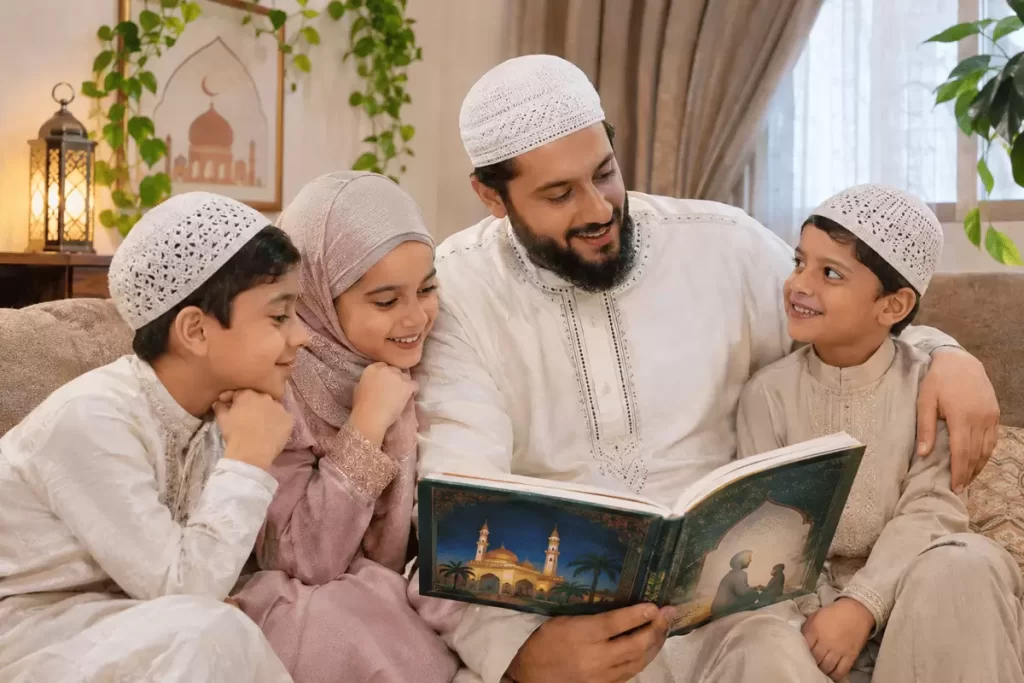
Islam treats parenthood as a trust from Allah, not merely a biological bond, and it defines clear obligations that begin before a child is born and continue into adulthood. The duties of parents towards their child in Islam cover physical care, moral guidance, education and fair treatment, and each is firmly grounded in the Quran and the authentic Sunnah. Parents who fulfil these obligations raise a child who knows Allah, respects others and serves society, while those who neglect them will answer for it. This guide explains each duty with its evidence and practical ways to apply it at home.
Duties of Parents Towards Their Child in Islam Before and After Birth
The responsibility starts well before the first cry, since the choices parents make early shape the home in which the child will grow.
Choosing a Righteous Partner
The Prophet ﷺ advised choosing a spouse of faith and character, because the home is the child’s first school, and a stable, God-conscious home gives the child the strongest start. The guidance can be summarised in three points:
- People marry for wealth, lineage, beauty or religion, and the Prophet ﷺ urged believers to prefer the one with religion, since faith protects the marriage in hard times and shapes the values passed to children;
- Families should accept a suitor whose religion and character please them, as the Prophet ﷺ instructed;
- The duty applies to both sides, since each should look for honesty, good manners and shared goals for raising children.
Welcoming the Newborn
Once the child arrives, the Sunnah prescribes several acts of welcome and protection:
- Calling the adhan in the newborn’s ear, as many scholars recommend;
- Tahnik, which means rubbing a softened date on the baby’s palate, as the Prophet ﷺ did;
- Choosing a good name, since people will be called by their names on the Day of Resurrection;
- Offering the aqiqah on the seventh day, together with shaving the baby’s head;
- Circumcising a boy, as part of the natural disposition.
قال النبي ﷺ: «كُلُّكُمْ رَاعٍ، وَكُلُّكُمْ مَسْئُولٌ عَنْ رَعِيَّتِهِ» (صحيح البخاري، حديث 7138؛ وصحيح مسلم)
The Prophet ﷺ said: “Every one of you is a guardian, and every one of you is responsible for those under your care.” (Sahih al-Bukhari 7138; Sahih Muslim)
Providing Care, Protection and Maintenance
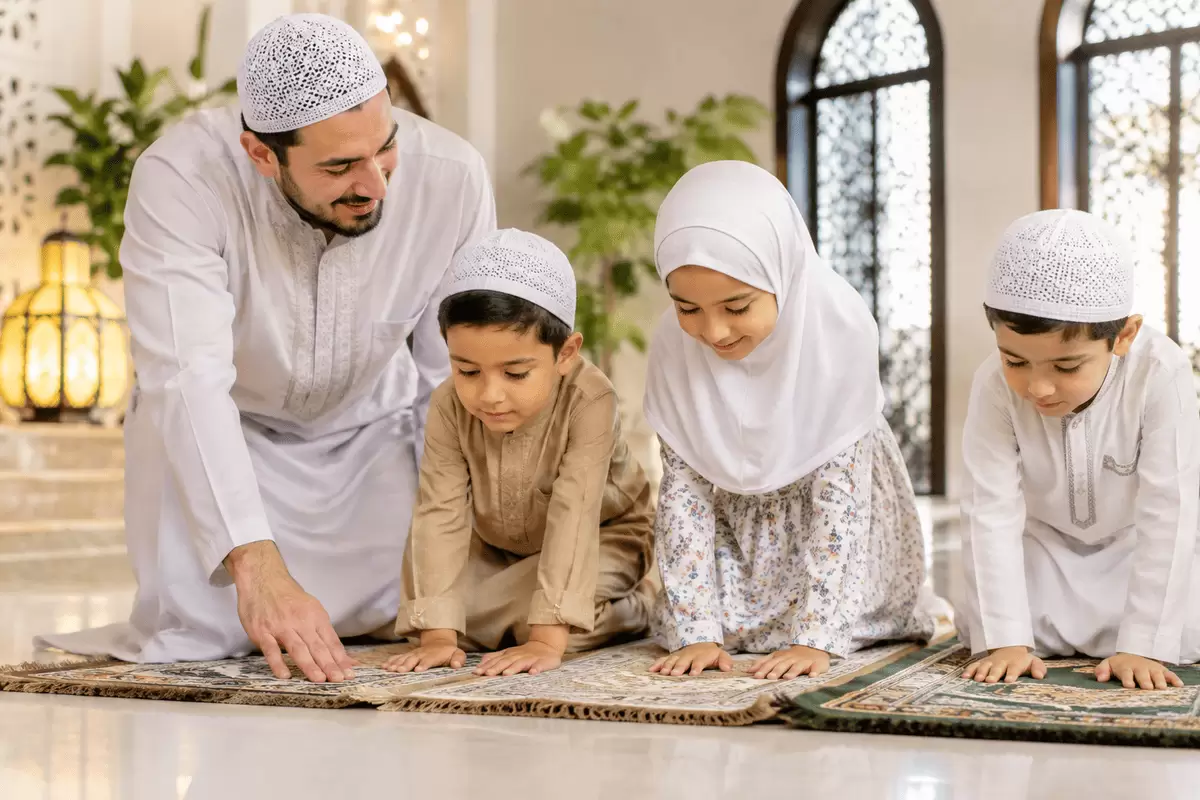
Among the duties of parents towards their child in Islam, material care comes first, since a child depends entirely on parents for survival and Islam makes it a binding duty rather than a favour.
The Quran encourages mothers to nurse their infants for two full years, which supports health and the earliest emotional bond. Beyond nursing, every child must receive the following:
- Nutritious food and clean water;
- Suitable clothing and a safe home;
- Medical care whenever illness appears;
- Protection from physical, emotional and online harm.
The Prophet ﷺ warned that neglecting those whom one is responsible for feeding is enough to earn sin, and the Quran commands believers to guard themselves and their families from the Fire, which includes guarding children from harmful influences.
قال النبي ﷺ: «كَفَى بِالْمَرْءِ إِثْمًا أَنْ يُضَيِّعَ مَنْ يَقُوتُ» (سنن أبي داود، حديث 1692)
The Prophet ﷺ said: “It is sufficient sin for a person to neglect those whom they are responsible for supporting.” (Sunan Abi Dawud 1692)
Teaching Faith and Good Character
Spiritual upbringing is the most lasting of the duties of parents towards their child in Islam, because it shapes how the child will think, worship and treat others for life.
Teaching by Example
Children copy what they see more than what they hear, so honesty, prayer and patience at home carry more weight than lectures. The Prophet ﷺ taught through his own conduct, as these examples show:
- Keeping promises, since the Prophet ﷺ taught that promising a child something and then withholding it is recorded as a lie;
- Greeting children with respect, as the Prophet ﷺ greeted boys he passed in the street;
- Showing sensitivity, as he shortened his prayer when he heard a baby crying, out of concern for the mother;
- Praying openly, so the child sees worship as a normal part of daily life.
Building Faith Step by Step
- Teach the declaration of faith and the basic beliefs while the child is young;
- Encourage Quran recitation and memorization at a pace that suits the child’s age;
- Teach manners such as greeting, truthfulness and respect for elders;
- Show mercy openly, since the Prophet ﷺ kissed his grandson Al-Hasan and taught that those who show no mercy will receive none.
Educating the Child for This Life and the Next
Seeking knowledge is an obligation in Islam, and parents carry the first duty of opening that door for their children, which is why education stands among the duties of parents towards their child in Islam. This means teaching religious knowledge alongside useful academic subjects and practical skills, so that the child grows into an adult who can earn lawfully, think clearly and serve the community. Guiding a child towards a path that matches their abilities is part of this trust, provided the chosen work is lawful and does not pull the child away from worship.
قال الله تعالى: ﴿وَقُل رَّبِّ زِدْنِي عِلْمًا﴾ (سورة طه 20:114)
Allah says: “And say, ‘My Lord, increase me in knowledge.’” (Surah Taha 20:114)
Parental Duties at Each Stage of Childhood
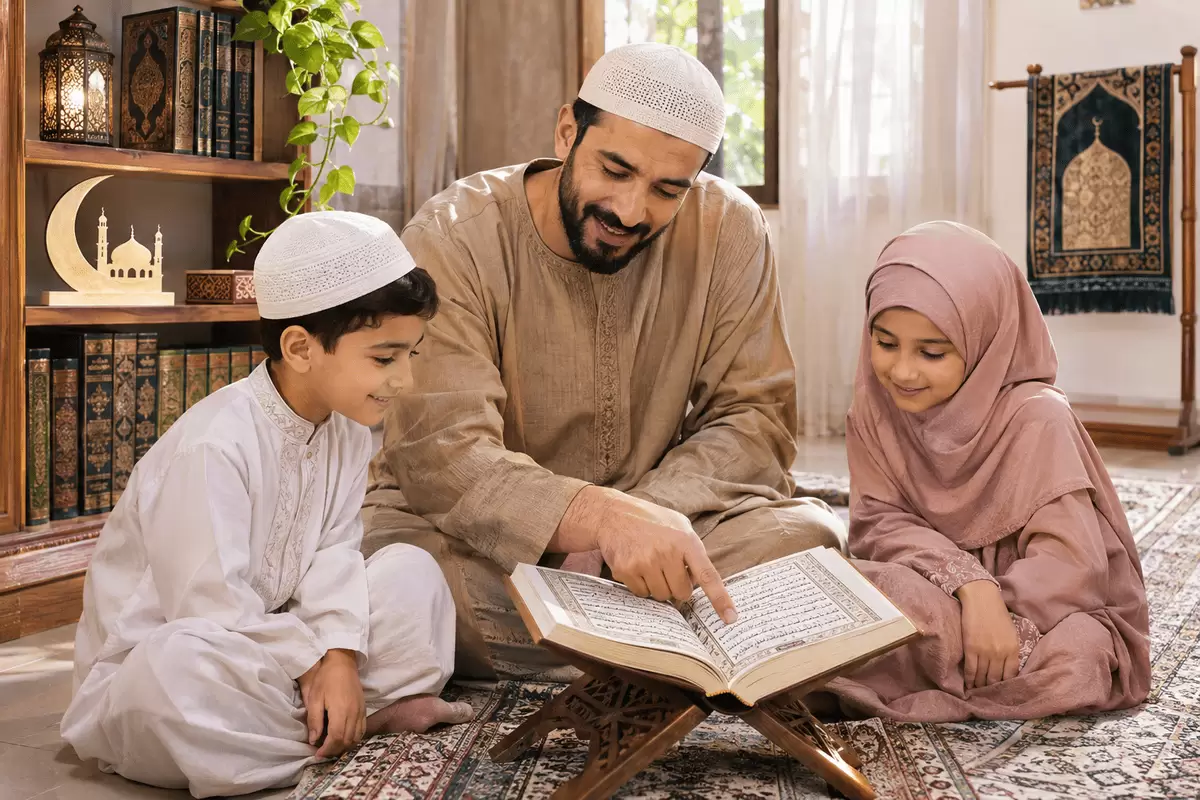
Responsibilities change as the child grows, and the table below shows how the duties of parents towards their child in Islam shift from infancy to adulthood.
| Stage | Main duty | Basis |
| Infancy (0 to 2 years) | Nursing, comfort and a secure bond | Quran 2:233 |
| Early childhood (3 to 6 years) | Basic faith, manners, short surahs and daily supplications | Sunnah of early instruction |
| Age 7 | Instructing the child kindly to pray | Hadith in Abu Dawud |
| Age 10 | Firm follow-up on prayer and separate sleeping places | Hadith in Abu Dawud |
| Adolescence | Open dialogue, sincere counsel and preparation for accountability | Advice of the Prophet ﷺ to Ibn Abbas |
| Adulthood | Helping the child marry a righteous partner, with the child’s consent | Hadith in Bukhari and Muslim |
Justice and Affection Among Children
Equal treatment protects the bond between siblings and the child’s sense of worth, and the Sunnah addresses it directly.
When Bashir wished to give one of his sons a special gift, the Prophet ﷺ told him to fear Allah and be just to his children, and Bashir withdrew the gift. The Prophet ﷺ also honoured the care of daughters, promising closeness to him on the Day of Resurrection for whoever supports two girls until adulthood, which corrects any preference for sons. Practical fairness looks like this:
- Give gifts of equal value unless a genuine need justifies a difference;
- Praise each child for their own strengths;
- Avoid comparing siblings, whether in grades or behaviour;
- Express love in words and touch, not only through food and school fees.
How does the Arabian Tongue shape your journey of learning the Quran and Arabic?
At Arabian Tongue, we help you understand the Quran deeply and connect with its meanings through simple and effective teaching methods. Our courses are designed to make your learning journey clear, engaging, and spiritually enriching.
Guidance from the Quran and Hadith
قال النبي ﷺ: «مُرُوا أَوْلَادَكُمْ بِالصَّلَاةِ وَهُمْ أَبْنَاءُ سَبْعِ سِنِينَ … وَفَرِّقُوا بَيْنَهُمْ فِي الْمَضَاجِعِ»
(سنن أبي داود، حديث 495)
The Prophet ﷺ said: “Instruct your children to pray when they are seven years old … and arrange their sleeping places separately.”
(Sunan Abi Dawud 495)
قال الله تعالى: ﴿وَعَلَى الْمَوْلُودِ لَهُ رِزْقُهُنَّ وَكِسْوَتُهُنَّ بِالْمَعْرُوفِ ۚ لَا تُكَلَّفُ نَفْسٌ إِلَّا وُسْعَهَا﴾
(سورة البقرة 2:233)
Allah says: “The father is responsible for providing their food and clothing in a reasonable manner. No soul is burdened beyond its capacity.”
(Surah Al-Baqarah 2:233)
FAQs
Who bears the financial duty, the father or the mother?
The Quran places the cost of the child’s food and clothing on the father, according to his means, even when the mother nurses the child after separation. A mother is not obliged to spend on the child while the father is able, although she may do so voluntarily, and the Prophet ﷺ confirmed that such spending carries reward.
Until what age do parental duties last?
According to most scholars, maintenance continues until a son becomes capable of earning and until a daughter marries. Moral guidance, counsel and supplication never end, since the relationship lasts for life, and the duty to advise with kindness remains even after the child has become independent.
Who has custody after a divorce?
Most scholars give the mother priority in caring for young children, based on a ruling reported by Abu Dawud that she has more right to her child as long as she has not remarried, while the father keeps responsibility for maintenance. The guiding principle is always the child’s welfare, so arrangements may change when circumstances change.
Is physical punishment allowed?
Islam places gentleness first and forbids causing harm, as the Prophet ﷺ declared that there should be neither harming nor reciprocating harm. Many scholars therefore limit correction to rare, light measures when truly needed, never on the face and never in anger, while patient explanation, consistent boundaries and good example remain the primary methods.
What should parents do if a child drifts away from religious practice?
Parents should continue with patience, gentle advice and sincere supplication rather than harshness or rejection, following Luqman, whose counsel to his son in the Quran is built on kindness. They should also keep the relationship warm, model the values they teach, and encourage righteous friendships, because pressure often hardens hearts while mercy opens them.