

Arabic has shaped civilizations, carried divine revelation, and connected over 420 million people across the world; yet for most beginners, it feels like a locked door. What if the key was closer than you think? Free trial Arabic lessons for beginners offer you the chance to take that first step without pressure, without commitment, and without fear. From mastering the elegant curves of the Arabic script to speaking your first real sentence, the journey starts with a single lesson. Are you ready to unlock it?
Why Learning Arabic is Valuable?
Arabic is one of the most widely spoken languages in the world, with over 420 million native speakers across 25 countries. Mastering its script, known as Abjad, deepens your appreciation for centuries of literature, poetry, and classical texts.
The language is a gateway to global opportunities; professionals in diplomacy, journalism, and technology find that Arabic fluency enhances their careers, while its structure also makes learning other Semitic languages like Hebrew or Aramaic easier.
Culturally, Arabic is the language of the Quran and a key to Islamic studies, Arab traditions, and a vibrant world of cinema, music, and cuisine. For children, early exposure sharpens cognitive skills, improves memory, and fosters multilingualism, making Arabic a rewarding journey at any age and for any goal.
Free trial Arabic Lessons for Beginners
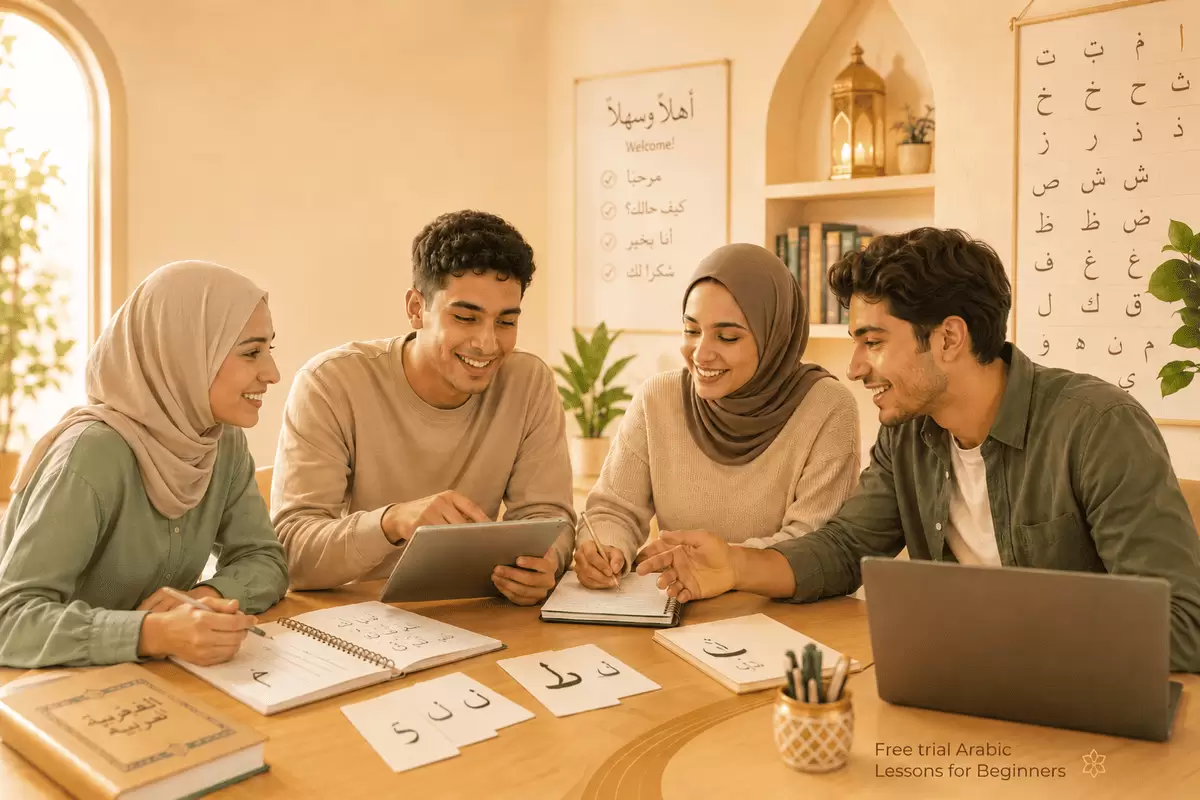
When you sign up for free trial Arabic lessons for beginners, you’re stepping into a structured yet flexible learning environment designed to ease you into the language. These trial sessions typically last between 30 and 60 minutes and focus on foundational elements that build confidence. You can expect an introduction to the Arabic alphabet, which consists of 28 letters, some of which change shape based on their position in a word. Unlike English, Arabic is written from right to left.
During your trial, you’ll engage in basic greetings, introductions, and simple phrases like “Marhaba” (Hello) or “Shukran” (Thank you). These interactions help you get comfortable with pronunciation, which can be tricky due to sounds like the guttural “ع” (ayn) or the throaty “ح” (ha). Instructors often use:
- Repetition exercises
- Shadowing techniques
- Real-time corrections
The goal isn’t perfection but familiarity; mistakes are part of the process.
Another key component of trial lessons is cultural context. You might learn about regional dialects such as:
- Egyptian Arabic
- Levantine Arabic
- Gulf Arabic
And how they differ from Modern Standard Arabic (MSA), the formal version used in writing and media. This exposure helps demystify the language’s diversity and prepares you for real-world conversations.
By the end of your trial, you should feel more confident about committing to a full course. Consider asking yourself:
- Did I enjoy the interaction?
- Did I grasp at least a few new words?
- Was the instructor supportive?
These are signs that you’re on the right track.
Speaking and Listening Practice in Trial Classes
One of the biggest challenges for beginners is overcoming the fear of speaking Arabic aloud. Trial classes address this by creating a safe, low-pressure space for practice. Instructors often start with simple dialogues that mimic real-life situations, such as ordering food at a café or asking for directions. For example:
- “Bikaif?” (How are you?)
- “Ana bihtaj ila…” (I need…)
- “Kam da?” (How much is it?)
Listening practice is equally crucial, as Arabic has a melodic rhythm that can be hard to decipher at first. Trial lessons incorporate audio exercises such as listening to short dialogues or news clips in MSA and repeating phrases to improve comprehension. This sharpens your ear to the language’s intonation and stress patterns, which are critical for understanding native speakers.
For those interested in Quranic Arabic, trial classes often include basics such as reciting short verses (Surahs) or identifying key vocabulary like “Allah” (God) or “Rahman” (The Merciful). Even if your goal isn’t Quranic study, these sessions provide insight into the language’s sacred roots and how it influences daily speech.
To maximize your trial experience, come prepared with questions: Are there specific dialects you’d like to focus on? Do you prefer one-on-one lessons or group settings? Trial classes are also an opportunity to test different teaching styles; some instructors emphasize memorization, while others prioritize conversational fluency. Pay attention to whether the platform offers live tutors, recorded lessons, or a mix of both, as the right fit will depend on your learning style, schedule, and long-term goals.
Reading and Writing Simple Arabic Sentences
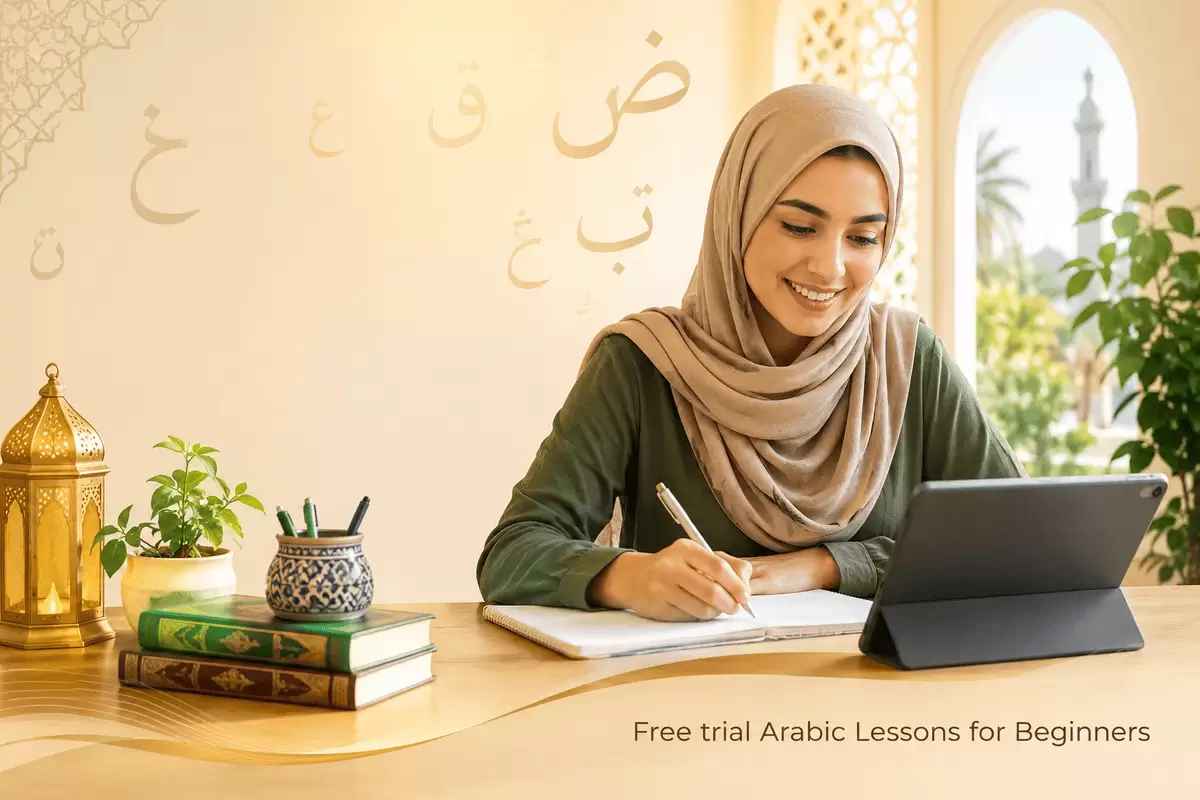
Writing Arabic can feel daunting at first, but trial lessons break it down into manageable steps. You’ll start with the alphabet, practicing each letter’s shape and sound in isolation before combining them into words. For instance, the letter “ب” (ba) changes depending on its position in a word:
- Beginning: ب
- Middle: ـبـ
- End: ـب
Many beginners use grid paper or digital tools to trace letters, reinforcing muscle memory.
Once you’re comfortable with individual letters, you’ll move on to simple words and phrases. Trial lessons often include exercises like writing your name in Arabic or labeling objects in a picture. Common examples include:
- “Kitab” — book
- “Qalam” — pen
Over time, you’ll notice patterns in word formation, such as:
- Prefixes: “al-“ (the)
- Suffixes: “-an” (pluralization)
Reading Arabic sentences requires a different skill set, as the script’s cursive nature means letters often connect. Trial classes introduce basic sentence structures, such as:
- “Ana raji3” — I am happy
- “Anta ta3rif al-ingliziya?” — Do you know English?
- “Hatha Kitab” — This is a book
Instructors may also introduce:
- Harakat: vowel marks that indicate pronunciation
- Tashkeel: diacritics that guide reading, though not always used in casual writing
For beginners, focusing on undiacritized text mirrors how Arabic appears in newspapers, books, and digital communication.
For grammar, trial lessons often preview key topics such as:
- Noun cases
- Verb conjugations
- The dual form, for example “kitabani” (my two books)
Breaking grammar down into small chunks, like learning one tense at a time, makes it manageable. Combining grammar study with real-life practice, such as writing a short journal entry or describing your day, reinforces what you’ve learned.
How does the Arabian Tongue shape your journey of learning the Quran and Arabic?
At Arabian Tongue, we help you understand the Quran deeply and connect with its meanings through simple and effective teaching methods. Our courses are designed to make your learning journey clear, engaging, and spiritually enriching.
Guidance from the Quran and Hadith
قال الله تعالى: “اقْرَأْ بِاسْمِ رَبِّكَ الَّذِي خَلَقَ” سورة العلق: 1
Allah Almighty said: “Read in the name of your Lord who created.” Surah Al-Alaq:1
عن أبي هريرة رضي الله عنه، قال رسول الله ﷺ: “مَنْ سَلَكَ طَرِيقًا يَلْتَمِسُ فِيهِ عِلْمًا سَهَّلَ اللَّهُ لَهُ طَرِيقًا إِلَى الْجَنَّةِ” رواه مسلم
Narrated by Abu Hurairah (may Allah be pleased with him), the Messenger of Allah ﷺ said: “Whoever takes a path in search of knowledge, Allah will make easy for him a path to Paradise.” Narrated by a Muslim
FAQs
What is the best way to start learning Arabic?
The best way to start is by learning the Arabic alphabet and basic pronunciation before moving on to simple words and phrases. Combining structured lessons with daily practice, such as labeling objects or writing short sentences, builds a strong foundation.
Are free trial Arabic lessons suitable for complete beginners?
Yes, trial lessons are designed specifically for complete beginners with no prior knowledge of the language. They focus on foundational skills like the alphabet, basic greetings, and simple phrases in a low-pressure environment.
What topics are covered in beginner Arabic lessons?
Beginner lessons typically cover the Arabic alphabet, basic greetings, simple vocabulary, and an introduction to sentence structure. Cultural context, regional dialects, and the difference between Modern Standard Arabic and spoken Arabic are also commonly introduced.
How long does a trial Arabic lesson usually last?
Trial lessons typically last between 30 and 60 minutes, making them easy to fit into a busy schedule. This duration is enough to cover foundational topics while giving you a clear sense of the teaching style and lesson structure.