
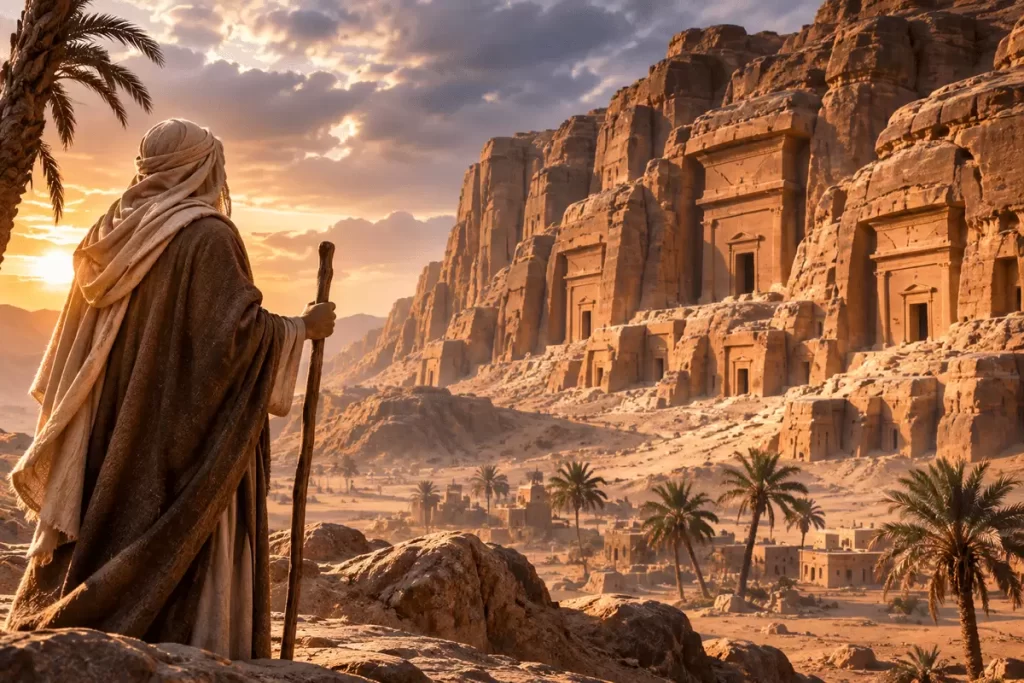
The Story of Prophet Hud tells of a mighty nation that grew arrogant with its strength and great wealth. Hud, peace be upon him, was sent to the people of Aad, who lived in the sand dunes of al-Ahqaf in southern Arabia and built the famed city of Iram of the pillars. He called them to worship Allah alone and to thank Him for their blessings, but they mocked him and challenged him to bring the promised punishment. Allah then sent a furious wind that destroyed the deniers completely, leaving a lasting warning for all generations about pride and ingratitude.
Who Was Prophet Hud?
Hud was one of the early prophets sent after the time of Nuh, and he came from the same people he was sent to guide. The Story of Prophet Hud begins with his mission among them. Key facts about him include:
- People: the tribe of Aad.
- Land: al-Ahqaf in southern Arabia.
- Era: after the people of Nuh, as the Quran states.
- Mentions in the Quran: named several times, with a surah bearing his name.
The People of Aad
Aad were one of the most powerful nations of their time. The Quran describes several of their characteristics:
- They possessed great physical strength and large stature.
- They built towering structures on every high place for show.
- They constructed strong fortresses, hoping to live forever.
- They acted as tyrants when they used their power against others.
- They boasted, “Who is mightier than us in strength?”
Iram of the Pillars
Surah Al-Fajr mentions Iram, the city of lofty pillars, describing it as unlike anything ever built in the lands. Scholars differ on whether Iram was the name of the tribe’s ancestor, their city, or the people themselves, but all agree it reflects the remarkable power and luxury Aad enjoyed before their downfall.
The People of Al-Ahqaf
Surah Al-Ahqaf, named after their homeland, recalls how Hud warned his people in the region of curved sand dunes. The word ahqaf refers to long, winding dunes, and many scholars locate this area between Yemen and Oman, near the Empty Quarter and the region of Hadramawt.
Prophet Hud in Surah Hud
Surah Hud presents the clearest account of Hud’s dialogue with his people. His call included several key messages:
- Worship Allah alone, for you have no god other than Him.
- Seek His forgiveness and turn to Him in repentance.
- Allah will then send abundant rain and add strength to your strength.
- I ask no reward from you; my reward is only from Allah.
Their response revealed their stubbornness:
- They claimed he had brought no clear proof.
- They refused to abandon their gods because of his words.
- They accused him of being struck with madness by one of their idols.
Hud responded boldly, calling Allah to witness that he was free of their idols and challenging them to plot against him without delay.
The Punishment of Aad by the Wind
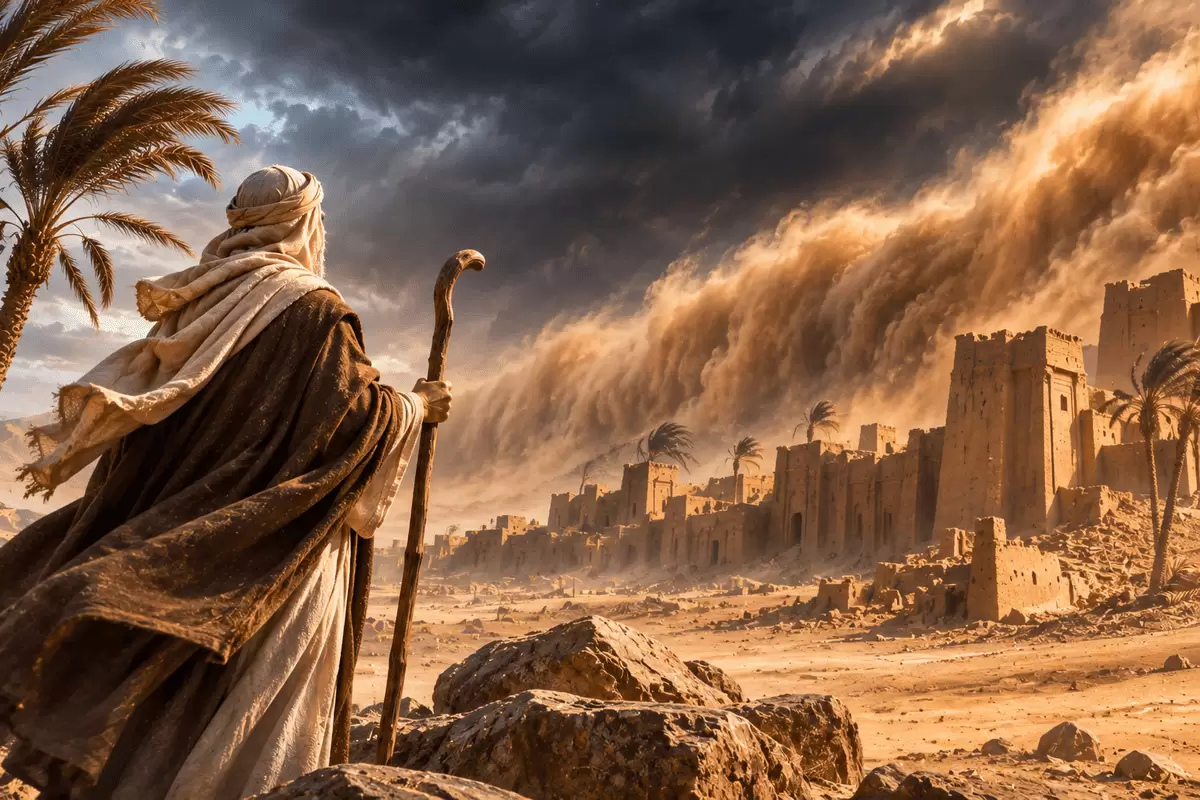
When Aad persisted in disbelief, Allah’s punishment came in stages:
- A long drought struck their land.
- A dark cloud appeared, and they rejoiced, thinking it would bring rain.
- Instead, it carried a cold, roaring wind of severe punishment.
- The wind blew for seven nights and eight days without stopping.
- It left them lying like hollow trunks of fallen palm trees.
Allah saved Hud and those who believed with him by His mercy.
Where Is the Grave of Prophet Hud?
No authentic text identifies the exact burial place of Hud, but several locations are linked to him by tradition:
- A shrine in Hadramawt, Yemen, which receives many visitors.
- A site associated with him in the Umayyad Mosque in Damascus.
- Another tradition linking his grave to the area of Najaf in Iraq.
Lessons from the Story of Prophet Hud
The Story of Prophet Hud carries important lessons for believers today:
- Strength and wealth cannot protect people from Allah’s decree.
- Gratitude preserves blessings, while arrogance destroys them.
- Seeking forgiveness brings both spiritual and worldly rewards.
- Callers to truth must remain firm and trust in Allah.
Final Thoughts on the Story of Prophet Hud
The Story of Prophet Hud shows that no civilization is too great to fall when it turns away from Allah. Its message invites believers to combine strength with humility and blessings with gratitude.
FAQs
Why did the Prophet ﷺ fear strong winds?
Aisha reported that when the Prophet ﷺ saw clouds or wind, his face clearly showed deep concern. He explained that he feared it might carry punishment, just as the people of Aad mistook their destruction for a cloud bringing rain.
What does the hadith Hud has made my hair grey mean?
The Prophet ﷺ said Surah Hud and similar surahs made his hair turn grey. Scholars explain that these surahs describe the destruction of past nations and command steadfastness, which weighed heavily on his heart out of concern for his Ummah.
Which wind destroyed the people of Aad?
The Prophet ﷺ said in Sahih al-Bukhari that he was granted victory by the east wind, known as al-saba, while the people of Aad were destroyed by the west wind, known as al-dabur, a reminder of Allah's control over nature.
Has the city of Iram been discovered?
Some researchers have linked Iram to ruins found near the Empty Quarter, often called Ubar, using satellite images in the 1990s. However, this identification remains a theory, and the Quran's description has not been confirmed by any definitive archaeological evidence.
Was Prophet Hud an Arab?
Yes. A hadith reported by Ibn Hibban names four Arab prophets: Hud, Salih, Shu'aib, and Muhammad ﷺ. The people of Aad belonged to the earliest ancient Arabs who lived in the Arabian Peninsula long before the descendants of Prophet Ismail.