
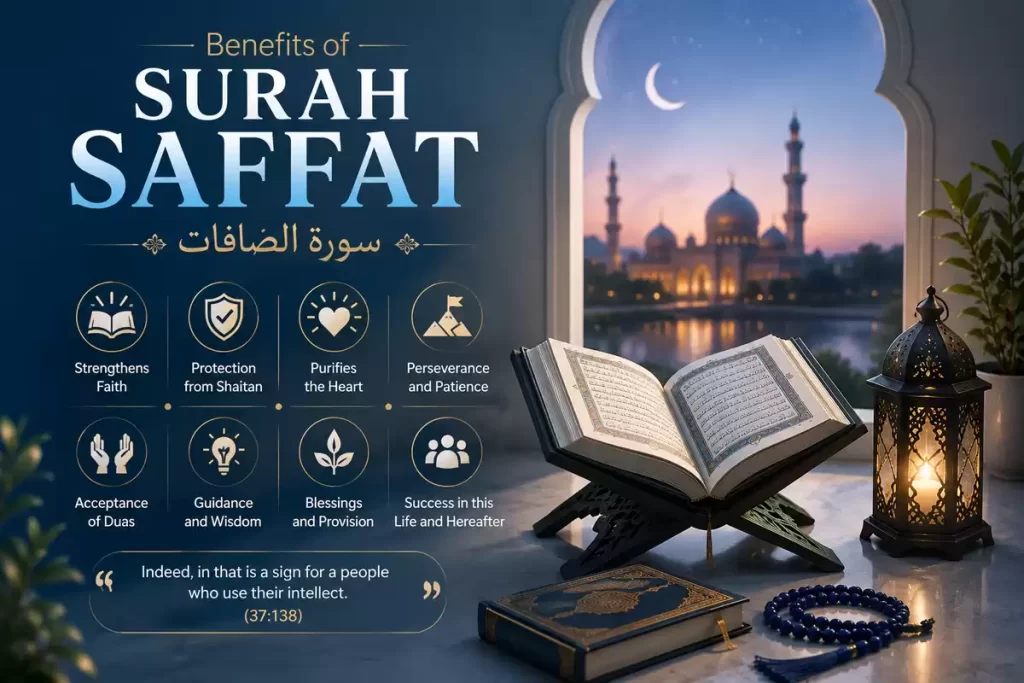
Exploring the profound spiritual and practical benefits of Surah Saffat offers believers a unique pathway to deepen their faith and understanding of divine wisdom. This Makkah-revealed chapter, the 37th in the Quran, addresses fundamental aspects of Islamic belief, from the oneness of Allah to the reality of the Day of Judgment. Delving into its teachings can illuminate profound messages, guiding individuals towards greater spiritual insight and a stronger connection with their Creator. This article will explore its significance, practical applications, and clarify common misconceptions, providing a comprehensive understanding of its virtues. The benefits of Surah Saffat are truly transformative for those who engage with its teachings.
What is Surah Saffat and Its Divine Significance?
Surah Saffat, the 37th chapter of the Quran, establishes core Makkan themes like Tawhid, prophethood, and resurrection. It highlights the steadfastness of prophets—such as Noah, Abraham, and Moses—to prove the ultimate triumph of truth.
Key themes and divine attributes highlighted within this chapter include:
- Tawhid (Oneness of Allah): Asserts Allah’s absolute sovereignty as Creator.
- Prophethood: Confirms the truthfulness of Allah’s messengers.
- Resurrection and Judgment: Outlines the Day of Reckoning and its outcomes.
- Patience and Steadfastness: Demonstrates prophetic resilience during adversity.
- Consequences of Disbelief: Warns against rejecting divine guidance and committing polytheism.
يقول الله تعالى: “إِنَّ إِلَٰهَكُمْ لَوَاحِدٌ” (سورة الصافات 37:4).
Allah says: “Indeed, your God is One.” (Surah As-Saffat 37:4).
Practical Ways to Incorporate Surah Saffat into Daily Life
Integrating Surah Saffat into daily life fosters spiritual growth through regular recitation, reflection, and practice.
- Daily Recitation: Set a daily time to recite specific portions.
- Tafsir Study: Study meanings to ensure true comprehension.
- Memorization: Memorize key passages for use in prayer.
- Journaling: Document personal reflections on its teachings.
- Sharing Knowledge: Discuss its lessons with family and friends.
Recommended Times for Recitation and Reflection
Engaging at quiet, optimal times enhances focus and spiritual connection.
- After Fajr Prayer: Provides a peaceful, reflective start to the day.
- Before Sleep: Calms the mind before night rest.
- During the Last Third of the Night: A blessed time for deep worship.
- On Fridays: Maximizes blessings during weekly devotion.
- During Times of Personal Reflection: Grants comfort in times of need.
Integrating Surah Saffat into Daily Prayers (Salah)
Reciting its verses during Salah transforms routine prayer into mindful worship.
- Choose Shorter Sections: Pick brief, memorized passages for each rak’ah.
- Recite After Al-Fatiha: Include these verses in standard prayers.
- Vary Your Recitation: Alternate passages to maintain focus and engagement.
- Focus on Meaning: Ponder the text while standing in prayer.
- Consistency is Key: Keep up the practice for continuous spiritual reward.
Using Key Verses for Personal Supplication (Dua)
Utilizing its Quranic themes enriches personal supplication.
- For Protection and Guidance: Invoke Allah’s power (verses 1–10) for safety.
- For Patience and Steadfastness: Draw on Ibrahim’s example for strength during trials.
- For Forgiveness: Use mercy verses to seek repentance.
- For Righteous Offspring: Emulate Ibrahim’s prayer for righteous family.
- For Gratitude: Recite the closing verses to praise Allah.
يقول الله تعالى: “أَفَلَا يَتَدَبَّرُونَ الْقُرْآنَ أَمْ عَلَىٰ قُلُوبٍ أَقْفَالُهَا” (سورة محمد 47:24).
Allah says: “Then do they not reflect upon the Quran, or are there locks upon their hearts?” (Surah Muhammad 47:24).
Addressing Common Misconceptions About Surah Saffat
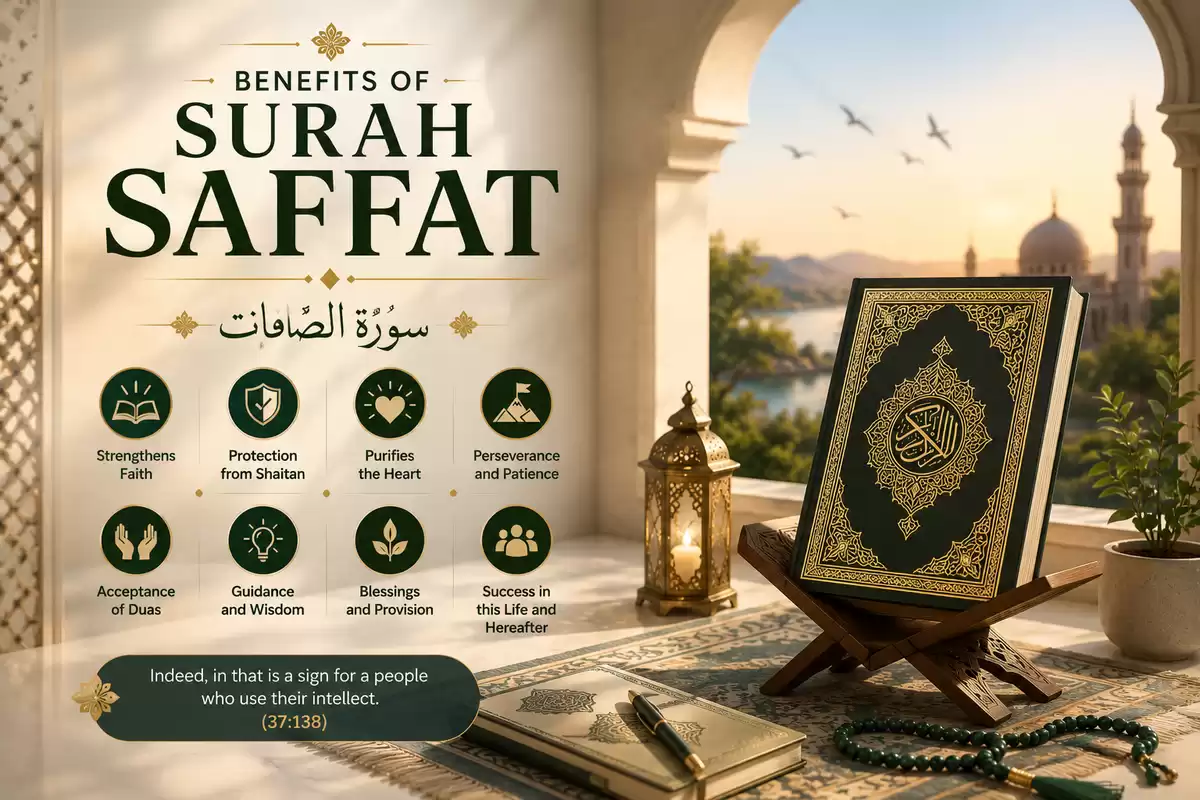
Addressing misconceptions prevents cultural myths from overshadowing the Surah’s authentic spiritual guidance.
- Guaranteed Wealth: Recitation does not guarantee wealth; the focus is on spiritual trust.
- Magical Properties: Offers spiritual healing rather than magical remedies.
- Determining Gender: Claims about child gender lack textual backing.
- Use as Amulets: Using verses as talismans promotes superstition.
- Arabic Perfection: Reflecting on translations also provides immense benefit.
Clarifying Interpretations of Specific Verses
Accurate Tafsir prevents taking verses out of context.
- Verse 102 (The Sacrifice): Highlights ultimate faith and submission, not human sacrifice.
Distinguishing Authentic Benefits from Cultural Beliefs
Separating folklore from established tradition keeps faith grounded in truth.
- Consult Scripture: Verify claims within the Quran.
- Check Hadith: Rely on authentic prophetic narrations.
- Follow Consensus: Align with verified scholarly consensus.
- Reject Anecdotes: Personal stories do not equal proof.
- Question Claims: Dismiss unverified material promises.
The Importance of Seeking Knowledge from Reliable Sources
Using credible channels safeguards understanding from popular misguidance.
- Reputable Scholars: Learn from verified teachers.
- Authentic Tafsir: Reference classical works like Ibn Kathir.
- Trusted Institutions: Rely on accredited Islamic sources.
- Filter Social Media: Avoid unverified online posts.
يقول الله تعالى: “وَمَا بِكُم مِّن نِّعْمَةٍ فَمِنَ اللَّهِ” (سورة النحل 16:53).
Allah says: “And whatever you have of favor, it is from Allah.” (Surah An-Nahl 16:53).
The Difference Between Surah Saffat and Other Quranic Chapters
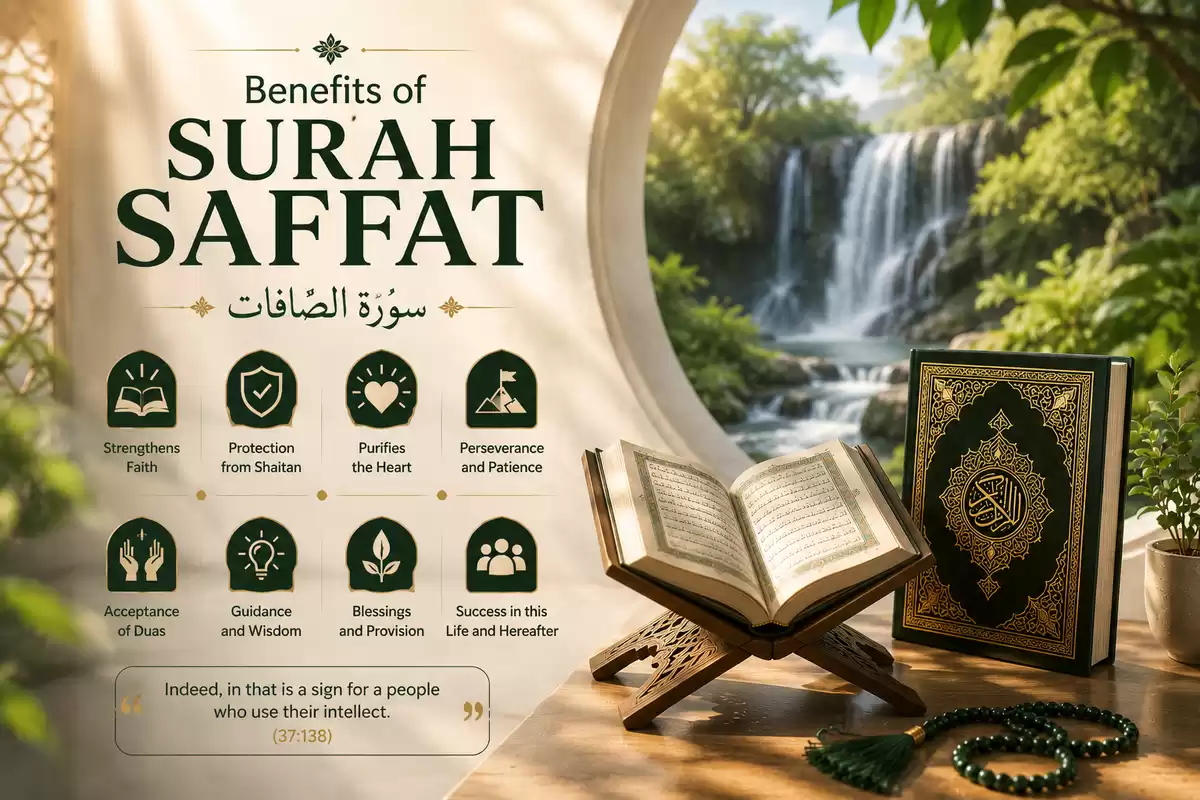
Surah Saffat stands out among Quranic chapters through its unique narrative style, vivid depiction of angelic ranks, and intense focus on prophetic submission and absolute divine sovereignty.
| Aspect / Feature | Surah Saffat (Unique Characteristics) | Other Quranic Chapters |
| Opening Theme | Starts with a vivid, majestic depiction of angels “ranged in ranks” (As-Saffat). | Feature diverse openings such as praises, disjointed letters, or direct commands. |
| Narrative Structure | Uses a poetic, fast-paced flow driven by direct dialogue and stark contrasts between believers and disbelievers. | Often follows historical timelines, legal rulings, or detailed societal guidelines. |
| Prophetic Narratives | Presents a rapid, interconnected series of 9 prophets (Noah, Abraham, Moses, Aaron, Elijah, Lot, Jonah, etc.) focused strictly on Tawhid. | Oftenfocusess deeply on a single prophet’s life story or detailed interactions with their nation. |
| Ibrahim’s Sacrifice | Highlights an emotional father-son dialogue detailing absolute trust and submission to divine will. | References Ibrahim in other contexts (e.g., debate with idolaters, building the Ka’bah). |
| Focus on Specific Prophets | Highlights Nuh’s swift prayer, Elijah’s bold stand, and Jonah’s immediate repentance. | Cover broader phases of their missions and trials across different chapters. |
| Spiritual & Practical Impact | Strongly cultivates patience (Sabr), complete submission, and protection from misguidance. | Offers broader legal, social, and general spiritual guidance. |
Summary of Sub-Sections
- Unique Narrative Structures & Thematic Focus: Interweaves direct speech, angelic majesty, and a unified theme of divine power to deeply embed monotheism.
- Distinctive Spiritual Rewards & Blessings: Fortifies faith (Iman), fosters patience during adversity, and grants a spiritual shield through reflection on prophetic resilience.
- Comparative Analysis of Prophetic Narratives: Concentrates on pivotal moments of ultimate obedience and repentance rather than full biographical accounts.
How does the Arabian Tongue shape your journey of learning the Quran and Arabic?
At Arabian Tongue, we help you understand the Quran deeply and connect with its meanings through simple and effective teaching methods. Our courses are designed to make your learning journey clear, engaging, and spiritually enriching.
Guidance from the Quran and Hadith
يقول الله تعالى: “سُبْحَانَ اللَّهِ عَمَّا يَصِفُونَ * إِلَّا عِبَادَ اللَّهِ الْمُخْلَصِينَ” (سورة الصافات 37:159–160).
Allah says: “Exalted is Allah above what they describe, except the chosen servants of Allah.” (Surah As-Saffat 37:159–160).
قال النبي ﷺ: «مَنْ يُرِدِ اللَّهُ بِهِ خَيْرًا يُفَقِّهْهُ فِي الدِّينِ» (صحيح البخاري وصحيح مسلم).
The Prophet ﷺ said: “Whoever Allah intends good for, He gives him understanding of the religion.” (Sahih al-Bukhari and Sahih Muslim).
FAQs:
What are the main benefits of reciting Surah Saffat?
It strengthens faith in Allah's oneness and cultivates patience through inspiring prophetic stories. It also provides spiritual guidance, reinforces reliance on divine will, and deepens one's connection with the Creator.
When is the best time to recite Surah Saffat?
Recommended times include after Fajr prayer, before sleeping, or during the last third of the night. These peaceful moments foster deep reflection, allowing for a more focused engagement with its verses.
Can Surah Saffat protect one from evil?
Yes, sincere recitation serves as a spiritual shield against negative influences by affirming Allah's ultimate power. However, its protection stems from building inner spiritual fortitude and trust, rather than acting as a magical charm.
What moral lessons can be learned from Surah Saffat?
It teaches absolute monotheism, sincere repentance, and unwavering obedience to Allah during hardship. Exemplified by Prophet Ibrahim, it highlights the ultimate triumph of righteousness and patience over adversity.
How does Surah Saffat strengthen faith?
It presents logical proofs of Tawhid while vividly describing the realities of the Day of Judgment. The steadfastness of the prophets reinforces belief in divine justice, wisdom, and mercy.