
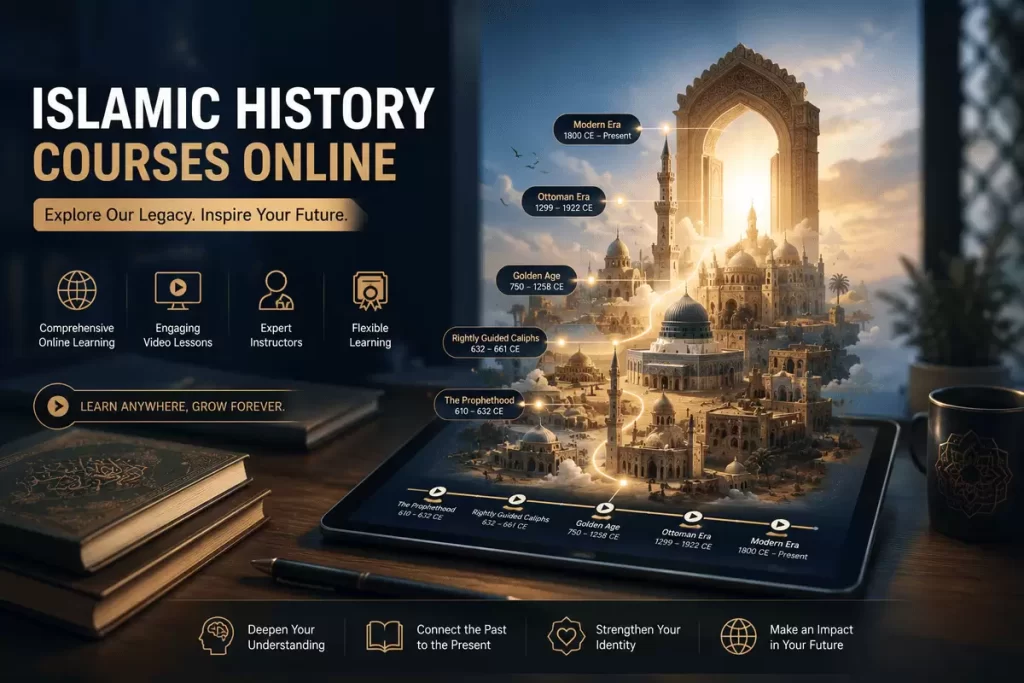
Have you ever wondered how a single civilization transformed the world from darkness into a Golden Age of enlightenment? Beyond the dates and battles lies a breathtaking narrative of innovation, resilience, and a legacy that still shapes our modern lives. The story of Islam is the story of humanity’s greatest intellectual and spiritual leaps. By exploring Islamic history courses online, you aren’t just opening a textbook; you are unlocking a treasure trove of wisdom and identity. Are you ready to discover the roots of greatness?
Why Studying Islamic History Is Important
Understanding Islamic history is a journey into a civilization that shaped the modern world. The Islamic Golden Age (8th–14th century) brought groundbreaking advancements in science, medicine, and philosophy that continue to influence global progress today.
1. Foundations of Modern Science and Intellect
The Islamic Golden Age produced legendary scholars like Ibn Sina, Al-Khwarizmi, and Al-Razi, who revolutionized fields such as mathematics, medicine, and chemistry. Islamic history courses online provide a structured way to explore how these contributions bridged the gap between ancient and modern knowledge, laying the groundwork for contemporary scientific methodologies.
2. Cultural Identity and Global Heritage
Islamic history serves as a repository of cultural heritage, preserving the art, traditions, and literature of diverse Muslim communities. It helps individuals reconnect with their roots and understand the continuity of a civilization that stretched from Spain to Southeast Asia. This global perspective fosters mutual respect and challenges narrow historical narratives.
3. Ethical Leadership and Moral Guidance
The history of Islam is replete with examples of justice, integrity, and social responsibility. From the stories of prophets to the governance of caliphs, these narratives offer timeless ethical models. Studying this history encourages learners to reflect on the role of wisdom and compassion in personal and societal development.
4. Bridging Cultures and Interfaith Dialogue
In today’s interconnected world, exploring the evolution of Islamic thought is vital for fostering meaningful dialogue. By examining how Islamic principles have been practiced across different cultures, learners gain a nuanced understanding that helps dismantle stereotypes and promotes harmony between diverse societies.
Benefits of Learning Islamic History Online
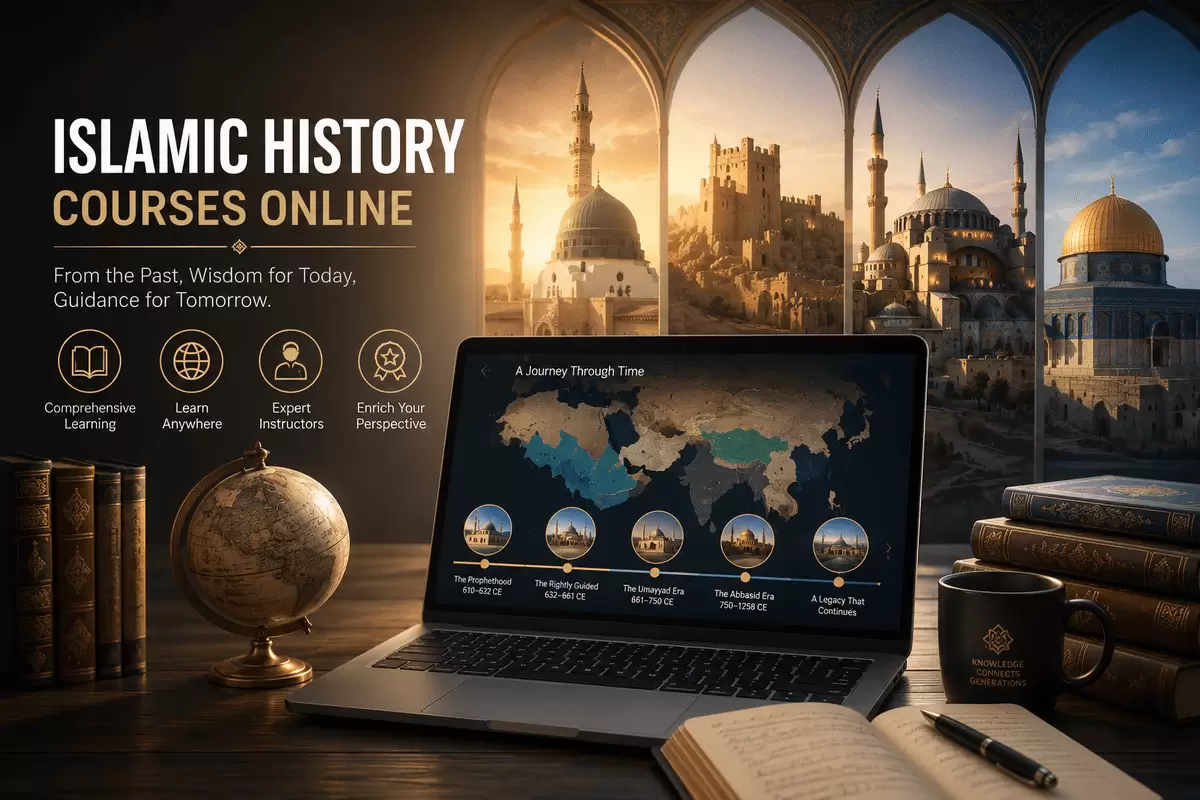
The digital age has transformed how we engage with historical knowledge. Choosing Islamic history courses online provides a modern, flexible, and resource-rich environment that traditional classrooms often cannot match.
1. Accessibility and Convenience
Online education democratizes access to specialized knowledge, allowing learners to study at their own pace regardless of their professional or personal commitments. This is particularly beneficial for those living in regions with limited physical access to Islamic studies, as it only requires an internet connection to revisit lectures and reinforce learning through repetition.
2. Multimedia and Diverse Resources
Digital platforms cater to all learning styles by offering diverse resources such as video lectures, podcasts, and interactive quizzes. For those seeking free Islamic history courses, many reputable organizations provide open-access materials, including historical maps, timelines, and virtual tours of iconic sites like the Great Mosque of Córdoba, making high-quality education accessible to a broader audience.
3. Collaborative Global Environment
Enrolling in an online program connects you with a diverse community of learners worldwide. Discussion forums and group projects foster cross-cultural exchanges and allow students to debate historical interpretations, gaining a broader and more nuanced perspective on Islamic civilization.
4. Cost-Effectiveness
Online learning significantly reduces financial barriers. Many programs are affordable or offer free Islamic history courses, eliminating expenses related to travel, accommodation, and physical textbooks. This ensures that high-quality Islamic history education remains accessible to learners regardless of their budget.
Overview of Islamic Civilization Through History
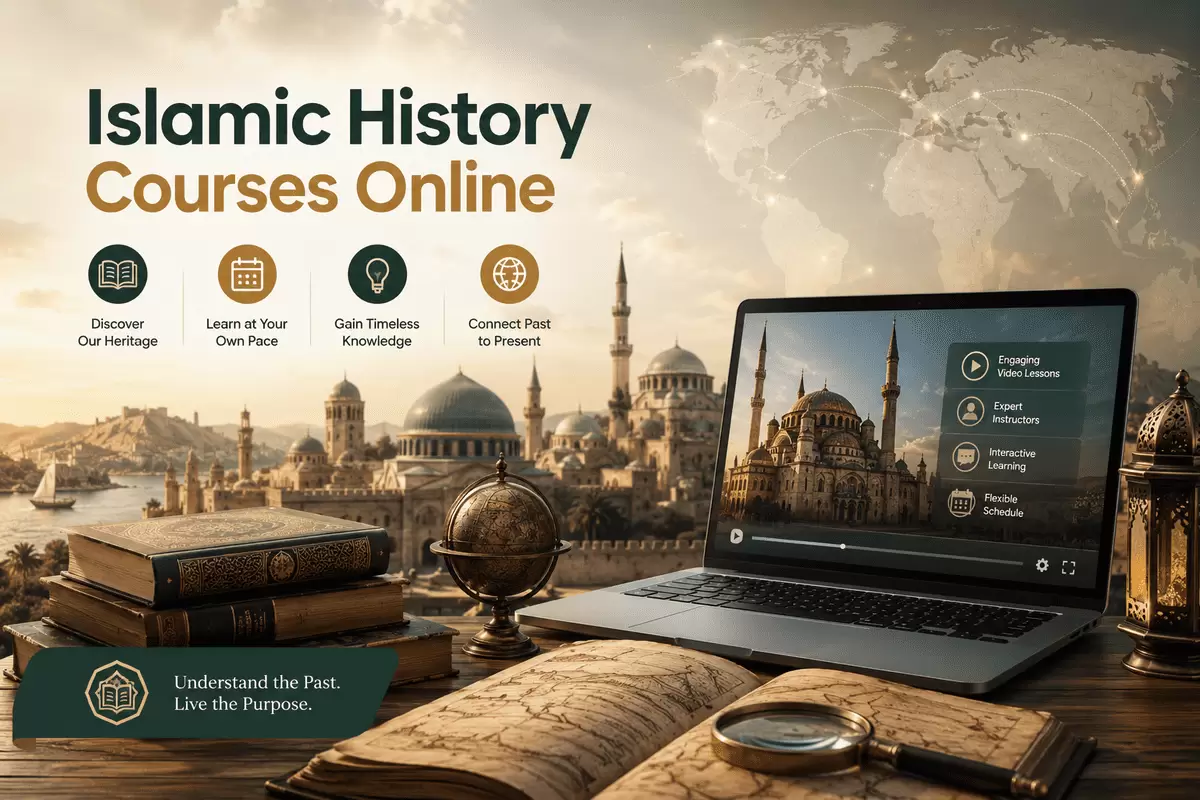
Islamic civilization is a rich tapestry of faith, science, and art. To truly grasp its depth, one must explore the key eras and contributions that shaped the cultural and intellectual landscape of the Muslim world.
1. Key Eras and Historical Evolution
The narrative of Islamic civilization unfolds through distinct phases, each marked by unique achievements:
- Rise of Islam (7th Century): The foundation of the first Muslim community in Medina.
- The Umayyad Caliphate: A period of vast expansion and the establishment of formal governance structures.
- The Abbasid Caliphate: The pinnacle of intellectual flourishing, known as the Islamic Golden Age.
- The Ottoman Empire: A long era of political dominance and cultural synthesis across the Mediterranean.
2. Centers of Learning and Intellectual Legacy
A defining feature of this civilization is its reverence for knowledge. Institutions like the House of Wisdom in Baghdad served as global hubs where scholars translated and expanded upon Greek, Persian, and Indian traditions. This era produced rigorous advancements in medicine, astronomy, and philosophy, creating a legacy that eventually sparked the European Renaissance.
3. Art, Architecture, and Aesthetic Spirituality
Islamic art and architecture serve as a harmonious blend of spirituality and aesthetics. From the geometric patterns of the Alhambra to the majestic calligraphy in the Great Mosque of Samarra, every design conveys deep theological meanings. The use of arabesques, mosaics, and symbolic gardens reflects the importance of nature and divine order in Islamic thought, offering a visual connection to the civilization’s soul.
4. Cultural Exchange and Global Influence
Islamic civilization acted as a bridge between ancient knowledge and modern progress. By preserving scientific texts and innovating in the fields of mathematics and social justice, it contributed significantly to the global knowledge economy. This spirit of cultural exchange remains one of its most enduring legacies.
The Life of Prophet Muhammad ﷺ and Early Islam
The story of Islam begins with Prophet Muhammad ﷺ, whose leadership transformed the Arabian Peninsula into a beacon of spiritual renewal. Born in 6th-century Mecca, his life evolved from a respected merchant to the final Messenger, providing a profound blueprint for a society built on justice and compassion.
1. Pivotal Milestones in the Prophetic Journey
Understanding the history of Islam requires looking at the key events that shaped the early Muslim community:
- The First Revelation (610 CE): In the Cave of Hira, the first verses of the Quran were revealed, marking the start of a 23-year divine guidance.
- The Hijrah (622 CE): The migration to Medina was a turning point that established the first Islamic state and the beginning of the Islamic calendar.
- The Conquest of Mecca (630 CE): A supreme example of leadership, where the Prophet ﷺ entered the city peacefully, offering amnesty and emphasizing forgiveness over retribution.
2. Core Principles of the Prophetic Teachings
The Prophet’s ﷺ leadership was defined by values that remain the foundation of Islamic thought today:
- Tawhid (Monotheism): Establishing the absolute oneness of Allah.
- Social Justice: Promoting equity in economic and political spheres, ensuring the rights of the marginalized.
- The Concept of Ummah: Uniting diverse tribes and ethnicities under a shared identity of brotherhood and faith.
3. The Role of the Sahabah (The Companions)
The early spread of Islam was championed by dedicated companions who preserved the Prophet’s ﷺ teachings:
- Abu Bakr & Umar: Focused on unification and establishing administrative and military reforms.
- Uthman & Ali: Oversaw the compilation of the Quran and emphasized spiritual guidance and judicial integrity.
4. A Lasting Global Legacy
The Prophet’s ﷺ life, or Sunnah, serves as a living testament to moral excellence. His influence extends beyond religious rituals, shaping the legal, social, and ethical frameworks of civilizations from Spain to Indonesia. For modern Muslims, his example of humility and patience remains the ultimate guide for personal and spiritual growth.
How does the Arabian Tongue shape your journey of learning the Quran and Arabic?
At Arabian Tongue, we help you understand the Quran deeply and connect with its meanings through simple and effective teaching methods. Our courses are designed to make your learning journey clear, engaging, and spiritually enriching.
Guidance from the Quran and Hadith
قال الله تعالى: {قُلۡ سِيرُواْ فِي ٱلۡأَرۡضِ فَٱنظُرُواْ كَیۡفَ كَانَ عَـٰقِبَةُ ٱلَّذِینَ مِن قَبۡلُۚ} [سورة الروم: 42]
Allah the Almighty said: “Say, [O Muhammad], ‘Travel through the land and observe how was the end of those before.'” [Surah Ar-Rum: 42]
قال النبي ﷺ: “مَن سَلَكَ طَرِيقًا يَلتَمِسُ فيهِ عِلمًا، سَهَّلَ اللَّهُ لَهُ بهِ طَرِيقًا إلى الجَنَّةِ” [رواه مسلم]
The Prophet ﷺ said: “Whoever follows a path in pursuit of knowledge, Allah will make easy for him a path to Paradise.” [Narrated by Muslim]
FAQs
Why is learning Islamic history important?
It provides a deep understanding of the intellectual and scientific foundations that shaped the modern world. Studying this history fosters a sense of identity and offers timeless lessons in ethical leadership and social justice.
What topics are covered in online Islamic history classes?
These courses typically cover the Rise of Islam, the Umayyad and Abbasid Caliphates, and the Islamic Golden Age. They also explore the development of Islamic art, architecture, and the contributions of great scholars in science and philosophy.
Are Islamic history courses suitable for beginners?
Yes, most online programs are designed to take learners from foundational concepts to complex historical analysis. They use clear timelines and engaging storytelling to make the vast history of Islamic civilization accessible to everyone.
How can online courses improve understanding of Islamic civilization?
They offer interactive resources like virtual tours and primary source analyses that bring historical events to life. This digital approach allows for a global exchange of ideas, helping learners appreciate the interconnectedness of Islamic and world history.