
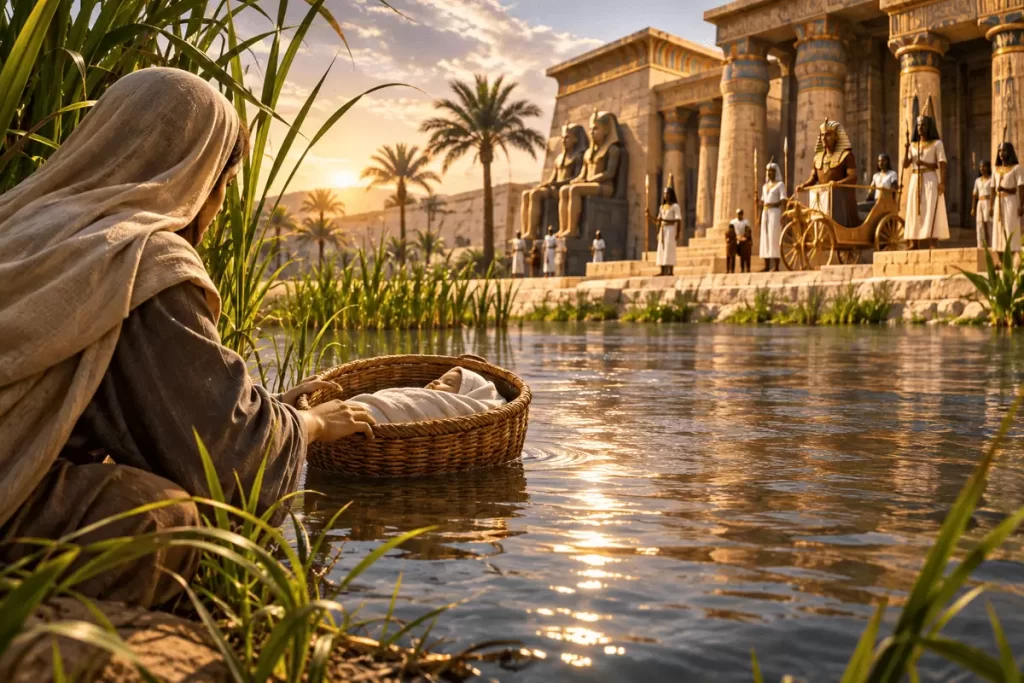
The Story of Prophet Musa is the most frequently told prophetic story in the Quran, filled with miracles, struggle, and powerful lessons. Musa, peace be upon him, was born in Egypt at a time when Pharaoh oppressed the Children of Israel. Allah saved him as an infant, raised him in Pharaoh’s palace, and later spoke to him directly, granting him miracles such as the staff and the parting of the sea. His life includes his years in Madyan, his confrontation with Pharaoh, his journey with al-Khidr, and his great patience with his own people, offering valuable guidance for every generation.
The Story of Prophet Musa: Birth and Early Life
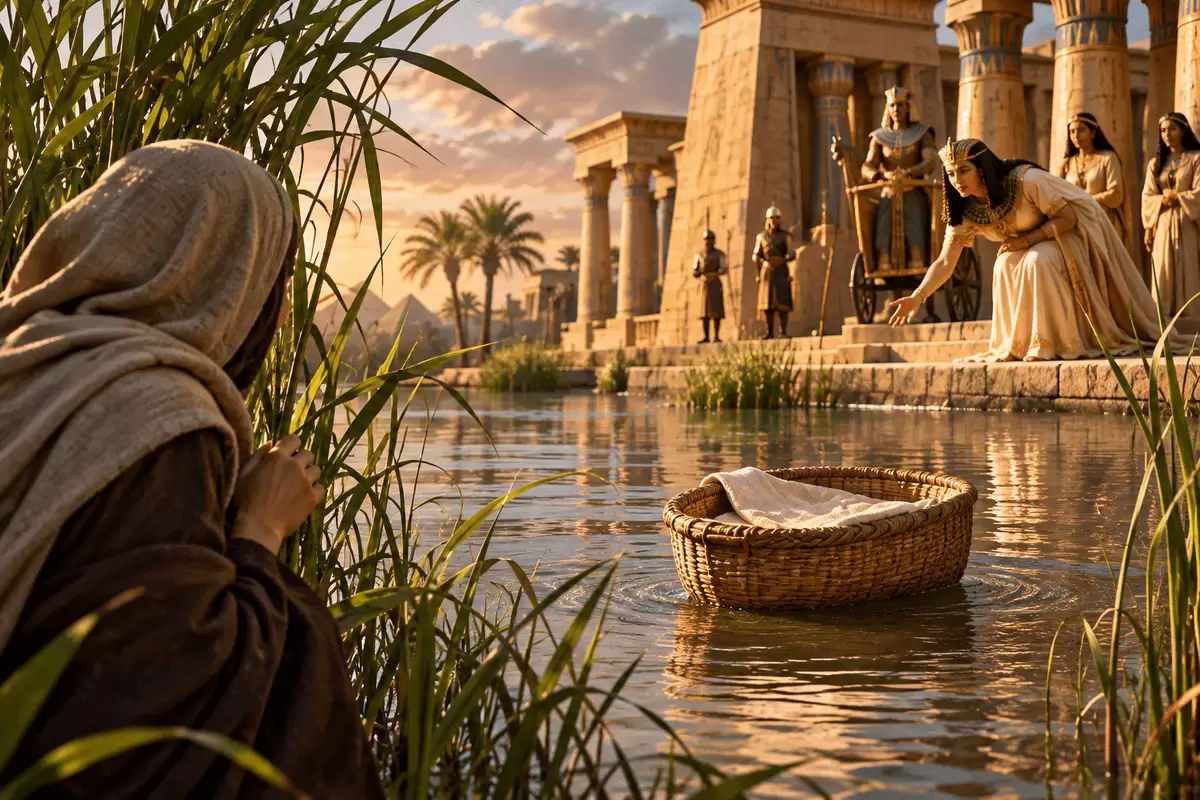
Musa was born among the Children of Israel when Pharaoh was killing their newborn boys. Allah protected him through a series of miracles:
- Allah inspired his mother to place him in a basket on the Nile.
- The basket reached Pharaoh’s palace, and Pharaoh’s wife asked to keep him.
- Baby Musa refused every wet nurse until his sister guided them to his own mother.
- He returned to his mother, fulfilling Allah’s promise to her.
Musa in Madyan
As a young man, Musa accidentally killed an Egyptian while defending a man from his people, then fled to Madyan. There he helped two women water their flock, and their elderly father welcomed him. Musa worked for him for about ten years and married one of his daughters.
Why Is Musa Called Kalimullah?
On his way back to Egypt, Musa saw a fire near Mount Tur in the sacred valley of Tuwa. There Allah spoke to him directly, appointing him as a messenger. Because of this unique honor, confirmed in Surah An-Nisa, Musa is called Kalimullah, the one to whom Allah spoke.
Musa and Harun
Musa asked Allah to strengthen him with his brother Harun, who was more eloquent in speech. Allah granted his request, and the two brothers worked together:
- Harun served as Musa’s minister and partner in delivering the message.
- Both went to Pharaoh with gentle words, as Allah commanded.
- Harun led the people while Musa was away at the mountain.
The Staff of Musa and Its Miracles
Musa’s staff became one of the greatest signs Allah gave him. Its miracles included:
- Turning into a moving serpent at Allah’s command.
- Swallowing the illusions of Pharaoh’s magicians.
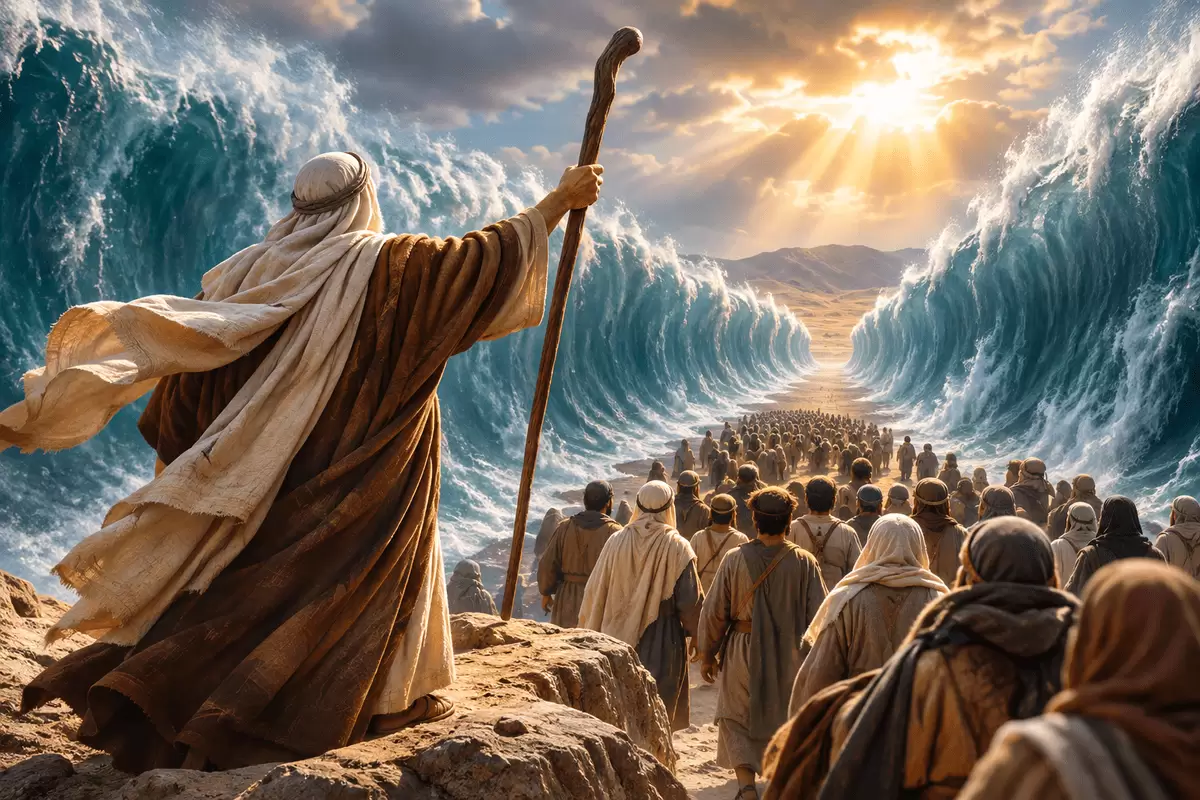
- Parting the sea when Musa struck the water.
- Bringing forth twelve springs when he struck a rock.
Prophet Musa and Pharaoh (Firaun)
Musa called Pharaoh to worship Allah and free the Children of Israel, but Pharaoh arrogantly claimed lordship and rejected every sign.
Musa and the Magicians of Pharaoh
Pharaoh gathered his best magicians to defeat Musa on a festival day. The contest ended in a surprising way:
- The magicians threw ropes and staffs that appeared to move like snakes.
- Musa threw his staff, and it swallowed everything they had produced.
- The magicians recognized the truth and fell down in prostration.
- They declared their faith, remaining firm even when Pharaoh threatened them with death.
The Parting of the Sea
When Musa led the believers out of Egypt, Pharaoh pursued them with his army. Allah commanded Musa to strike the sea with his staff, and it split into dry paths. The believers crossed safely, while Pharaoh and his soldiers drowned when the waters closed over them.
Bani Israel and the Golden Calf
After their rescue, Musa went to the mountain for forty nights to receive the Torah. During his absence, a serious trial occurred:
- A man named al-Samiri shaped a golden calf from the people’s jewelry.
- Many of the Children of Israel began worshipping it.
- Harun warned them, but they refused to listen until Musa returned.
- Musa returned in anger, destroyed the calf, and called the people to repent.
Musa and Al-Khidr Story
Surah Al-Kahf describes how Musa traveled to meet al-Khidr, a servant granted special knowledge from Allah. During their journey, al-Khidr did three puzzling things:
- He damaged a boat, protecting it from a king who seized every sound ship.
- He killed a boy whose future disbelief would have harmed his believing parents.
- He rebuilt a wall to protect a treasure belonging to two orphans.
Each act taught Musa that Allah’s wisdom often lies beyond human understanding.
How Many Times Is Musa Mentioned in the Quran?
Musa is mentioned by name about 136 times in the Quran, more than any other prophet. His story appears in many surahs, including Al-Baqarah, Al-A’raf, Taha, Al-Qasas, Ash-Shu’ara, and Al-Kahf, reflecting its importance for believers.
The Story of Prophet Musa for Kids
Children can enjoy this story as a lesson in courage: baby Musa floated safely on the river, grew up to be a brave prophet, and stood up to a cruel king. With Allah’s help, the sea opened to save the believers.
Lessons from the Story of Prophet Musa
The Story of Prophet Musa carries lessons that remain relevant in every age:
- Allah protects those who trust Him, even in the darkest situations.
- Gentle speech is the best way to call others to the truth.
- Oppression eventually ends, however powerful the oppressor seems.
- Seeking knowledge requires humility and patience.
- Leaders need loyal helpers and strong teamwork.
FAQs
What happened to Pharaoh's body?
When Pharaoh was drowning, he declared belief, but it was too late. Allah said in Surah Yunus that his body would be preserved as a sign for those who came after him, a lesson about the fate of arrogant tyrants.
Who was the wife of Pharaoh?
Pharaoh's wife was Asiyah bint Muzahim, who raised Musa and secretly believed in Allah. The Prophet ﷺ named her among the best women of all time, and the Quran mentions her beautiful prayer for a house near Allah in Paradise.
What were the nine signs of Musa?
Surah Al-Isra states that Musa received nine clear signs. Scholars commonly list them as the staff, the shining hand, the flood, locusts, lice, frogs, blood, years of drought, and shortage of fruits, all sent as warnings to Pharaoh and his people.
Where is Prophet Musa buried?
The Prophet ﷺ said that Musa asked Allah to bring him close to the Holy Land at death, and his grave lies beside a red sand dune by the road. A traditional site near Jericho in Palestine bears his name.
Why did Musa ask to see Allah?
Out of love and longing, Musa asked to see Allah at the mountain. Allah told him he could not, then manifested His glory to the mountain, which crumbled to dust. Musa fell unconscious and, upon waking, repented and glorified Allah.