
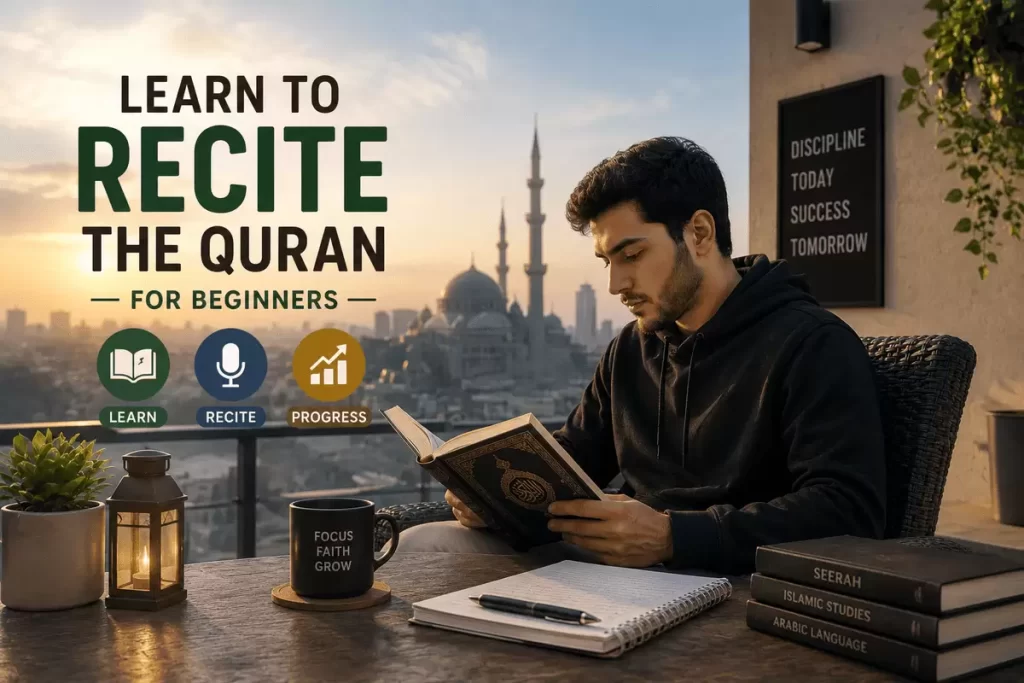
Every journey with the Quran begins with a single letter. Not a chapter, not a verse, just one letter pronounced correctly, with intention and care. Learn to recite the Quran for beginners is not about perfection from the first day; it is about taking that first step with sincerity, knowing that even the one who struggles with recitation receives a double reward. The path is clear, the tools are available, and the only thing standing between you and the Quran is the decision to begin.
Why Learning Quran Recitation Is Important for Beginners?
Embarking on the journey of learning to recite the Quran for beginners is one of the most rewarding spiritual experiences a Muslim can undertake. Unlike simply reading the Quran, recitation transforms the act into a profound connection with the divine words of Allah, elevating it from a mere reading exercise to a deeply spiritual and transformative practice through the art of pronunciation, rhythm, and melody.
The Quran is the literal word of Allah, and its recitation with proper Tajweed carries immense blessings, increasing faith, bringing peace to the heart, and preserving the integrity of the holy text. Mastering the basics ensures that every word is uttered with respect and accuracy, making a structured learning approach essential for anyone beginning this journey.
Beyond the spiritual benefits, learning to recite the Quran fosters discipline, patience, and a deeper appreciation for the Arabic language. Many beginners underestimate the complexity of Arabic phonetics, which is why starting with humility, consistency, and a willingness to embrace the challenges of Tajweed is the foundation of every successful recitation journey.
Benefits of learn to recite the Quran for beginners Correctly

Reciting the Quran correctly unlocks a multitude of spiritual, mental, and emotional benefits that make mastering proper recitation a priority for every beginner:
- Spiritual rewards: Every letter pronounced correctly carries its own virtue, ensuring that recitation is not just reading but an active act of worship that earns immense rewards in the hereafter.
- Deeper connection with the text: The melodic flow of Tajweed helps the meaning of verses resonate more deeply, making the experience more immersive and emotionally engaging.
- Improved memory and focus: The structured nature of Tajweed rules trains the brain to focus and retain information, a skill that benefits all areas of life beyond Quranic recitation.
- Correct interpretation: Mispronunciation can alter the meaning of verses, and proper recitation ensures the message of the Quran is conveyed exactly as intended.
- Personal growth and discipline: The journey requires patience, perseverance, and dedication, building character and instilling a sense of accomplishment with every challenge overcome.
Understanding the Arabic Alphabet
Before diving into recitation, beginners must familiarize themselves with the Arabic alphabet, which forms the backbone of Quranic pronunciation. The Arabic script consists of 28 letters, each with unique sounds and shapes that change depending on their position in a word, written from right to left in a connected cursive style that adds another layer of complexity for new learners.
Why mastering the Arabic alphabet is essential:
- Letter sounds and pronunciation: Each Arabic letter has a distinct sound that may not exist in English. The letter “ق” (Qaf), for example, requires a guttural pronunciation that takes practice to perfect, and mispronouncing such letters can lead to significant deviations in meaning.
- Tashkeel marks (vowels): Small diacritical marks called tashkeel indicate vowels such as Fatha, Kasra, and Damma, guiding the reciter on how to articulate each word with precision.
- Letter shapes and connections: Arabic letters change shape based on their position in a word, whether initial, medial, or final, and understanding these transformations is vital for fluent reading.
- Common mistakes to avoid: Beginners often struggle with letters like “ض” (Dad), “ظ” (Zah), and “غ” (Ghain), which require precise tongue placement and targeted practice with audio examples and visual guides.
To build a strong foundation, beginners should focus on writing each letter in isolation, then in words, and finally in short verses before advancing to Tajweed rules.
Basic Pronunciation Rules for Beginners

Once the Arabic alphabet is mastered, beginners can explore the fundamental rules of Tajweed that govern the proper pronunciation of the Quran, ensuring every word is recited with clarity, rhythm, and respect for the language’s nuances:
- Makharij (Points of Articulation): The specific locations in the mouth, throat, or nasal cavity where each sound is produced. For example, “ب” (Ba) is articulated with the lips while “ث” (Tha) is produced with the tongue touching the upper teeth.
- Sifaat (Characteristics of Letters): Specific qualities that define each letter, such as being emphatic like “ص” (Sad) or guttural like “ح” (Ha), which must be understood for accurate pronunciation.
- Qalqalah (Echoing Sounds): Letters such as “ق” (Qaf) and “ط” (Ta) produce a bouncing or echoing effect when recited, requiring isolated practice to develop the correct technique.
- Idgham, Ikhfa, and Iqlab: Advanced rules dealing with the merging, hiding, or changing of sounds when certain letters follow others. For example, the “ن” (Nun) in “من” is pronounced differently depending on the following letter.
Starting with simple verses and gradually incorporating these rules is the ideal approach for those learning how to recite the Quran beautifully, ensuring steady and confident progress at every stage.
How does the Arabian Tongue shape your journey of learning the Quran and Arabic?
At Arabian Tongue, we help you understand the Quran deeply and connect with its meanings through simple and effective teaching methods. Our courses are designed to make your learning journey clear, engaging, and spiritually enriching.
Guidance from the Quran and Hadith
قال الله تعالى: “وَلَقَدْ يَسَّرْنَا الْقُرْآنَ لِلذِّكْرِ فَهَلْ مِن مُّدَّكِرٍ” — سورة القمر: ١٧
Allah said: “And We have certainly made the Quran easy for remembrance, so is there any who will remember?” — Al-Qamar: 17
قال رسول الله ﷺ: “مَنْ قَرَأَ حَرْفًا مِنْ كِتَابِ اللَّهِ فَلَهُ بِهِ حَسَنَةٌ، وَالْحَسَنَةُ بِعَشْرِ أَمْثَالِهَا” — رواه الترمذي، عن ابن مسعود رضي الله عنه
The Prophet ﷺ said: “Whoever reads a letter from the Book of Allah will receive a reward, and that reward will be multiplied by ten.” — Narrated by At-Tirmidhi, on the authority of Ibn Masud (may Allah be pleased with him)
FAQs
What are the first steps to start Quran recitation?
The first step is mastering the Arabic alphabet, focusing on the correct pronunciation of each letter in its isolated, initial, medial, and final forms. Once comfortable with the alphabet, beginners move to tashkeel marks (vowels), short verses, and foundational Tajweed rules such as Makharij and Sifaat, building a strong and accurate foundation before advancing to longer portions of the Quran.
Why is Tajweed important for beginners?
Tajweed ensures that every letter is pronounced correctly from the very start, preventing the formation of bad habits that become increasingly difficult to correct later. Beyond accuracy, proper Tajweed transforms recitation into a spiritually moving experience, and beginning with correct pronunciation establishes the foundation for a lifetime of meaningful and rewarding Quranic recitation.
Can adults learn Quran recitation as beginners?
Yes, adults can absolutely begin Quran recitation from scratch, and many have successfully done so at various stages of life. While adults may require more deliberate practice than children to master Arabic phonetics, their greater discipline, motivation, and ability to understand the deeper meanings of the Quran often make their learning journey equally effective and deeply fulfilling.
How long does it take to learn basic Quran recitation?
Most dedicated beginners can develop comfortable basic recitation skills within three to six months of consistent daily practice with qualified guidance. Mastering Tajweed rules and reciting fluently, however, is a gradual journey that deepens over the years, with each stage bringing greater accuracy, confidence, and spiritual connection to the divine text.